
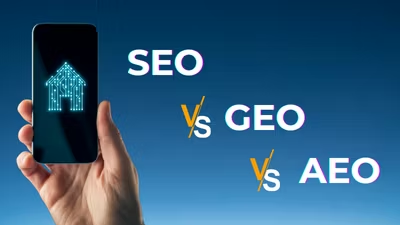
How would your owner pipeline change if your company was the first name people see—before they even click?
We know property discovery is shifting. Potential customers now find answers from classic results, AI-driven snippets, and platform citations. That means your visibility must span traditional search and generative answers.
We’ll walk you through a practical strategy that links site content, on-page optimization, and local systems so owners and residents find your brand when they ask questions about rentals or management services.
This article frames an ultimate guide for U.S. property management companies that want more owner leads, more doors under management, and a steadier resident pipeline. We keep recommendations actionable: what to fix first, what to measure, and how to scale without risking current performance.
For more information or to discuss your needs, contact us at (425) 954-3452 or email info@kihanmarketing.com. We’re ready to help you turn search visibility into qualified customer growth.
Key Takeaways
- Modern discovery combines classic rankings with AI answers—visibility is broader than before.
- We link content and optimization to practical systems that drive owner and resident leads.
- Success is not just traffic; it’s brand trust and consistent references in search and AI results.
- Prioritize fixes that protect current performance while building momentum.
- Measure impact with referral sources, qualified leads, and conversions—not vanity metrics.
- Contact us to translate this framework into a growth plan for your portfolio.
Why “SEO Is Dead” Keeps Coming Back—and Why It Still Drives Growth
Buzz that discovery is finished surfaces whenever engines add features or shift results. Since ShoeMoney’s 2005 headline, the refrain repeats, yet owner and resident behavior has not vanished.
“SEO Was Dead” — ShoeMoney, 2005
Those headlines flare because algorithm updates and new answer features change click patterns. Systems evolve, clicks drop, and marketers feel uncertain. That creates predictable headlines—not an end to discovery.
What stays the same
People still use search to find services like “property management company near me” or “rental management fees.” Customers and users research before they call.
Optimization is not a gimmick. It’s the practice of aligning site content, brand signals, and local systems with how real users decide. That discipline drives leads and protects existing performance.
Why the playing field expanded
Traditional search results still matter. But answer-style results and AI summaries now influence who gets attention first. We recommend a steady plan that defends today’s leads while building readiness for tomorrow.
- History shows the panic; data shows steady discovery behavior.
- Changes in results shift attention, not the need to be found.
- Practical systems beat hype: measure leads, not impressions.
| Concern | Why it happens | What we do | Near-term impact |
|---|---|---|---|
| Headline panic | Major engine updates | Prioritize core technical fixes | Protects traffic and leads |
| Click shifts | Answer-style features reduce clicks | Craft answer-ready content | Maintains visibility in AI outputs |
| Uncertainty | New tools change metrics | Track leads and referral sources | Better attribution and growth decisions |
How AI Overviews and LLMs Are Reshaping Discovery in the United States
Discovery for local services is moving from clicks to citations and instant answers. That change matters now for property management firms competing for owners and residents.
Timeline matters: Google announced SGE on May 10, 2023, and rolled AI Overviews out in the U.S. on May 14, 2024. By October 2024 overviews reached 100+ countries. These milestones mean the new systems are live and affecting local discovery.
Zero-click search behavior and what it means
In 2024, 58.5% of Google searches ended without a click. Users get direct answers on the results page, so wins shift from pure organic traffic to presence and brand trust in answer panels.
Longer conversational queries
Perplexity shows average queries of 10–11 words versus 2–3 for traditional search. That means we must target intent-rich, conversational phrases and craft extractable passages in our content.
CTR pressure and revenue impact
Ahrefs reports a 34.5% drop in position-one CTR when AI Overviews appear. Even top rankings can send less traffic, so being cited inside overviews or platforms is as crucial as ranking.
“Owners often decide before they click—visibility in overviews drives trust and eventual outreach.”
| MetricWhat it showsAction for property managers | ||
|---|---|---|
| AI rollout dates | SGE announced May 10, 2023; U.S. overviews May 14, 2024; global Oct 2024 | Audit content for answer-ready passages and structured data |
| Zero-click rate | 58.5% of searches end with no click | Prioritize brand mentions, concise answers, and citation-worthy guides |
| CTR drop | 34.5% lower position-one CTR with overviews | Focus on being referenced by overviews and platforms, not only on-page rank |
Answer Engine Optimization (AEO) Explained for Property Management Brands
Answer-driven results now steer many owner decisions before a single website loads. For property managers, that means structuring content so search systems and AI platforms can pull your guidance directly into results.
What answer engine optimization targets:
- Featured snippets and concise lists that summarize services and fees.
- Voice-style answers for quick queries from owners and agents.
- AI-generated answers and overviews that cite trusted sources.
How it wins when users don’t click
Being the answer builds brand recall and trust. Owners often call or search your company name after seeing a clear response. That sequence drives later visits, leads, and direct outreach even with low click-through rates.
Visibility signals to track
Measure snippet appearances, AI Overview citations, and brand mention frequency. Add schema for FAQs, services, and local pages so systems can read your content easily.
| Signal | What it shows | Action |
|---|---|---|
| Snippet wins | Direct answer inclusion on result pages | Craft clear Q&A blocks and short lists |
| AI citations | Mention inside overviews or summaries | Publish citation-worthy guides and original data |
| Brand mentions | Frequency of your name in answers | Use consistent NAP, review signals, and linked profiles |
Conversion tip: pair answerable passages with clear calls, trust signals, and a phone or contact link so owners who are ready can act immediately.
Generative Engine Optimization (GEO) and What AI Platforms Need From Your Content
Generative systems now read and quote short passages, not just whole pages. That change shifts our work from chasing page rank to earning citations that appear inside AI answers.
We define generative engine optimization as earning citations—clear, extractable passages that platforms can pull and cite. Focused passages about fees, tenant screening, or service areas perform best.
Platforms shaping this shift
The key platforms are ChatGPT, Perplexity, Gemini, Claude, Copilot, and Grok. These systems synthesize information across sources, so your content must be easy to extract and verify.
Passage-level retrieval basics
- Semantic relevance: single passages must answer a query fully and directly.
- Clear entities: include company name, service area, fee structure, and compliance terms.
- Reasoning chain: show step-by-step logic so the platform can reproduce your answer.
“Citations in AI outputs act like modern referrals—short passages drive trust and early brand recognition.”
Write content with clean definitions, numbered steps, and unambiguous facts. That structure helps generative engines understand, extract, and link back to your website—turning citations into real leads.
SEO, AEO, GEO: What’s Different, What Overlaps, and What to Prioritize
We see three business-focused paths to discovery: traditional ranked pages, concise answer blocks, and generative citations that quote short passages. Each path uses similar signals but rewards different formats and proofs.
Traditional search engines vs answer engines vs generative engines
Ranked results still favor strong pages, links, and topical authority. That is where classic site-level engine optimization wins.
Answer engines prize short, direct passages that resolve a question on the results page. Those passages drive brand recall even when users don’t click.
Generative engines pull extractable sentences from many sources. Data shows overlap: Ahrefs reports ~76% of AI Overview citations come from Google’s top-10. But other LLM searches often cite lower-ranking pages.
Why it’s not a false choice: building a dual-track playbook
We recommend a dual-track strategy that protects current lead flow while expanding future discovery. Keep foundational optimization in place, then engineer answer-ready blocks and citation-friendly passages.
Where citations come from and how to prioritize
Conductor analysis shows some platforms cite lower-ranking URLs, creating an opening for well-structured, niche content to outperform rank alone.
“Specialized, high-quality passages can earn citations even if the page isn’t top-ranked.”
- First: fix technical basics and strengthen topical pages.
- Next: add short Q&A blocks, numbered steps, and entity-rich passages for answer and generative engines.
- Always: measure citations and brand mentions along with links and leads.
The Business Case for Investing Now—Even If AI Referral Traffic Looks Small
A modest slice of AI-driven visits already packs outsized conversion value for service businesses. Conductor shows AI referrals are roughly 1.08% of visits while organic search still drives about 53%. That gap sets the starting point for a practical plan.
Conductor benchmark context
Use the 1.08% figure to set expectations. Organic traffic remains the dominant source today, so we protect those channels first.
Visibility as a leading indicator
Being cited in answers often influences decisions before analytics reflect clicks. For owner-focused services, citations and short passages can spark name recognition and direct outreach days or weeks later.
What Gartner’s projection means for budgeting
Gartner forecasts a 25% drop in traditional search by 2026. That shift argues for gradual reallocation of marketing spend now—maintain core systems while building citation-ready content.
Quality over quantity
Data show LLM visitors convert at higher rates. Amsive found LLM traffic converts at 3.76% versus 1.19% for organic. Semrush reports LLM visitors convert about 4.4x better than organic search visitors.
“Even small, intent-rich referral streams can deliver more qualified customer leads than larger, passive traffic pools.”
What we do next:
- Preserve organic wins with technical fixes and core pages.
- Create extractable passages and concise answers for platforms.
- Measure conversions and assisted paths, not only raw traffic.
| Metric | Value | Action |
|---|---|---|
| AI referral share | ~1.08% | Build citation-ready content; expect gradual growth |
| Organic search | ~53% | Protect core pages and leads |
| Gartner forecast | -25% traditional search by 2026 | Shift budget toward discovery and content systems |
| Conversion lift | Amsive & Semrush: higher intent | Prioritize quality signals and clear CTAs |
Investing now is a balanced strategy: defend the site and grow the next channel. Small volumes of referral traffic can deliver big wins for owner acquisition and long-term success.
Technical SEO Foundation That Still Powers AEO and GEO
A fast, secure site is the non-negotiable backbone of any discoverable property management brand. We start with technical health because every optimization and content effort depends on it.
Speed, mobile usability, security, and crawlability
Slow pages or mobile issues stop owners from converting. We test Core Web Vitals, time to first byte, and layout shifts.
HTTPS and clean server responses keep pages safe and indexable. Crawlability checks make sure search engines can find service and location pages.
Structured data and schema markup
We add schema for services, FAQs, locations, and organization details so engines read context correctly.
Clear schema increases the chance your passages get pulled into answer panels and citations. That helps brand recall before a click.
Internal linking systems
Well-planned links move users from “what you do” to “how you do it” and then to “how to start.” Links also reinforce topical hierarchy for engines.
Technical fixes are not busywork—they protect lead flow and make every piece of content perform better over time.
“Fix the core systems first; everything else scales faster afterward.”
Content Engineering for Property Management: From Page-Level SEO to Passage-Level Answers
Content must be engineered so each paragraph can stand alone as a trusted, citable answer for landlords and investors. That means writing short, semantically complete passages that resolve a single question—fees, timelines, or maintenance steps—without extra context.
Writing for semantic completeness
Each paragraph should answer one question. Use clear definitions, a brief summary, and a concise list when needed. AI systems evaluate passages by relevancy and clarity, so one paragraph = one idea.
Structuring headings for extractable answer blocks
Use H2 for the main topic and H3 for focused slices. Start with a one-line summary, then a 2–3 sentence explanation and a short list. That pattern is easy for engines to lift as an answer.
Entity-rich language and citation-worthy assets
Include service areas, unit types, fee amounts, and compliance terms. Publish original data, transparent fee tables, and step-by-step checklists so other platforms can cite your information.
Balance helpfulness with conversion: finish passages with a simple next step—call, contact link, or form—so useful answers also drive owner outreach and measurable success.
Measurement and Reporting: Tracking Success Across Search, Answers, and Generative Platforms
Measuring modern discovery means combining classic performance metrics with new signals that show where answers and citations appear. We build a framework that keeps revenue-focused KPIs front and center while adding coverage and citation measurements for answer-driven results.
Traditional KPIs that still matter
We monitor rankings, organic traffic, leads, and conversion rates from search-driven visitors. These metrics link directly to revenue and show if technical fixes and content updates move the needle.
AEO-focused visibility signals
Featured snippet coverage, voice-inclusion checks, AI Overview citations, and brand mention frequency help us measure zero-click influence. Tracking these shows when prospects see your brand before they click.
Generative platform metrics
We track cross-platform citation rate, share of voice on priority topics, and assisted conversions from generative outputs (ChatGPT, Perplexity, Gemini, Copilot). These metrics signal growing visibility even when direct traffic is small.
Why attribution is harder now
Outputs are volatile, prompt-level data is limited, and answers can be personalized. That makes last-click attribution unreliable. We emphasize trend analysis, coverage goals, and assisted conversion paths instead of perfect attribution.
- Report approach: what moved, why it moved, and next actions.
- Dashboard mix: rankings + coverage + citations + lead quality.
- Stakeholder view: short-term wins and long-term citation growth tied to pipeline impact.
| Metric | Why it matters | Action |
|---|---|---|
| Rankings & organic traffic | Direct revenue signal | Protect core pages and content |
| Snippet & overview citations | Zero-click visibility | Publish concise, extractable passages |
| Cross-platform citations | Generative share of voice | Measure coverage and assisted conversions |
We translate these signals into clear monthly reports so owners understand trends, not noise, and see how search and answer visibility build qualified pipeline over time.
Conclusion
Property managers win when they align strong site fundamentals with concise, citable passages for AI platforms.
Engine optimization and clear content still drive owner discovery. At the same time, short answer-ready passages and citation-worthy assets increase visibility on modern platforms.
Our practical strategy is dual-track: protect organic performance first, then build extractable answers that earn citations and appear in overviews. We focus on systems that convert users into qualified customers.
Ready to move quickly? For more information or to discuss your goals and current site performance, contact us at (425) 954-3452 or email info@kihanmarketing.com.
FAQ
What is the difference between traditional search and generative or answer engines for property management businesses?
Traditional search returns ranked pages based on queries and links, while answer and generative engines synthesize direct responses, citations, or short summaries from multiple sources. For property managers, that means you must optimize both page-level content for clicks and passage-level answers or citation-worthy assets so AI overviews and LLMs reference your brand and services.
Do we still need on-site optimization if AI Overviews and chat platforms are taking more discovery?
Yes. Technical site health—speed, mobile usability, security, crawlability—and well-structured content remain baseline requirements. They support visibility in traditional results and help generative systems pull accurate citations from your site. Investing in both foundations and answer-ready content protects discovery across channels.
What is an effective content strategy for getting cited by LLMs and AI platforms?
Create citation-worthy assets: original data, clear definitions, local market reports, and step-by-step guidance for owners and residents. Use entity-rich language, semantic completeness for passages, and heading structures that make extractable answer blocks. These tactics increase your chances of being referenced by ChatGPT, Gemini, Perplexity, and others.
How does answer engine optimization (AEO) help when zero-click searches are rising?
AEO focuses on being the source of direct answers—featured snippets, voice responses, and AI-generated summaries—so your brand gains visibility even when users don’t click through. That visibility builds trust, increases brand mentions, and can drive downstream conversions through name recognition and follow-up searches.
Which platforms matter most for generative engine optimization (GEO) today?
Key platforms shaping GEO include ChatGPT (OpenAI), Perplexity, Google’s Gemini, Anthropic’s Claude, Microsoft Copilot, and Elon Musk’s Grok. Each platform surfaces citations differently, so prioritize universal signals: authoritative content, clear data, and passage-level clarity that supports semantic retrieval.
How do we measure success across search, answer, and generative channels?
Track a mix of KPIs: traditional metrics like rankings, organic traffic, leads, and conversions; AEO indicators such as featured snippet coverage, voice visibility, and AI Overview citations; and GEO metrics like cross-platform citation rate and share of voice in AI outputs. Use assisted conversion tracking to capture downstream impact from non-click discovery.
Will investing in AI-driven discovery deliver immediate traffic and leads?
Not necessarily immediate. Benchmarks show AI referrals can be a small share today, but visibility often leads indicator growth before traffic rises. Quality matters: LLM traffic can boost conversion rates when it’s highly relevant. We recommend a dual-track playbook that balances short-term traffic goals with long-term citation and visibility gains.
What technical elements should property managers prioritize to help engines understand our site?
Prioritize site speed, mobile usability, HTTPS security, crawlability, and structured data/schema markup. These elements help both search engines and generative systems parse context, support passage retrieval, and increase the likelihood your content is selected as a trusted source.
How should we write content so passages are extractable for AI answers?
Write short, self-contained passages that fully answer specific questions. Use clear H2/H3 structures, direct language, and entity-rich terms tied to local intent (city names, service types). Include concise definitions, statistics, and step-by-step instructions to make passages citation-ready for answer engines.
How do citations differ between Google and LLM search results?
Google citations tend to come from top-ranking pages within the top-10 overlap, while LLMs may cite a broader set of lower-ranked but authoritative passages. LLMs rely more on semantic relevance and entity signals, so earning citations requires both topical depth and clearly attributed, original content.
Can structured data and schema help us get referenced by AI Overviews and LLMs?
Yes. Schema markup clarifies your content’s meaning—business info, reviews, FAQs, property listings—which helps engines extract accurate facts. While schema alone won’t guarantee AI citations, it increases the chance your site is interpreted correctly and used as a source.
How do we balance helpful content and conversion goals on property management pages?
Provide useful, answer-focused content alongside clear conversion paths: contact forms, booking options, and resident portals. Helpful content builds authority and citations; conversion elements capture interested prospects. That balance drives both discovery and measurable leads.
What team skills are required to win in both search and generative discovery?
Combine technical web operations (speed, crawlability), content engineering (passage-level writing, entity modeling), and analytics (multi-channel KPIs, attribution). Collaborate with local operations to generate original data and case studies that increase citation-worthiness and competitive edge.
How often should we update content to keep it citation-worthy for AI platforms?
Update at least quarterly for key assets and immediately for time-sensitive data (rental rates, legal changes, local regulations). Freshness signals help both traditional indexing and generative systems trust your content as current and accurate.