











That gap is expensive. Your website is where an owner decides whether to call you and where a renter finds an open unit. Choose software that boxes the site in, and you find out after the contract is signed.
Every product fact below comes from the vendor's own public pages and each is linked. We left the prices out. They change, and each vendor's pricing page is the place to read them.
What is AppFolio?
AppFolio is cloud property management software: one system for accounting, leasing, maintenance and resident communication, used by property management companies. Its website lists versions for single-family, multifamily, student housing, affordable housing, community associations, commercial property and investment management, sold in three plans called Core, Plus and Max.
Yardi is the other name most managers hear first. It sells several products under one brand, which is where the comparison gets confusing.
AppFolio vs Yardi from the website side, from the vendors' own pages
| Question | AppFolio | Yardi Breeze and Breeze Premier |
|---|---|---|
| How many products? | One product in three plans: Core, Plus, Max | Breeze, Breeze Premier, and the larger Voyager |
| Unit minimum | Minimums apply on every plan; Core's is 50 units | No unit minimum stated for Breeze |
| The vendor's own website product | AppFolio Sites | RentCafe websites, as an add-on |
| API for a custom site | Read only on Plus, read and write on Max | None described on the Breeze pages we read |
| AI leasing tool | Realm-X Leasing Performer | RentCafe Chat IQ, a Premier add-on |
What is the difference between AppFolio and Yardi for a small property manager?
The first difference is that Yardi is not one product. A small company comparing "Yardi" with AppFolio is usually comparing Yardi Breeze or Breeze Premier, not Yardi Voyager.
- Yardi Breeze. The simpler tier. Yardi's Breeze FAQ says "there is no minimum number of units that you must manage", though a minimum monthly charge applies.
- Breeze Premier. The same platform with more on it. Yardi's FAQ lists more property types for Premier: affordable, HOA and condo, manufactured housing and self storage, on top of residential and commercial.
- Yardi Voyager. The large platform. Yardi's own Breeze and Voyager comparison, published in June 2020, says Voyager is "designed to support a wider variety of property types and more advanced functionality", and that you can move from Breeze to Premier to Voyager "without losing your data". That description is six years old, so ask Yardi what Voyager covers today.
- AppFolio. One product in three plans: Core, Plus and Max. AppFolio's pricing page says of Core that a "minimum spend and 50 unit minimum apply", and describes Max as "an enterprise solution for large operators".
So start with your unit count. AppFolio's pricing page says a minimum spend and a 50 unit minimum apply to Core, and adds "Contact us for details". It does not say what that means for a smaller company, so a company under 50 units should ask AppFolio. Yardi's Breeze FAQ states no unit minimum, though a minimum monthly charge applies. From 50 units up, the website is one of the places the two differ.
How does each one put listings on a website?
Both vendors sell a website of their own, and both feed it from the same system your leasing team works in. That is the easy route, and for some companies it is the right one.
- AppFolio's own website. AppFolio calls it AppFolio Sites: "a modern, mobile-responsive website that's fully integrated with the AppFolio Platform", on its marketing and leasing page. The same page says Vacancy Posting shares vacancies "on your website and internet listing services with a single click".
- Yardi's own websites. On Yardi's Breeze features and pricing page, RentCafe corporate websites are an add-on: "an easy-to-use marketing website for your property management company" that Yardi says will "help you appear in search results". Breeze Premier lists "customizable property websites" among its features, and lists RentCafe Property Websites among the Premier add-ons.
- Yardi's listing site. Breeze can "showcase available units on popular listing sites, including RentCafe.com". Yardi's FAQ calls RentCafe.com an internet listing service and says RentCafe also includes the resident portal for applications, rent payments and maintenance requests.
- AppFolio's AI leasing agent. AppFolio describes its Realm-X Leasing Performer as "an AI agent that works autonomously" on the lead to lease process. Ask which plan it comes with. The pricing page lists a Leasing CRM under Max only.
- Yardi's AI chat. Yardi's Breeze page lists RentCafe Chat IQ among the Breeze Premier add-ons and describes it as "a powerful AI tool with natural language processing that automatically responds to prospect questions with real-time information on pricing, amenities, unit availability and more". It is listed as an add-on, so ask what your plan includes.
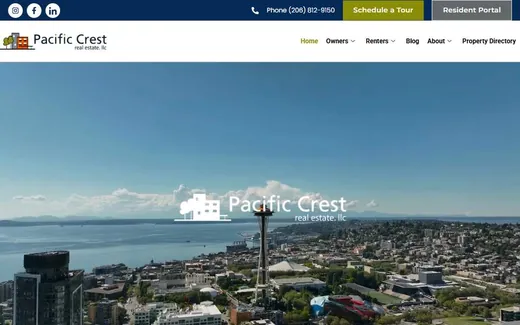
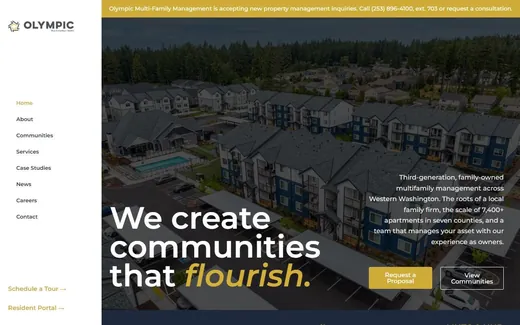
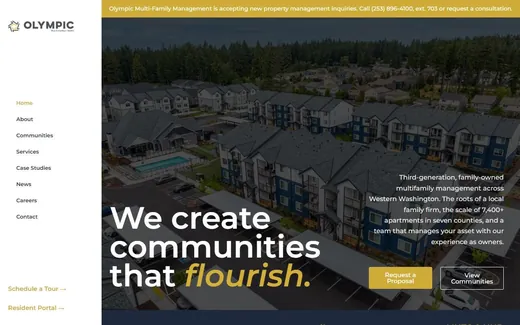
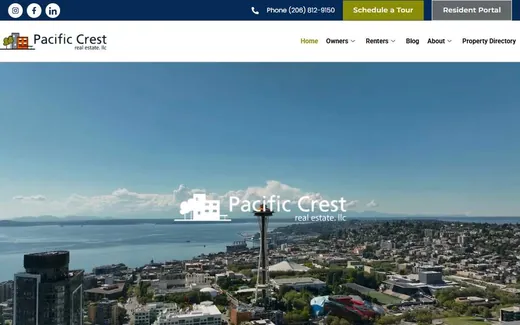
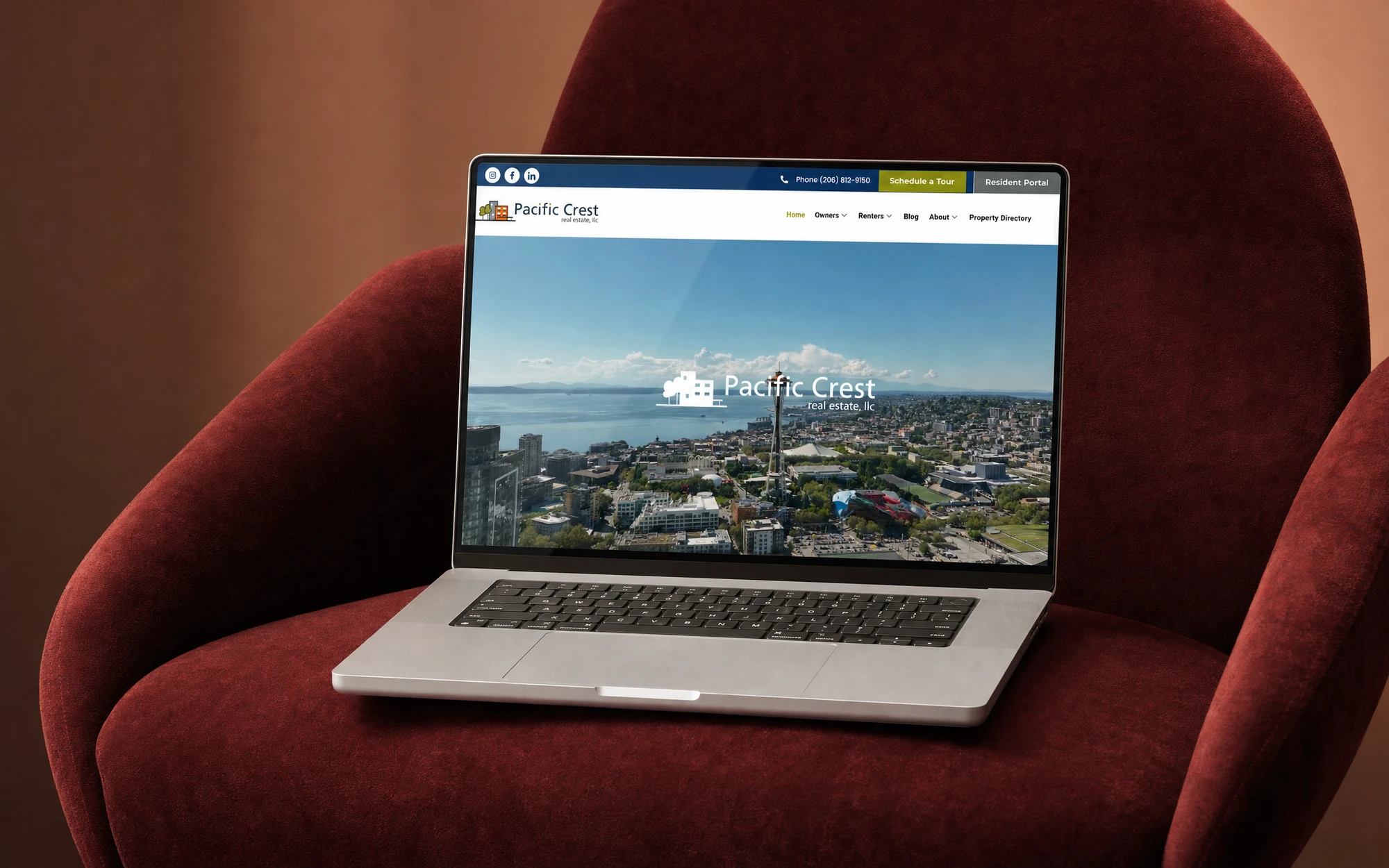
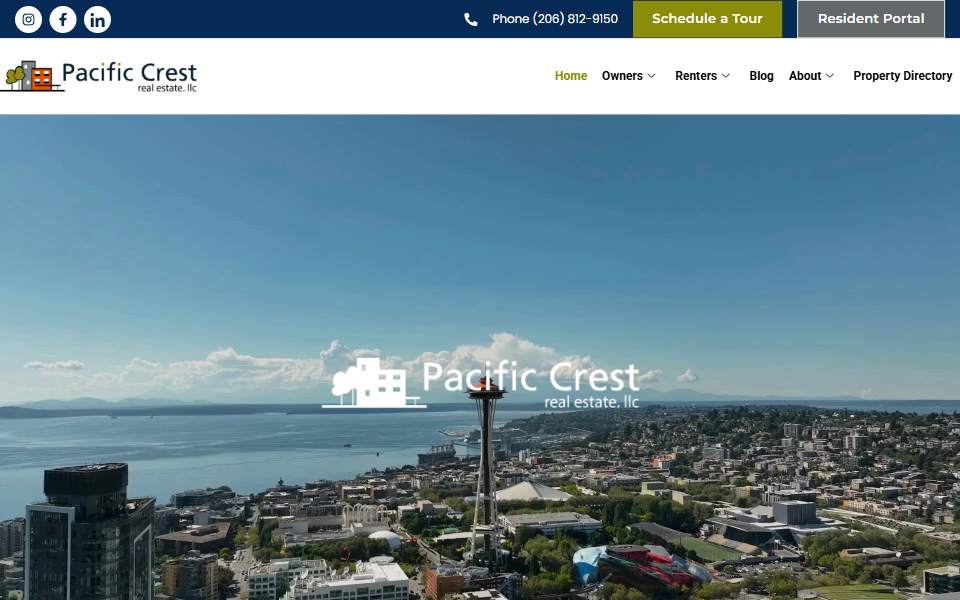
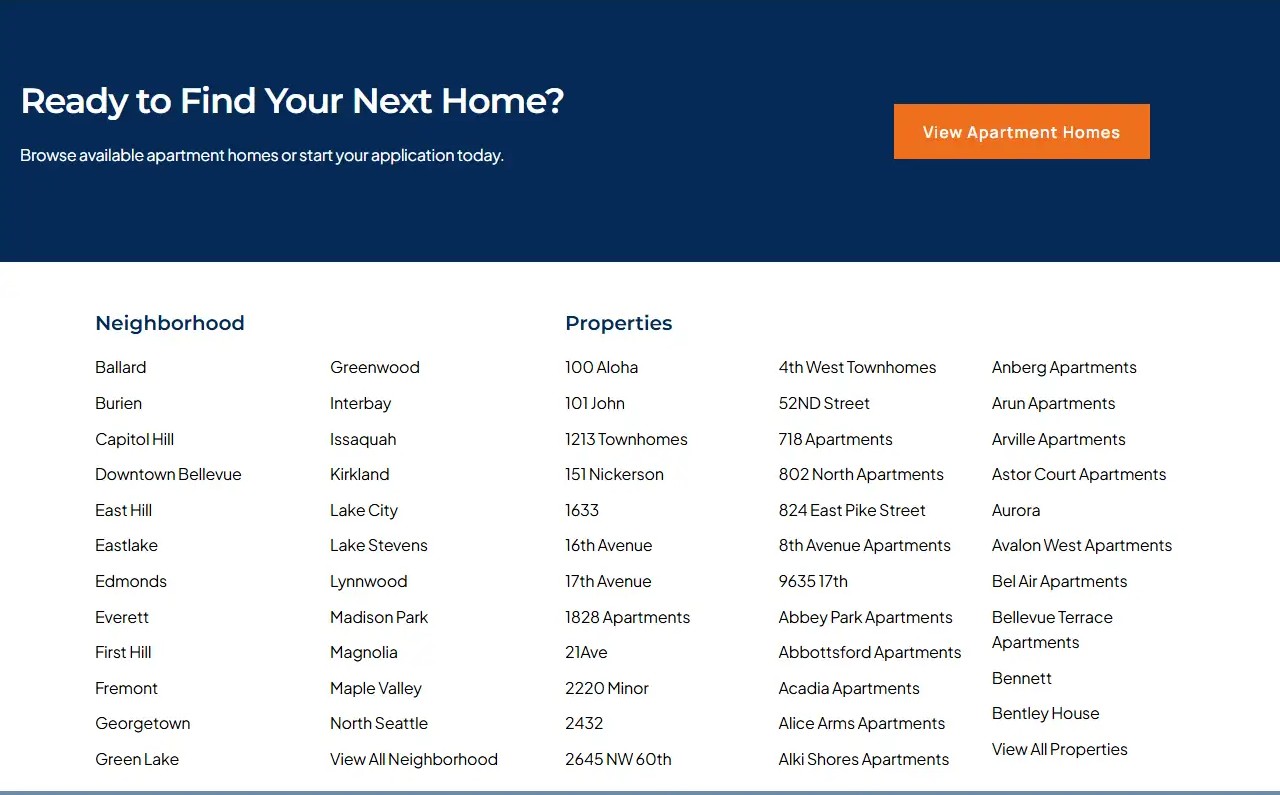
On the AppFolio template site that Pacific Crest Real Estate, a Kihan Marketing client, started from, the template set the layout and the page types, and the site had five pages. That is fine for showing open units and taking applications. Ask either vendor how far its websites can be changed before you choose one.
Can I have a custom website with either one?
Yes, with either. The software stays the system of record for units, rents, availability and applications. The custom site is built around it. What changes from one product to the other is how the listings get onto your pages, and there are two ways.
- Through the public listing link. If the software publishes your open units on a public page, a website can read that page and draw the listings in its own design. No API plan is needed.
- Through the API. Where the software offers an API and your plan includes it, a custom integration can do more than show listings. AppFolio's pricing page lists "AppFolio API (read only)" on Plus and "AppFolio API (read/write)" on Max, and no API on Core.
On AppFolio, Kihan Marketing has done both. Listings Pro, the WordPress plugin we wrote, reads the public AppFolio listings on the server and draws them as the site's own pages, with no iframe and no AppFolio API key. Renters still apply through AppFolio's own apply flow, and nothing is written back to AppFolio. On AppFolio's API we built a chat leasing tool that answers by neighborhood, price, city and area with real, active listings.
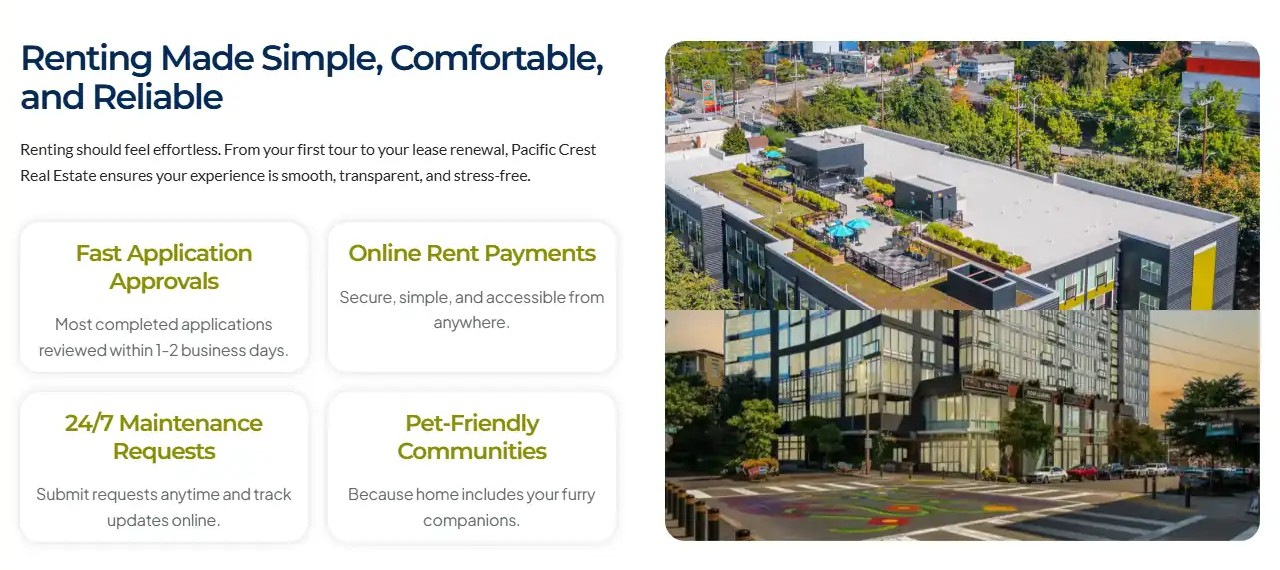
The fullest example is Pacific Crest Real Estate, a Seattle property manager. Its website went from five pages on AppFolio's template to more than 250, with a page for every property it manages. The full account is in our property management case study.
The same two routes apply to other software: Kihan Marketing can connect a website to any property management software through its public listing link or its API. On Yardi, the Breeze features and pricing page and the Breeze FAQ describe no public API, so ask Yardi directly what your plan allows before you plan a custom site around it.
AppFolio vs Buildium: how do they compare?
Buildium comes up in the same search, usually from smaller companies. From the website side, three facts on Buildium's own pricing page matter most.
- A website is part of the product. Buildium lists "a free property management website, hosted by Buildium" among its features.
- The API sits on the top plan. Buildium has three plans: Essential, Growth and Premium. The page describes Premium as "everything in Growth plus Open API".
- It belongs to RealPage. The site's footer reads "Buildium, A RealPage Company".
The pattern is the same as with AppFolio and Yardi: a vendor website for the simple case, and an API on a higher plan for anything custom.
What is the best property management software for your company?
There is no single best property management software, and anyone who names one without asking your unit count and property type is guessing. A small company usually ends up comparing three: AppFolio, Yardi Breeze and Buildium. Each describes its customer on its own home page.
Property management software comparison: the three a small company compares
| Software | Who the vendor says it serves | The website side |
|---|---|---|
| AppFolio | One platform for any property management business, with an enterprise plan for large operators | AppFolio Sites, or a custom site. API on Plus and Max |
| Yardi Breeze | Residential, commercial, affordable, self storage, HOA and condo, and manufactured housing | RentCafe websites as an add-on. No API described on the Breeze pages |
| Buildium | Residential rentals and community associations, among others | A free hosted website. Open API on the Premium plan |
If you are looking for AppFolio alternatives or Yardi alternatives beyond these, Rent Manager, Entrata, RealPage, DoorLoop and Propertyware each describe their customer on their own home page. Start with the ones that name your kind of portfolio.
The pattern repeats: a vendor website for the simple case, an API on a higher plan for anything custom.
Which questions should I ask before choosing?
Ask each vendor the same questions, and get the answers in writing, because the answers decide what your website can do later.
- Do my open units appear on a public page I can link to, and can that page be filtered by property?
- Is there an API, which plan includes it, and is it read only or read and write?
- If I use your website product, who controls the page titles, the headings and the page for each property?
- Can my site keep its own domain, and what happens to the website if I leave your software?
- Where does a renter apply, and can my own site send them straight into that step?
- Which listing sites do my units go to, and which of those cost extra?
- Which leasing and AI tools are in the plan you are quoting me, and which are add-ons?
Then do one more thing: open a live website that runs on each product, on your phone, and try to find one building and one open unit. It tells you more than a demo.
What has Kihan Marketing built on AppFolio?
Kihan Marketing knows AppFolio from shipped work: the Listings Pro plugin, the chat leasing tool on AppFolio's API, and client sites that run Listings Pro today.
- Custom sites around AppFolio. Custom WordPress sites built around AppFolio, with live listings from Listings Pro. One of them has a page for every property the company manages, more than 250 pages in all.
- A link or an API. Kihan Marketing can connect a website to any property management software through its public listing link or its API. Our own Listings Pro plugin shows live AppFolio availability on client sites.
- The website side. Kihan Marketing builds the websites that sit in front of this software. To buy, set up or migrate the software itself, talk to the vendor.
If a custom website is part of your plan, Kihan Marketing can show you a running site on AppFolio and the plugin behind it.
Marketing for property managersWebsites, SEO, AI search and ads for property management companies.Questions property managers ask about AppFolio vs Yardi
What is AppFolio?
AppFolio is cloud property management software that handles accounting, leasing, maintenance and resident communication in one system. It sells three plans, Core, Plus and Max, for property types that include single-family, multifamily, student, affordable and commercial.
What is the best property management software?
It depends on your property type and unit count. Each vendor describes a different customer on its own site: Propertyware names single-family companies, Buildium names residential rentals and associations, and Entrata names multifamily. Start with the vendors that name your kind of portfolio, then compare how each puts listings on your website.
What are the main AppFolio alternatives?
The products most often compared with AppFolio include Yardi Breeze, Buildium, Rent Manager, DoorLoop, Propertyware, Entrata and RealPage. Each describes who it serves on its own website. From the website side, ask every one how your open units reach your own site and whether there is an API on your plan.
Is AppFolio or Yardi better for a small property management company?
Start with your unit count. AppFolio's pricing page says a minimum spend and a 50 unit minimum apply to its Core plan, so a company under 50 units should ask AppFolio what that means for it. Yardi's Breeze FAQ states no unit minimum, though a minimum monthly charge applies. Then compare AppFolio with Yardi Breeze or Breeze Premier and ask each how your listings reach your own website.
What is the difference between Yardi Breeze and Yardi Voyager?
Yardi Breeze is Yardi's simpler product and Yardi Voyager is its large platform. Yardi's own comparison, published in June 2020, says Voyager is designed to support a wider variety of property types and more advanced functionality, with Breeze Premier in the middle. It also says a company can move from Breeze to Premier to Voyager without losing its data.
Can I show AppFolio listings on my own website?
Yes. AppFolio sells its own website product, AppFolio Sites, and a custom site can also show AppFolio listings. Kihan Marketing wrote Listings Pro, a WordPress plugin that reads your public AppFolio listings and draws them as your own pages, with no iframe and no AppFolio API key. Renters still apply through AppFolio.
Do I need AppFolio's API for a custom website?
Not for showing listings. AppFolio's pricing page lists its API on the Plus plan (read only) and the Max plan (read and write). Listings Pro, the plugin Kihan Marketing wrote, reads the public listings page, so it needs no API key. An API matters for a custom tool, such as a chat that answers with live listings.
Can Kihan Marketing connect a website to my property management software?
Yes. Kihan Marketing connects websites to property management software, through the software's public listing link or its API, and its Listings Pro plugin shows live AppFolio availability on client sites.
How does Buildium compare with AppFolio for a website?
Buildium lists a free property management website, hosted by Buildium, among its features, and its pricing page puts its Open API on the Premium plan. AppFolio sells AppFolio Sites and lists its API on Plus and Max. Kihan Marketing has built custom websites on AppFolio.