What is generative engine optimization (GEO)?
Generative engine optimization, written "generative engine optimisation" in British spelling and shortened to GEO everywhere, is the work of getting a business named and cited, with the facts right, in answers written by generative AI assistants and AI search features such as ChatGPT, Google AI Overviews and Perplexity. It covers AI crawler access, business facts that agree everywhere, reviews, and mentions on the other sites those answers draw on.
What is GEO in SEO?
In SEO, GEO stands for generative engine optimization. It is the part of search marketing aimed at the answers AI assistants write, where a business is named, as opposed to the list of results, where a page ranks. GEO builds on SEO, because assistants search the web before they answer.
Where does the term GEO come from?
The term GEO comes from a research paper, GEO: Generative Engine Optimization. Its authors studied engines that write answers from several sources and tested which changes made a page more visible in those answers. Marketing agencies adopted the name afterward.
What is GEO vs SEO?
GEO builds on SEO and adds work SEO does not cover. Assistants search the web before they answer, so pages still have to be indexed and clear, which is SEO. GEO adds AI crawler access, one consistent version of the business facts, and mentions on the lists and directories that assistants cite.
Is GEO the same as AEO?
No, but they overlap, and both terms are used loosely. AEO works on the page so a passage can be quoted as the direct answer. GEO works on the business so it is named and cited in answers written from many sources. Google AI Overviews fall under both.
Do I need GEO if I already do AEO?
GEO and AEO overlap, and both terms are used loosely, so much of the groundwork is shared. AEO works on the page: answer-first writing, featured snippets and People Also Ask, measured in Search Console. GEO adds what a page cannot do alone: AI crawler access, one version of the business facts, mentions on other sites, and a fixed set of prompts tracked across AI models.
What does a GEO agency do each month?
A GEO agency asks the same set of buyer prompts again, records who is named and which pages are cited, fixes what blocks AI crawlers, keeps the business facts in one version everywhere, and works through the lists and directories the answers cite. Kihan Marketing reports the share of answers that name you and what changed in the sources.
How do you choose the best GEO agency?
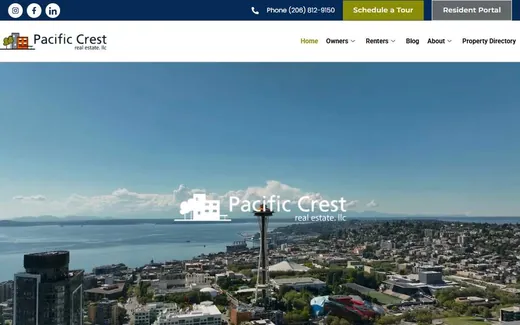
Choose a GEO agency that shows its proof with the exact prompt, the platform and the date, and that measures with a fixed prompt set over time. One example from our own work: asked "rentals in belfair wa", the AI assistants ChatGPT, Perplexity, Gemini and Claude each named Belfair View Apartments. Kihan Marketing has built more than 100 community websites.
Do AI assistants really cite small local business websites?
Yes. Kihan Marketing put 47 client questions to ChatGPT, Perplexity, Gemini and Claude, and for 23 of them at least one named one of our clients or linked to its website. A small site gets cited when it answers the question being asked.
How do I get my business to show up in ChatGPT and Perplexity answers?
No one can promise a place in ChatGPT or Perplexity answers, but you can remove what prevents one. Allow their search crawlers to read your site, state what you do, for whom and where in plain sentences, keep your name, address and phone the same everywhere, earn reviews, and get named on the lists and directories they cite.
Which AI crawlers should my website allow?
To appear in AI answers, allow the crawlers that fetch pages for search, such as OpenAI's OAI-SearchBot and Anthropic's Claude-SearchBot. Crawlers that gather training data, such as GPTBot and ClaudeBot, are separate settings, so a site can stay in the answers and still opt out of training. Check firewall and CDN rules as well as robots.txt.
Does llms.txt help a business appear in AI answers?
llms.txt does not earn a place in AI answers by itself. It is a proposed file that lists a site's most useful pages for AI tools. Google's guide to AI features says no AI text files are needed for AI Overviews or AI Mode. The pages the file points to matter far more than the file.
Which generative engine optimization tools are used to measure GEO?
The measure is a fixed set of buyer prompts, asked again on a schedule, with a record of who each answer names and which pages it cites. A tracking tool or a plain sheet can hold that record. Our guide on how to track AI citations sets out the prompt set, the sheet and the schedule.
How is GEO measured?
GEO is measured with a fixed set of buyer questions, called prompts, put to AI models on a schedule. Each run records whether the business is named, which competitors are named instead and which pages are cited. Kihan Marketing's wording for its own service is: We track your prompts across AI models, weekly or daily, depending on your plan.
How long does GEO take, and can anyone guarantee it?
No agency can guarantee that an AI assistant will name a business, and Kihan Marketing does not. Crawler access can be fixed in a day. Being named depends on other sites naming the business, which builds over months. The honest measure is the share of answers that name you across a fixed prompt set over time.
Do you work with businesses in my area?
Yes. Kihan Marketing works remotely and takes on clients in any country. The prompt set is written for your own industry and your own area.