















The file will not hurt you. The risk is what it distracts you from. An owner who spends the budget on llms.txt can still have a robots.txt that locks ChatGPT's search crawler out, and never know.
Each vendor's position is quoted from its own pages, followed by a template and the two checks that matter more.
What is llms.txt?
It is a text file written in Markdown, placed at yoursite.com/llms.txt. It tells an AI system what the site is and where the important pages are, in a form that is easy for a language model to read.
The idea comes from a proposal by Jeremy Howard, published in September 2024 and revised as version 2 in August 2026. The proposal opens: "We propose adding a /llms.txt markdown file to websites to provide LLM-friendly content." It describes itself as a proposal, and says it is open for community input.
llms.txt next to the two files it gets confused with
| File | What it is for | Who honors it |
|---|---|---|
| robots.txt | Tells crawlers what they may and may not fetch | The major search and AI crawlers say they follow it |
| sitemap.xml | Lists every page you want indexed | Search engines read it |
| llms.txt | A short guide to your best pages, for AI systems to use on demand | None of the vendors we checked says its crawler reads it |
The proposal draws the same line. In its words, robots.txt "lets automated tools know what access to a site is considered acceptable", while llms.txt information "is instead used on demand, when an agent needs information about a topic while assisting a user".
Do ChatGPT, Google, Perplexity and Claude use llms.txt?
Google Search does not, by its own statement, and none of the other vendors' pages says its crawler does.
| Vendor | What its own pages say | Reads llms.txt on your site? |
|---|---|---|
| Google Search | "Google Search itself doesn't use them." Creating one "will neither harm nor help your site's visibility or rankings in Google Search". | No, by its own statement |
| Google Chrome (Lighthouse) | Calls llms.txt "an emerging convention" and audits for it under agentic browsing. A missing file is marked not applicable. | This is about browsing agents, not Search |
| OpenAI | Serves an llms.txt as the index of its own developer documentation, and its crawler page links to that index. The page says nothing about its crawlers reading llms.txt on other sites. | No statement |
| Anthropic | Serves an llms.txt for its own developer documentation. Its crawler page does not mention the file. | No statement |
| Perplexity | Serves an llms.txt as the index of its own developer documentation, and its crawler page links to that index. The page says nothing about its crawlers reading llms.txt on other sites. | No statement |
"No statement" means the vendor's crawler documentation is silent on it. It does not prove the file is never fetched.
The AI labs publish llms.txt files for their own documentation. None has said its crawler reads yours.
It is easy to mix those two up. A lab that publishes the file for developers who use its documentation is not telling you its crawler reads yours when it decides what to cite.
Google's wording, from its AI optimization guide, is the clearest: "You don't need to create new machine readable files, AI text files, markup, or Markdown to appear in Google Search (including its generative AI capabilities), as Google Search itself doesn't use them."
Does anything read the file?
Rarely, on the evidence so far. The largest study we found is from Ahrefs, published June 15, 2026. It looked at 137,210 domains using its analytics product that received traffic in May 2026.
28%
of those domains publish an llms.txt
Ahrefs, May 2026 data
97%
of those files were fetched by nothing at all
Ahrefs, May 2026 data
Ahrefs adds two cautions of its own. Its customers are more technical than the web at large, so 28 percent is an upper bound. And a fetch is not the same as a read. This is one company's data on one month, so treat it as a strong hint, not a verdict.
Website builders describe the file the same careful way. Webflow lets you upload one, and its help article says the format "doesn't guarantee your site will be read by LLMs" and that "its effects on AI-driven search are unclear".
How do you write an llms.txt file?
The format is short. The proposal requires only one thing, a title on the first line. After it come an optional one-line summary, then sections of links, each link with a short note.
An llms.txt example for a small business
# Your Business Name

> What you do, for whom, and where. One or two lines.

## Start here

- [Services](https://yoursite.com/services/): What we offer.
- [Areas we serve](https://yoursite.com/areas/): Every town.
- [Contact](https://yoursite.com/contact/): Phone and hours.

## Guides

- [Guide title](https://yoursite.com/guide/): The question
this page answers.Keep it true and keep it current. A file that lists pages you deleted, or describes services you stopped offering, is worse than no file.
What matters more than llms.txt?
Two things, and both can be checked today.
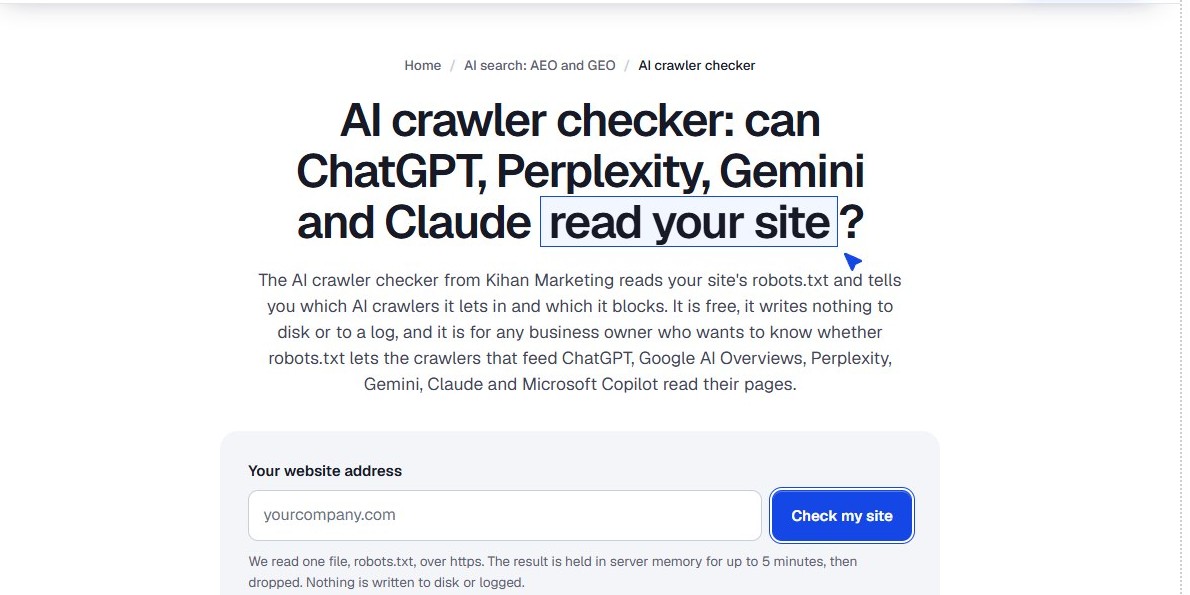
A robots.txt rule that blocks OAI-SearchBot keeps you out of ChatGPT's search answers, by OpenAI's own account. No llms.txt file can undo that. Our free AI crawler checker reads your robots.txt and shows which AI crawlers it lets in.
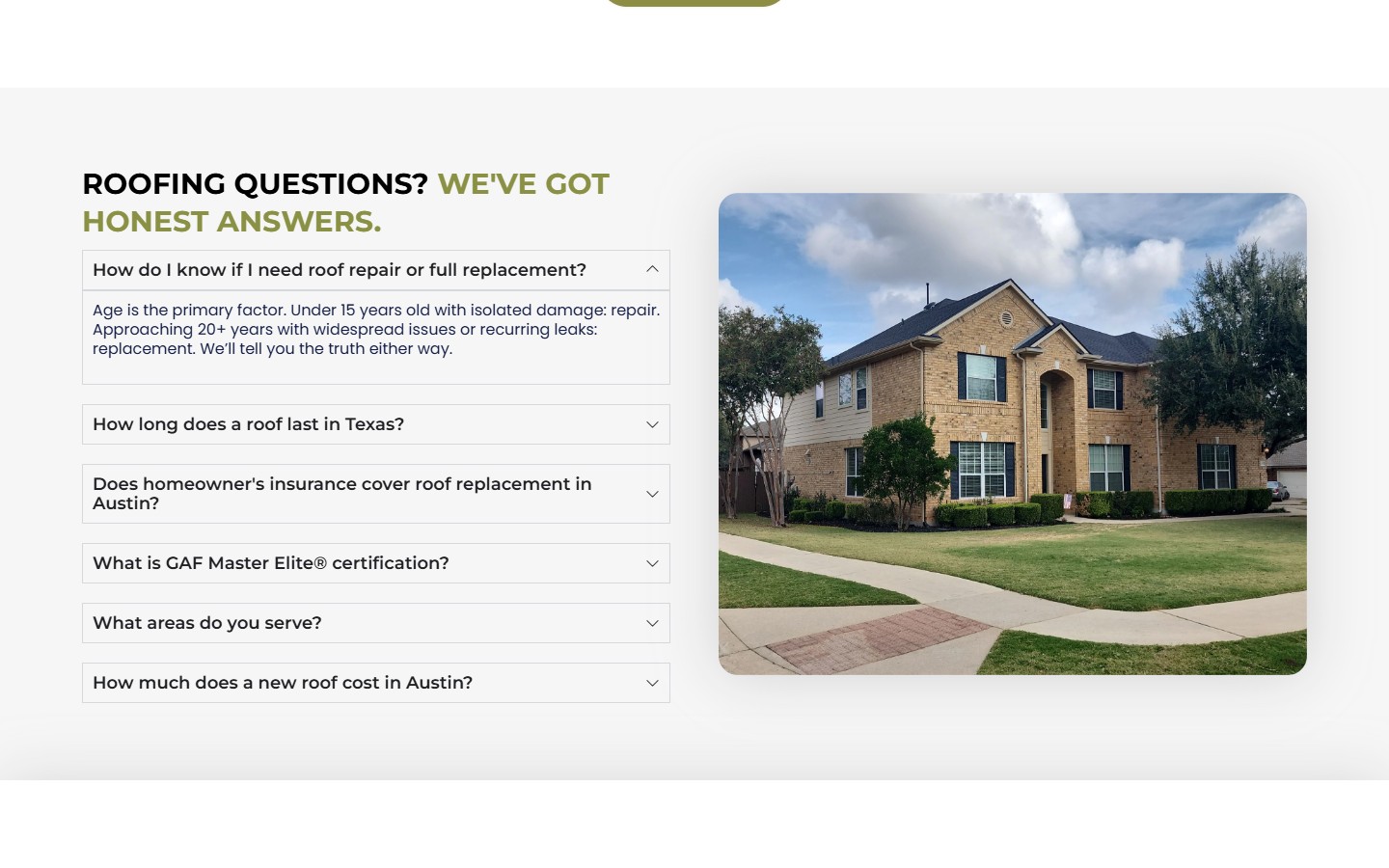
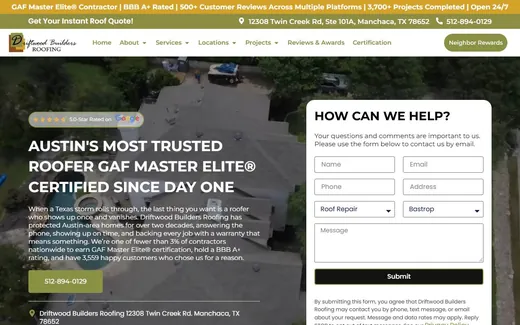
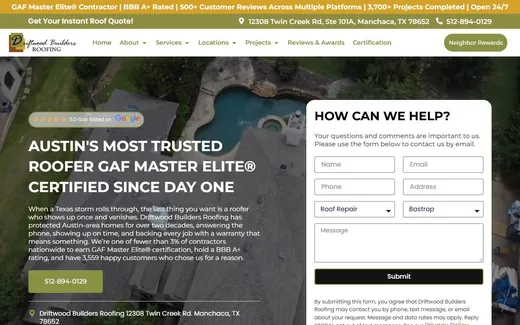
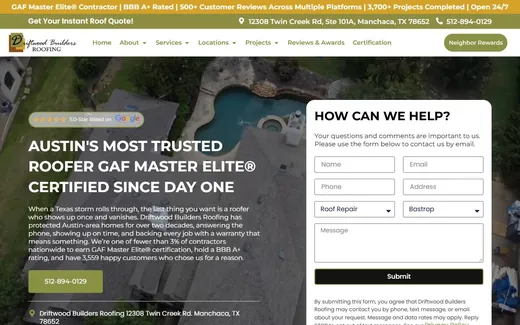
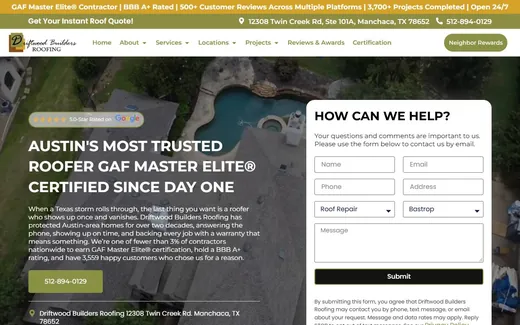
When we checked 53 client sites, the pages AI answers cited were pages built around one customer question. ChatGPT and Google's AI Overviews linked to the website of Driftwood Builders Roofing, a Kihan Marketing client, in their answers to 169 roofing questions. The full findings are in which websites AI assistants cite.
Run the crawler check first, because it takes a minute. Write the file second, because it takes twenty. Then spend the real time on pages that answer what your customers ask.
AI crawler checkerFree. Type your domain and see which AI crawlers your robots.txt allows or blocks.Questions about llms.txt
What is llms.txt?
llms.txt is a Markdown text file at the root of a website that gives AI systems a short summary of the site and links to its key pages. It was proposed by Jeremy Howard in September 2024 and revised in August 2026. It is a proposal, not an adopted standard.
Does Google use llms.txt?
Google Search does not. Its AI optimization guide says Google Search itself does not use such files and that creating one will neither harm nor help visibility or rankings in Google Search. Chrome's Lighthouse tool separately audits for the file in the context of browsing agents.
Does ChatGPT read llms.txt?
OpenAI's crawler documentation does not say its crawlers read llms.txt on other websites. It links to an llms.txt that indexes OpenAI's own developer documentation, which is a different thing.
Is llms.txt the same as robots.txt?
No. robots.txt tells crawlers what they may fetch, and the major AI crawlers say they follow it. llms.txt is a guide to your best pages and cannot block or allow anything.
Should a small business add an llms.txt file?
Yes, if it takes little time, because it does no harm and may matter more as browsing agents grow. It should not cost much or replace the basics: AI crawlers allowed in robots.txt, and pages that answer your buyers' questions.
Where does the llms.txt file go?
At the root of your domain, so it opens at yoursite.com/llms.txt. The proposal also allows a file at a path inside the site, covering the pages under that path.