

TL;DR
E-E-A-T stands for Experience, Expertise, Authoritativeness and Trustworthiness. They are the four qualities Google uses to judge content. Google’s E-E-A-T shapes what ranks, and the same signals help AI engines quote you. Quick answers are in the FAQ at the end.
Google rewards pages that prove real experience and can be trusted, and it holds money and health topics to the strictest bar. You build E-E-A-T with named authors who have relevant credentials, first-hand detail, cited sources, reviews and a site that stays accurate. The same signals help AI engines cite you.

What E-E-A-T Means
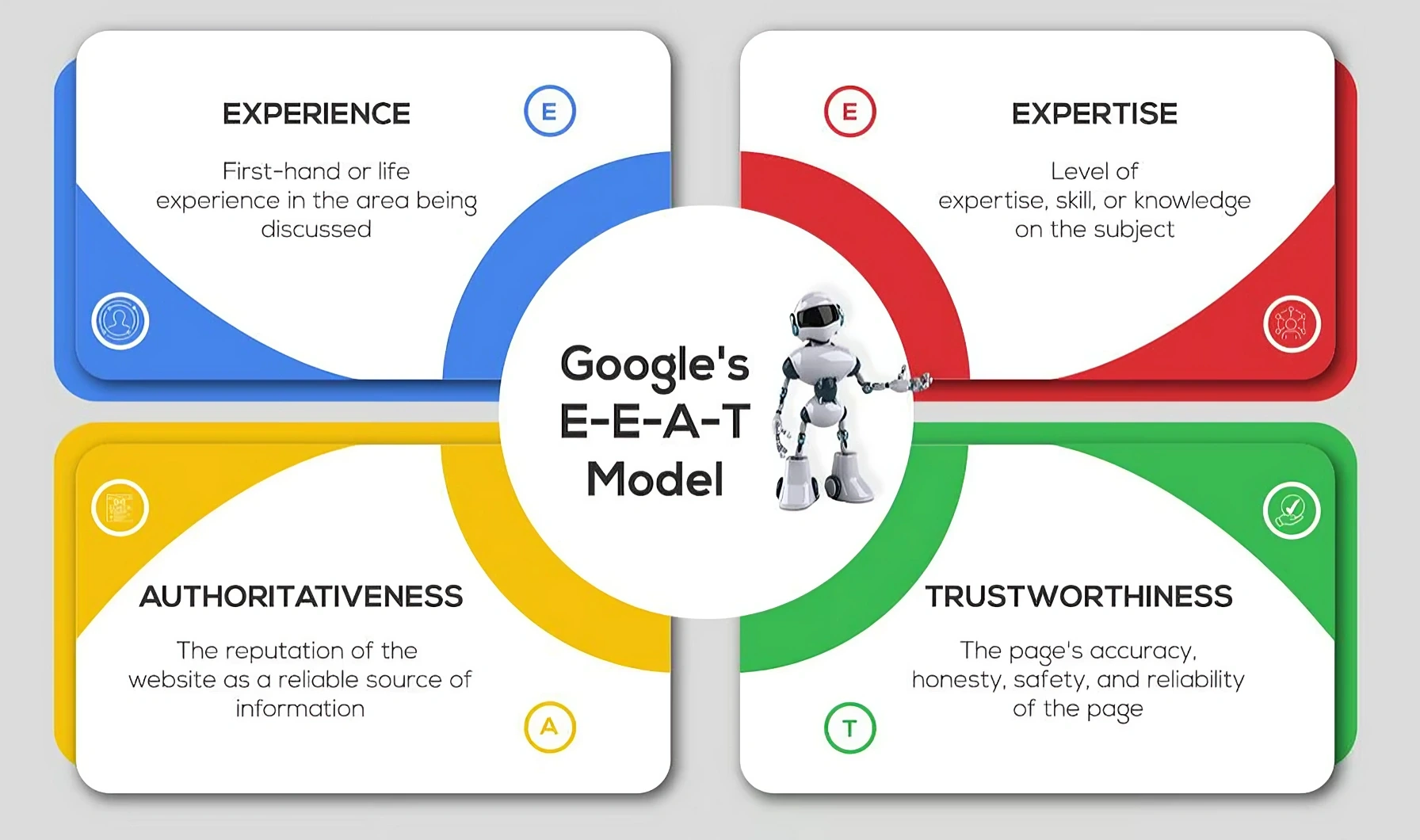
E-E-A-T is Google’s framework for content quality. Each part is a question about you and your page.
- Experience: have you done the thing yourself?
- Expertise: do you know the subject?
- Authoritativeness: are you known for it?
- Trustworthiness: can people rely on you?
Google’s human quality raters use these four questions to decide whether a page deserves to rank.
Why E-E-A-T Matters for SEO
Google gives more and more weight to pages that prove real experience and can be trusted. It applies the bar most strictly to YMYL topics. YMYL means “your money or your life”, subjects like finance and health.
Weak E-E-A-T makes it hard to rank for anything competitive. Strong E-E-A-T is a lasting SEO advantage.
How to Build E-E-A-T
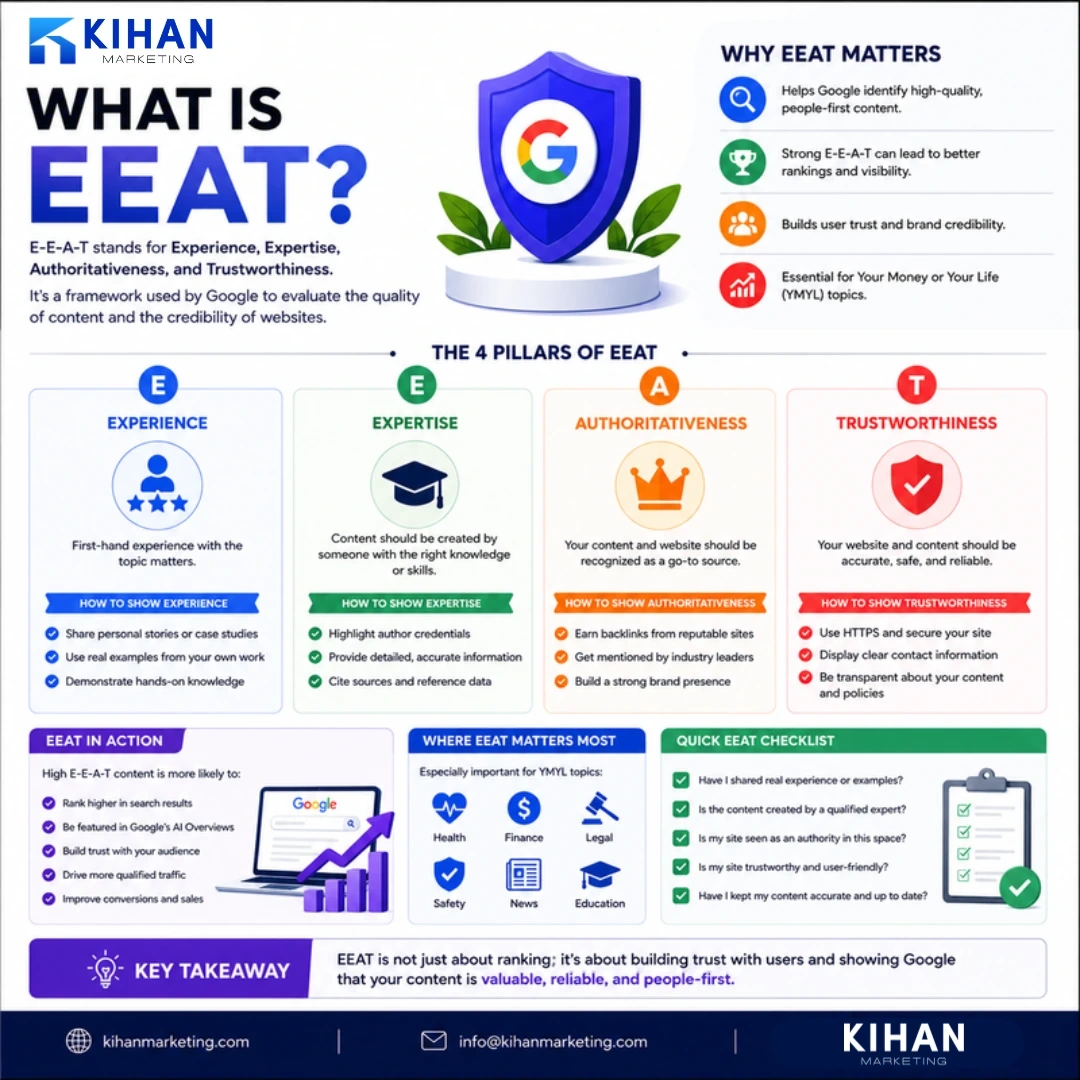
Show who wrote each page and why they are qualified. Then back it up.
- Name your authors and list their relevant credentials.
- Show first-hand experience on the page.
- Cite sources that carry weight.
- Collect reviews.
- Keep your site accurate and up to date.
These signals tell Google and readers the same thing: you are a source worth trusting and worth ranking. A free marketing audit can flag where your trust signals are thin.
E-E-A-T and AI Citation
The signals that build E-E-A-T, real expertise, citations and trust, also make AI engines more likely to cite you. Search is shifting toward AI answers. Proof of expertise and trust helps you get quoted, not just ranked. So E-E-A-T is now an asset for both classic SEO and AI visibility.
Related reading
- What Is GEO (Generative Engine Optimization)? 2026 Guide
- The AI marketing stack we actually use to run marketing for small businesses
- AI in marketing: a practical guide for small businesses
FAQ: E-E-A-T Explained
What does E-E-A-T stand for?
Experience, Expertise, Authoritativeness and Trustworthiness. It is the framework Google uses to judge content quality.
Why is E-E-A-T important for SEO?
Google rewards content that shows real experience and can be trusted, most of all on money and health topics. That makes it key to ranking.
How do I improve E-E-A-T?
Use named expert authors and show first-hand experience. Cite your sources and collect reviews. Keep your site accurate and worthy of trust.
What is YMYL?
Your Money or Your Life. It covers topics like finance and health, where Google applies its strictest quality and E-E-A-T standards.
Is E-E-A-T a score or an algorithm update?
Neither. E-E-A-T is a framework, not a score you can look up or a single update. Google’s human quality raters use it to judge whether a page deserves to rank. The practical test is the four questions above. Have you done it and do you know it? Are you known for it, and can people rely on you?
Does E-E-A-T only matter for YMYL topics?
No. The bar is strictest for YMYL topics like finance and health, but it applies everywhere. Weak E-E-A-T makes it hard to rank for anything competitive, whatever the subject. Treat the four signals as the baseline for every page you want to rank, and raise them further on money and health pages.
What is the difference between Experience and Expertise?
Experience means you have done the thing yourself. Expertise means you know the subject, which is what credentials show. A page can have one without the other, so Google’s framework asks for both. To show both, name the author, list their relevant credentials, and write from first-hand work rather than from research alone.