

Generative engine optimization, or GEO, is how you get your content quoted in AI answers. This guide covers what GEO is, how it differs from SEO, how it works and why it matters now. Quick answers sit in the FAQ at the end.
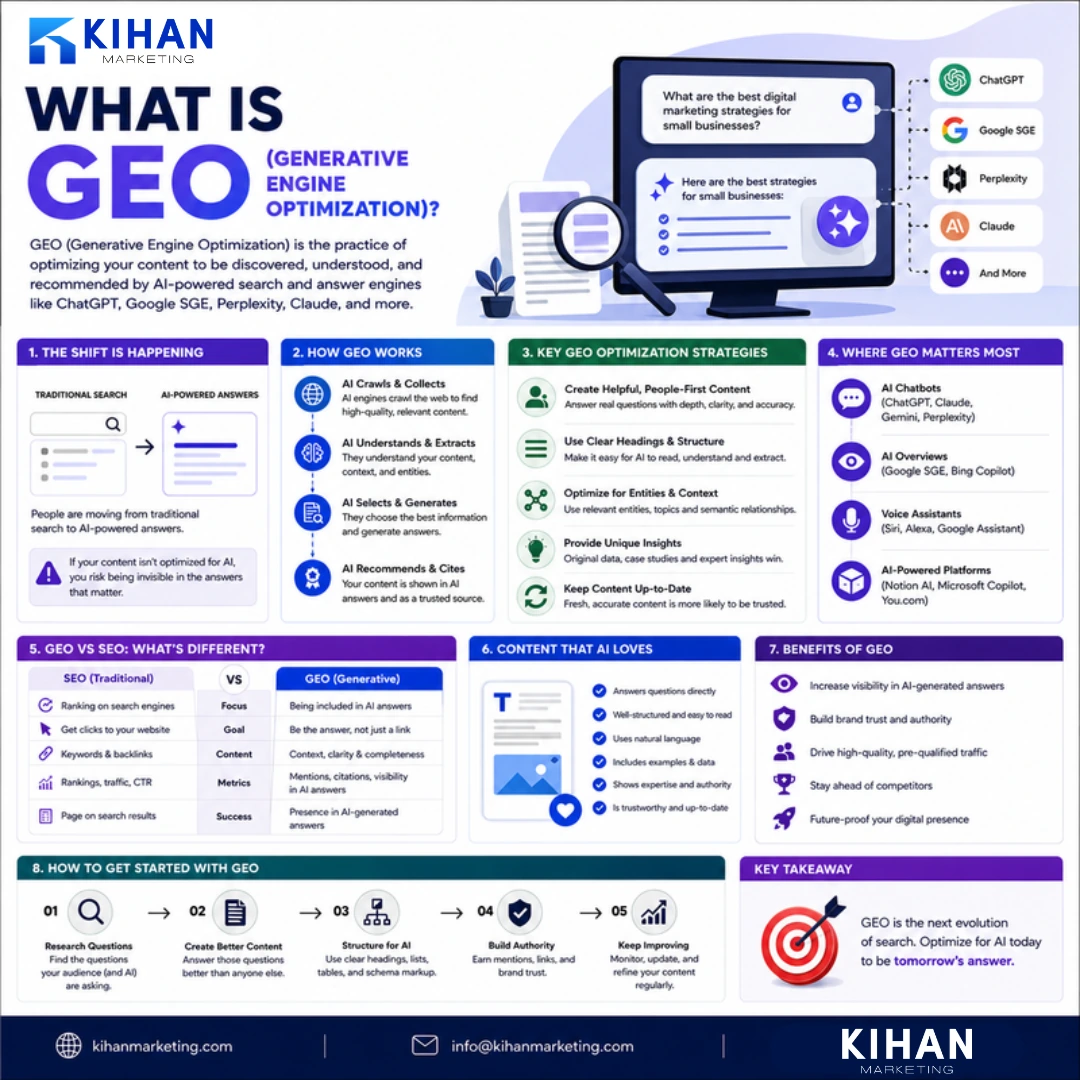
GEO is the work of getting your content quoted in AI answers from ChatGPT, Gemini, Perplexity and Google AI Overviews. SEO helps you rank. GEO helps you get cited. You do it by answering questions directly, using clear headings and FAQs, and backing claims with data and cited sources. You need both.
TL;DR
GEO (Generative Engine Optimization) means shaping your content so AI tools cite it in their answers. That covers ChatGPT, Gemini, Perplexity and Google AI Overviews. Unlike SEO, which aims to rank, GEO aims to get quoted. It works by making content easy for AI to lift out. Answer questions directly, and back your claims with data and sources.

What GEO Is
GEO, or Generative Engine Optimization, is shaping your content so AI assistants cite it when they answer questions. More and more people ask ChatGPT, Gemini and Perplexity instead of scrolling through search results. So getting quoted in those answers has become its own skill. It is related to traditional SEO, but it is not the same thing.
GEO vs SEO: Rank vs Get Cited
Traditional SEO aims to rank your page on Google. GEO aims to get your content quoted inside an AI answer, even if your page is not the number-one result. SEO is the base. GEO adds the clear structure and the signs of authority that make AI pick you as a source. In 2026 you need both.
How GEO Works
GEO works by writing for extraction. That means making each answer easy for an AI tool to lift out and quote. Answer the question directly, up top. Use clear headings and FAQs. Back your claims with statistics and cited sources. The Princeton GEO study found that citing sources and adding data can lift AI visibility by around 40%. For a step-by-step walkthrough, see how to get cited by AI.
Why GEO Matters Now
AI Overviews and AI assistants are a fast-growing way people find answers. Brands that shape their content to be cited get seen. Brands that skip it go missing from AI answers. Search is shifting from links to answers, and GEO is how you stay visible.
Related reading
- The AI marketing stack we actually use to run marketing for small businesses
- AI in marketing: a practical guide for small businesses
- How to Write Content That Gets Cited by AI (ChatGPT & Perplexity)
FAQ: GEO Explained
What is GEO in marketing?
It stands for Generative Engine Optimization. It is the practice of shaping content so AI answers cite it. Those answers come from tools like ChatGPT, Gemini, Perplexity and Google AI Overviews.
What is the difference between GEO and SEO?
SEO aims to rank your page. GEO aims to get your content quoted inside an AI answer. SEO is the base that GEO builds on.
How do I optimize for GEO?
Answer questions directly. Give your content clear headings and FAQs. Back your claims with statistics and cited sources.
Is GEO worth it in 2026?
Yes. AI Overviews now appear in about 45% of searches. So getting cited in AI answers is more and more where visibility lives.
What is the difference between GEO and AEO?
The two overlap heavily. AEO stands for Answer Engine Optimization. Both aim to make your content the source an answer is built from, not just one link in a list. So the work is largely the same, and the steps under How GEO Works serve both. The label you choose matters far less than how the page is written.
Do I need special tools for generative engine optimization?
No. GEO is mostly about how you write and lay out a page, not about software. The steps under How GEO Works need only your own site. To check your progress, ask ChatGPT, Gemini and Perplexity the questions your customers ask. Then note whose content they cite, and whether any of it is yours.
How much does GEO cost?
Three things move the cost of GEO: how many pages need rework, how much content lacks direct answers or sources, and how strong your SEO already is. GEO builds on SEO, so a weak base means more work. The pricing page explains what shapes the work. Or start with a free marketing audit to see what your site needs.