

TL;DR
A marketing funnel is the path a stranger takes to become a customer. It is usually framed as four stages: awareness, interest, decision and action. It helps you see where people drop off, so you can fix the leak. For a small business, a simple funnel is: get found, capture the lead, follow up and close.
Map your funnel as four simple steps: get found, capture the lead, follow up and close. Then find the stage where people drop off and fix that leak first, instead of guessing. The leak is often a weak website. Fixing it turns more of the traffic you already have into customers.
What a Marketing Funnel Is
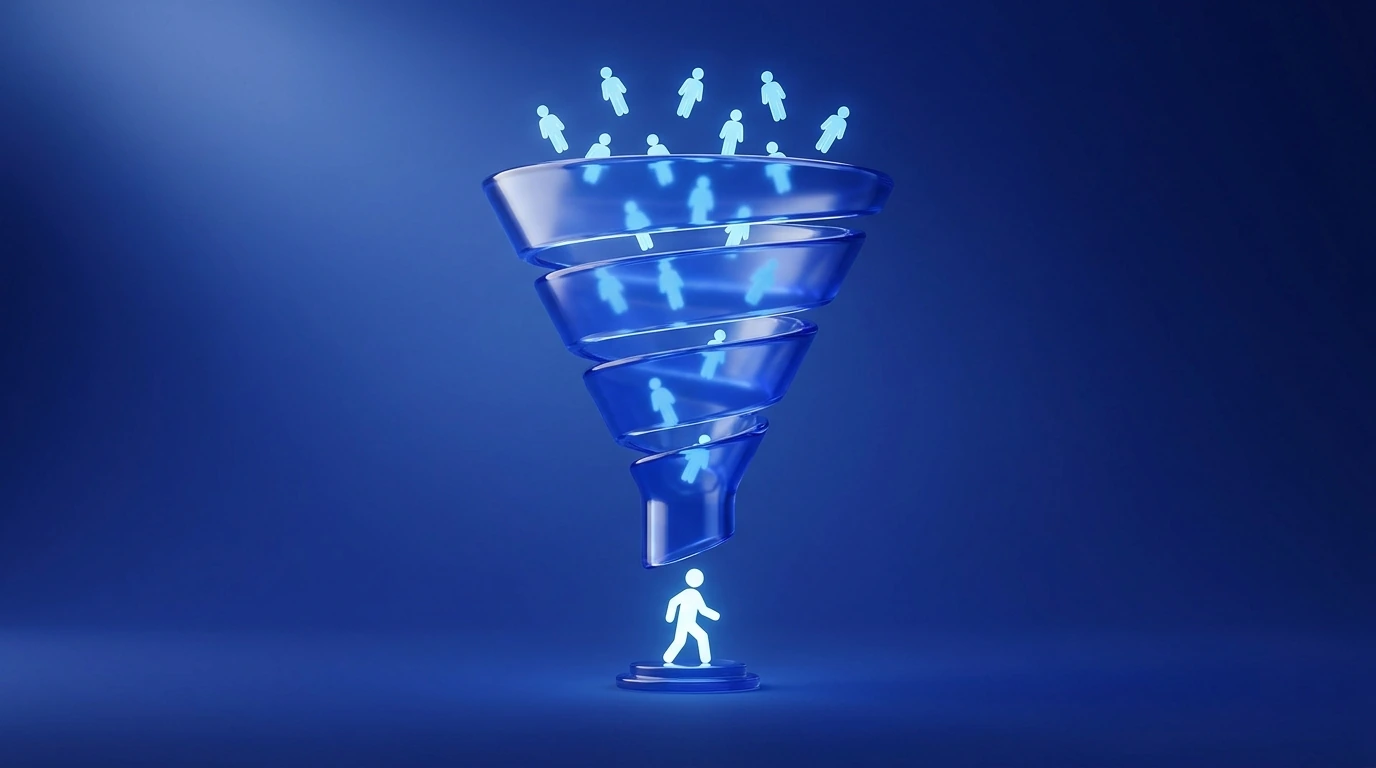
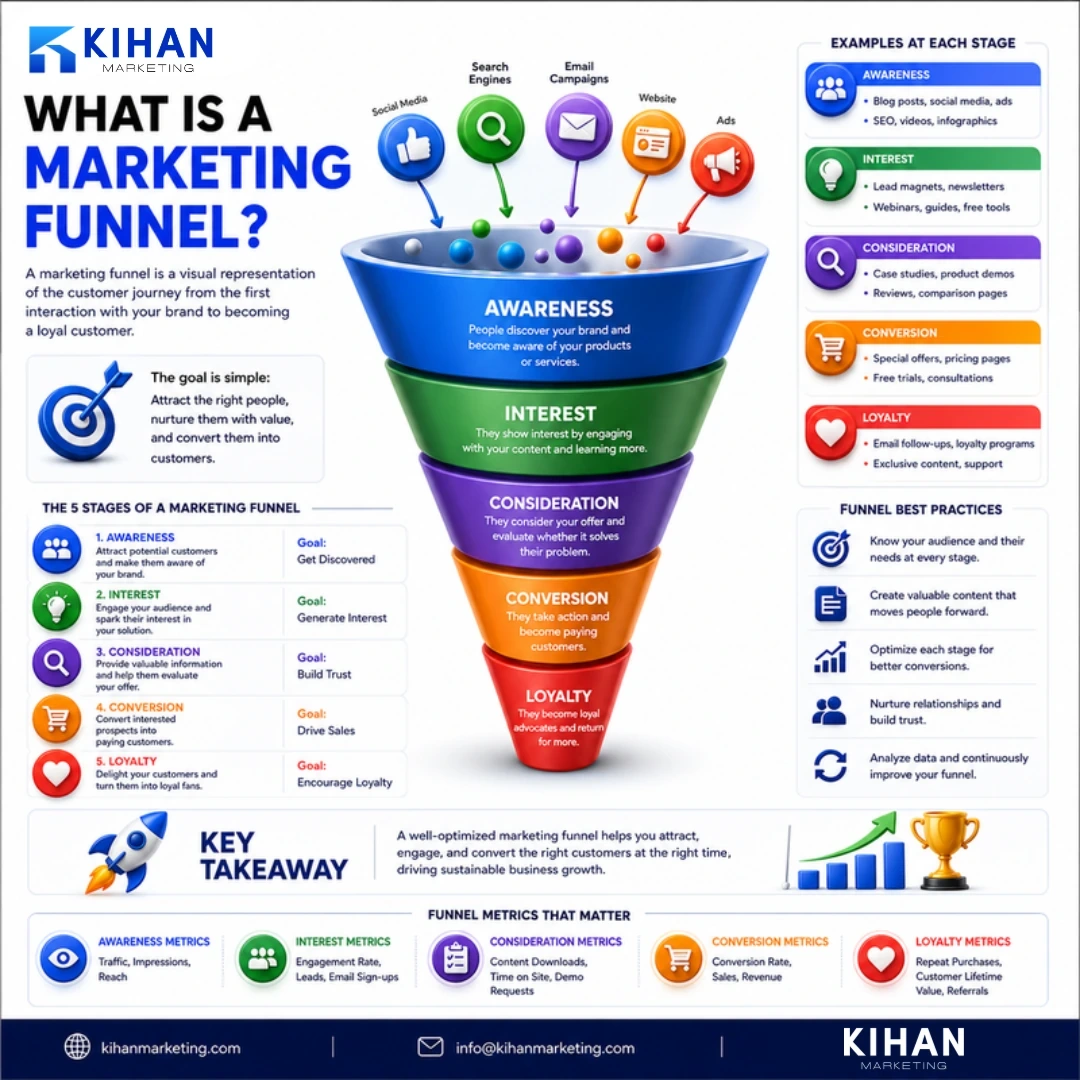
A marketing funnel maps the journey from stranger to customer. The classic stages are awareness, when people discover you, and interest, when they engage. Then comes decision, when they compare, and action, when they buy.
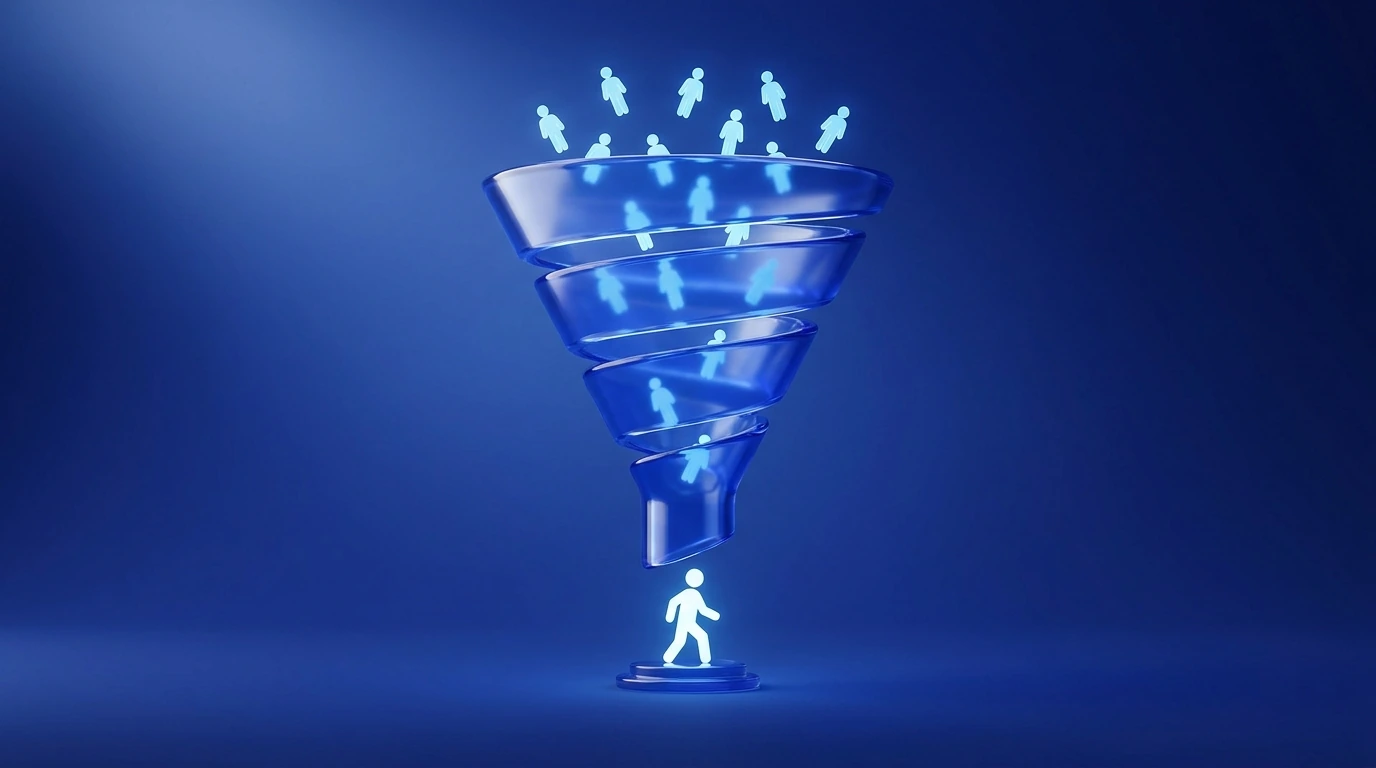
It is called a funnel because more people enter at the top than come out the bottom. That is normal.
Why Funnels Matter
The funnel shows you where people drop off. Seeing each stage lets you fix the specific leak instead of guessing. That way, more of the traffic you already have turns into customers.
Say lots of people visit your site, but few get in touch. The leak is between interest and decision, and a weak website is often the cause. That is the part to fix first.
The Simple Small-Business Funnel
You do not need a complex funnel. For most small businesses, it is four steps:
- Get found, through search and ads.
- Capture the lead, with a website built to convert.
- Follow up, by email, text message or a quick callback.
- Close the sale.
Conversion-focused website development is what keeps the middle of the funnel from leaking.
Map Channels to Stages
Each stage has its own channels. SEO and ads bring awareness. Your website and reviews carry people through interest and decision. Follow-up turns them into action.
Mapping channels to your marketing funnel stages shows the gaps. For example, you may have plenty of awareness but no follow-up. Strong lead generation connects every stage, so people do not fall through.
Related reading
- What Is Programmatic SEO and Should Your Business Use It?
- Seattle Single-Family Lots Can Now Hold 4 Units, Most Owners Don’t Know
- Small Business SEO: 12 Practices to Outrank Bigger Competitors
FAQ: Marketing Funnels
What is a marketing funnel?
It is the path a stranger takes to become a customer, usually awareness, interest, decision and action. It helps you find and fix the spot where people drop off.
What are the stages of a marketing funnel?
Awareness, interest, decision and action, from top to bottom. More people enter the top than come out the bottom.
Why is a marketing funnel important?
It shows where people drop off, so you can fix that specific leak. Then more of the traffic you already have turns into customers.
What is a simple funnel for a small business?
Get found, capture the lead, follow up and close. Those four steps map to your channels.
What is the difference between a marketing funnel and a sales funnel?
The two terms overlap, and many people use them for the same thing. In this guide, the marketing funnel covers the whole path, from the first time someone finds you to the moment they buy. The sales side is the bottom of that path: the follow-up and the close.
What is the awareness stage of a marketing funnel?
Awareness is the top of the funnel, where people first discover your business. For a small business, that usually means being found in search or seeing your ads. It is the widest stage, because more people enter here than will ever buy. Awareness still needs follow-up lower down to turn into customers.
What is an example of a marketing funnel?
Picture a local business. Someone searches, finds the business and visits its website. The site is built to convert, so they fill in a form. The business calls back quickly, answers their questions and books the job. That is get found, capture the lead, follow up and close, in one short path.
How do you build a marketing funnel?
Start by writing down how people find you, how they contact you and what happens next. Match each step to a channel: search and ads, your website, then follow-up. Look for the gap, such as leads that never get a callback. Fix that gap first, so prospects do not fall through.
On this page