

What is marketing? The simplest marketing definition is this. A business finds out what people need and builds something that meets that need. Then it tells the right people about it in a way that gets them to act: a call, a booking, or a sale.
Marketing is not just ads or social media. It is the whole system that links a business to the people who need what it sells. If you run a small business, the textbook version matters less than the result. Marketing that does not bring in leads is not working.
Marketing is every step that takes a stranger from finding you to buying from you. Ads are one piece of it. Pricing, your website, your reviews and what shows up when someone searches your name are part of it too. Judge each piece by one test: did it bring in a real lead at a cost you can afford.
What Is the Definition of Marketing?
Marketing is what a business does to learn what people want, make it, tell them about it, and deliver it. In return the business gets something back, usually money, loyalty, or a referral. It covers a lot. Working out what people want is part of it. So is pricing a service, and so is getting the right message to the right person at the right time.
The American Marketing Association puts it this way: “the activity, set of institutions, and processes for creating, communicating, delivering, and exchanging offerings that have value for customers, clients, partners, and society at large.”
That is the textbook version. For a small business owner, marketing is simpler than that sounds.
The Simple, Practical Version
Marketing is how people find out you exist, come to trust you, and buy from you instead of a rival.
That is it. Each tactic exists to move a stranger along that path: awareness, trust, action. That goes for a Google ad, a blog post, and a Google Business Profile listing alike.
A law firm does not need a textbook definition. It needs someone to search “personal injury lawyer near me,” find the firm’s website, and call. That whole chain, from the search to the phone call, is marketing.
- Awareness. Getting found when someone searches or scrolls.
- Trust. Showing proof through reviews, content, and design that you are worth trusting.
- Action. Making it easy to call, book, or buy right now.
Why the Definition Gets Confused
Most owners think marketing means ads or social media. That is because those are the parts you can see. But ads are only one piece of the marketing mix. Social media is one channel out of many.
Marketing also covers your pricing and how a product is packaged. It covers what your website says and how fast a page loads. It even covers what shows up when someone searches your business name. Treating it as just “posting online” is why so many small businesses spend money and see no leads.
Marketing is not what you say about your business. It is what makes the right customer choose you before they ever talk to you.
The 4 Ps: The Core Components of Marketing
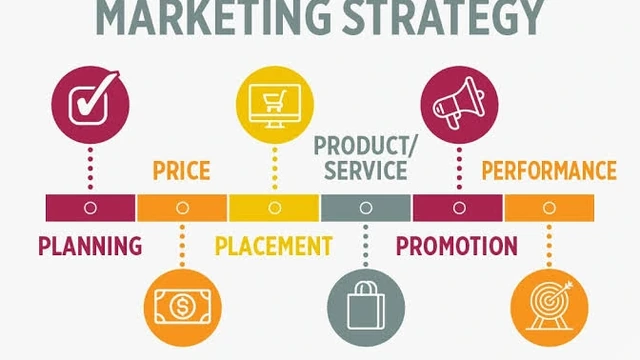
The 4 Ps of marketing are product, price, place, and promotion. They are the four basic levers each business adjusts to reach people and turn them into buyers. The framework is decades old and still taught today. When people ask what the building blocks of marketing are, this is often what they mean. It matters because most companies only pull the promotion lever and ignore the other three.
Product and Price
Product is what you really offer: a roof repair, a dental cleaning, or a property management contract. Price is what you charge for it. Both need to match what your target customer expects and can afford.
A med spa that offers Botox needs to know what rivals charge in its market, and set its price to fit. Pricing is a marketing choice, not just a money choice. Get the product or the price wrong, and no amount of ads will fix it.
Place and Promotion
Place is where and how people can get to your product or service. That includes your physical location, your website, and platforms like Google Maps. Promotion is all the ways you get your value across, from SEO and paid ads to content marketing and email.
Kihan Marketing works with property managers, real estate firms, roofers and med spas. For most of them, place more and more means showing up on Google Maps and in local search, not just having a storefront. That is why Google Business Profile optimization is now one of the strongest marketing moves a local business can make.
- Product-market fit. Make sure your service solves a real, clear problem for your target customer.
- Competitive pricing. Find out what rivals in your city charge before you set your rates.
- Local visibility. Put being found on Google Maps and in local search first.
- Consistent promotion. Run paid and organic channels together instead of leaning on one alone.
| Term | What It Actually Means | Example for a Local Business |
|---|---|---|
| Marketing | The full process of researching customers, positioning your business, and delivering value across every touchpoint | Building a brand, optimizing your Google Business Profile, running SEO, and shaping your service offer around what customers want |
| Advertising | One paid channel within marketing used to get attention and drive traffic | Running Google Ads or Facebook ads for a limited-time promotion |
| Sales | The direct exchange that converts an interested prospect into a paying customer | A dental office front desk closing a new patient after they call from a Google ad |
| Branding | How your business is perceived, built through consistent visual identity and messaging | A roofing company’s logo, color scheme, and reputation for showing up on time |
Types of Marketing Every Small Business Should Know
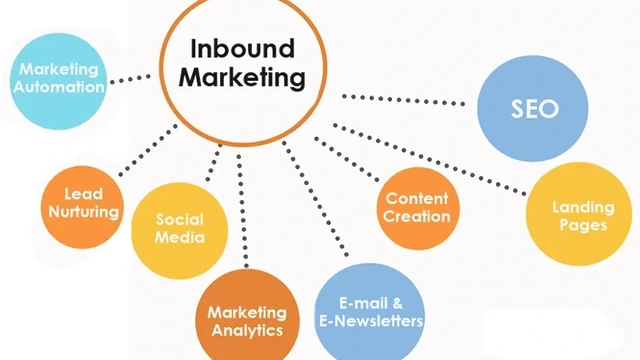
The main types of marketing are digital marketing, content marketing, social media marketing, search engine marketing, and traditional marketing. Most small companies need a mix of several, not just one. A simpler way to split them is by approach: product-based, service-based, relationship-based, and digital. Know which types fit you. That keeps you from wasting money on channels that do not match how your customers search and buy.
Digital Marketing
Digital marketing is the online side: search engine optimization (SEO), paid ads, email, and social media. For a real estate agent or a home services company, this is often where most leads come from today. Most people start their search for a service on Google or social media before they call anyone.
Within digital marketing, SEO and paid ads do different jobs. SEO builds a place in organic search results that lasts and grows over time. Google Ads management and social media advertising bring faster traffic that you pay for directly.
- Search engine optimization. Ranking in organic results so people find you without paying per click.
- Paid search and social ads. Buying reach right away on Google, Facebook, and Instagram.
- Email marketing. Staying in touch with past customers and leads who have not booked yet.
- Content marketing. Publishing helpful articles, guides, and videos that build trust and rank in search.
Relationship and Reputation Marketing
Relationship marketing is about keeping the customers you have and turning them into repeat work and referrals. That is often cheaper than winning new ones. For service firms like dental practices or property managers, it overlaps a lot with reputation management. Reviews and word of mouth shape whether a new lead trusts you enough to book.
A five-star Google review carries more weight with a would-be buyer than almost any ad copy. It comes from someone who already used the service.
Traditional and Local Marketing
Traditional marketing means direct mail, print ads, radio, local sponsorships, and signage. It still matters for home services and local shops in certain neighborhoods. Local marketing blends those tactics with digital ones. It leans on hyper-local SEO, a real local presence, and being the clear choice in one service area.
Take a roofing company that covers three counties. It gains from local SEO paired with branded trucks and sponsorships around town. Local trust still closes deals that ads alone cannot.
Marketing Definition by Well-Known Authors and Organizations
Philip Kotler is often called the father of modern marketing. He defines marketing this way: “the science and art of exploring, creating, and delivering value to satisfy the needs of a target market at a profit.”
Other major bodies and sources word it their own way. They all come back to the same core idea: find out what people need, and deliver it at a profit.
How the Definitions Compare
The American Marketing Association’s version stresses creating, communicating, delivering, and exchanging value for customers and society at large. Merriam-Webster keeps it simpler: the process of promoting and selling products or services, including market research and advertising.
Investopedia and other business sources frame marketing as a core business function. They tie it straight to sales and profit, not just communication. Notice that none of these versions mention likes, followers, or impressions. Those were never the point.
- Kotler’s definition. Value delivered to a target market at a profit.
- AMA’s definition. The full process, from creating value to exchanging it.
- Merriam-Webster’s definition. The hands-on work of promotion and selling.
- Investopedia’s framing. Marketing as a core business strategy tied to growth.
What This Means for a Business Owner
Each textbook definition of marketing comes down to the same test: did this work help a real customer find you, trust you, and buy from you. If a tactic cannot pass that test, it does not matter which famous definition backs it.
This is why Kihan Marketing measures success in leads and revenue, not impressions or clicks. A textbook version helps you understand the field. An owner needs one that ties straight to the phone ringing or the calendar filling up.
How Marketing Actually Drives Leads and Revenue
Marketing drives leads and revenue when the right channels are joined into one system instead of run on their own. Think of a business that runs Facebook ads but has a slow website that is not built to convert. Or one that ranks on Google but has no way to capture the leads that click through. Both leak money at each step. The goal is not more traffic. It is more qualified leads at a lower cost.
Connecting the Full Funnel
The path to a lead often starts with being seen, through SEO, paid ads, or social media. It ends at a conversion point: a phone call, a form, or a booking. Each step in between matters. Page speed, clear calls to action, and trust signals like reviews all decide whether a visitor converts or leaves.
A property manager might rank on Google for “apartment management near me” through local SEO. But if the site takes six seconds to load, most of that traffic leaves before it ever sees a contact form. That is why site speed is treated as a marketing job, not just a technical one.
- Visibility. SEO, paid ads, and social media get people to notice you.
- Trust. Reviews, design, and content convince them they can trust you.
- Conversion. A fast website and a clear CTA turn interest into a lead.
- Follow-up. A CRM or a reputation management process turns leads into buyers.
Why Cost-Per-Lead Matters More Than Impressions
Cost-per-lead tells you what it really costs to get one real call or form fill. That is a far more useful number than impressions or reach. A campaign that gets 50,000 impressions but zero calls has produced no value, however good it looks in a report.
Three things move cost-per-lead the right way: better targeting, tighter ad copy, and landing pages built to convert rather than just to get noticed. That works better than chasing a new channel or tactic. The gain often comes from pairing paid ads with organic SEO, so you are not paying for each click you get.
Judge Spend by Return
Judge marketing spend the way you judge any other investment: by return, not by activity. If a campaign is not producing leads within a fair window, the numbers should show it plainly. Then you can make a change.
Building Your Own Marketing Definition That Works
The best working definition of marketing for your business is simple. It is whatever mix of work keeps turning strangers into paying customers at a cost you can afford. That looks different for a dental office than for a roofing company. The customer journey, the price point, and the buying cycle all differ.
Start With Where Your Customers Already Search
A home services company like HVAC or plumbing often gets calls from people searching Google in a moment of urgency. That puts local SEO and Google Ads first. A med spa or a real estate agent often sees a longer research phase. There, social media content design and content marketing get your name known before anyone reaches out.
Before you pick a channel, map out how your last ten customers really found you. Do not guess based on what a rival is doing.
Match the Channel to the Buying Behavior
Search-based companies need strong SEO and a website that loads fast and converts. A customer only clicks a couple of results before deciding. Visual, trust-based fields like med spas or real estate are different. They gain more from Instagram ads and steady social media marketing that builds a name over time.
Most companies need organic and paid working together. Organic SEO builds long-term equity. Paid ads fill the gap while that equity is being built.
- Urgent-need businesses. Put local SEO, Google Ads, and a fast-loading website first.
- Consideration-based businesses. Put content marketing, social media, and reputation management first.
- Repeat-service businesses. Put email and relationship marketing first to keep the customers you have.
- Every business. Needs a Google Business Profile that is fully set up and kept active.
Track the Number That Actually Matters
Pick one number: cost-per-lead, or revenue per marketing dollar spent. Hold each channel to it. Vanity metrics like impressions, follower counts, and website traffic feel good in a report but do not pay the bills.
If you track cost-per-lead steadily, you can spot a channel that is falling short and shift budget fast. You do not have to wait for the end of a wasted quarter to find out.
Free Marketing AuditReads your Google Search Console and shows which rankings are close to page one.Frequently Asked Questions
What is the best definition of marketing?
The best working definition of marketing is this: find out what people need, build an offer that meets it, and get its value across so that they act. Textbook definitions from the American Marketing Association and Philip Kotler expand on this. The core idea stays the same: marketing links a business to the customers who need it.
What are the 4 types of marketing?
The 4 types of marketing are often listed as product-based, service-based, relationship, and digital marketing. In practice, most companies use a blend: digital marketing, content marketing, paid ads, and review-driven relationship marketing, rather than just one type.
What are the 4 basics of marketing?
The 4 basics of marketing, often called the 4 Ps, are product, price, place, and promotion. Product is what you offer. Price is what you charge. Place is where people can get it. Promotion is how you get its value across.
What is marketing in your own words?
In plain terms, marketing is all a business does to get the right customer to notice it, trust it, and buy from it. It includes ads, but it also covers pricing, how your website feels to use, reviews, and how you show up in search results.
What is the marketing definition by Philip Kotler?
Kotler’s definition of marketing is this: the science and art of exploring, creating, and delivering value to satisfy the needs of a target market at a profit. It is widely taught because it ties marketing straight to profit, not just promotion.
How is marketing different from advertising?
Marketing is the whole process of learning what customers want, setting your business apart, and delivering value. Advertising is one paid channel inside it, used to get attention. A business can market itself through SEO, reviews, and website design without ever running a paid ad.
How is marketing different from sales?
Marketing gets you noticed and trusted, so a prospect is ready to buy. Sales is the direct conversation that closes the deal. In a small business, marketing might get someone to call. Sales is the talk that turns that call into a paying customer.
Why does marketing matter for a small business specifically?
Marketing matters for a small business because it is usually the only way to compete with bigger firms. Those firms have bigger budgets but less local relevance. A well-targeted local SEO and reputation strategy can beat a national brand’s generic ads in one city or service area.
What is the marketing concept?
The marketing concept is the idea that a business grows by finding out what people need and meeting it. That is the opposite of pushing what it already sells. It is the thinking behind the Kotler and AMA definitions above. Start with the customer, shape the offer around them, then tell them about it.
What is a marketing strategy?
A marketing strategy is your plan for turning strangers into customers at a cost you can afford. It names who you want to reach, where they already search, which channels you will use, and the one number you will track. The definition tells you what marketing is. The strategy tells you what you will do about it.
What is a marketing channel?
A marketing channel is one route to your customers. Google search, Google Ads, Google Maps, social media, email, direct mail, and referrals are all channels. Each one fits a different buying habit. Urgent needs favor search and ads. Longer decisions favor content and social media. Most businesses need a few channels working together, not one on its own.
What is marketing research?
Marketing research means finding out what people want, how they search, and what rivals charge before you spend on promotion. For a small business it can be simple. Before you pick a channel, look at how your last ten customers found you. Before you set rates, check what similar businesses in your city charge.
Marketing Is a System, Not a Single Tactic
Marketing is not one thing you do. It is the full system that links a business to the customers who need it. It runs from the first Google search to the final call or booking. Whether you lean on the AMA’s formal definition or Kotler’s profit-focused one, the real test is the same: does this work turn a stranger into a customer.
Maybe your current marketing cannot answer that clearly. Maybe you cannot tell which channel is really producing leads. Either way, it is time for an outside look at what is working and what is not.
Want to know where your site stands? Ask for a free marketing audit.