

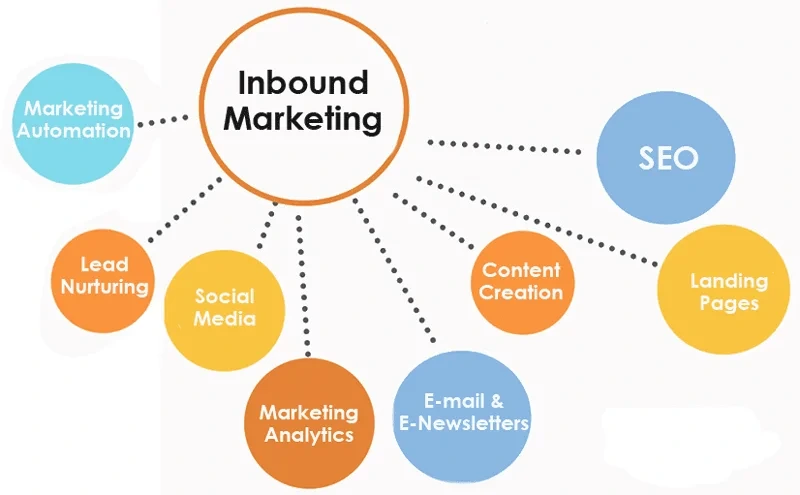
Inbound marketing is how you attract customers by publishing helpful content, ranking in search, and building trust. It is the reverse of interrupting people with ads they did not ask for. It works because buyers do their research online before they ever talk to a sales rep. The companies that show up during that research win the deal. Done right, it lowers cost per lead over time. The content and rankings keep working long after you publish them.
Inbound marketing works when you answer the exact questions your customers already search, then make sure those answers rank. Build the technical and local base first, publish steadily, and count leads rather than clicks. Pair it with paid ads early while the rankings build. Over time it lowers your cost per lead, and it keeps building on itself.
- Publish content that answers the exact questions your customers search before they call.
- Build your search rankings so leads find you without a paid click every time.
- Stop relying only on outbound ads that stop producing the moment you stop paying for them.
- Run a content and SEO system that builds on itself, so old blog posts turn into a steady lead source months later.
- Grow lead volume without growing ad spend by pairing inbound content with local SEO and reputation management.
What Is Inbound Marketing
Inbound marketing attracts buyers by creating useful content made for them. It does not push ads at people who are not looking. It relies on search engines, social platforms, and referrals. Those bring the right people to your business at the moment they are looking for an answer. HubSpot made the term popular in the mid 2000s. The idea behind it, earn attention instead of buying it, has been core to good marketing for far longer.
The Basic Definition
Inbound marketing means the customer finds you, not the other way around. A simple example shows the difference.
Take a property management company. Its guide on “how to screen tenants in Seattle” answers a question a real prospect is typing into Google. A billboard for the same company interrupts someone driving to work. The guide shows up just when someone is looking for that help. That makes it far more likely to turn into a lead.
- Content first. Blog posts, videos, guides, and tools that solve a real problem.
- Search visibility. Ranking on Google so people find that content without paid clicks.
- Permission based. The prospect chooses to engage. No one interrupts them.
- Compounding value. A well-built page can bring in leads for years after it goes live.
Why It Matters More in 2026
Buyers do more research on their own than ever before. They read reviews, compare options, and narrow their choices before they contact a single business. So the companies that show up during that research get the first look, and often the only look. That means showing up on Google, on Google Maps, and in AI Overviews.
We see this often with med spa clients. By the time someone calls, they have often checked reviews and skimmed at least one page on the business’s website. If that page did not exist or did not rank, the call never happens.
- AI Overviews and chat-based search now show answers directly. Content has to be built to get quoted, not just ranked.
- Google Business Profile optimization and reviews now shape buying choices before a website visit ever happens.
- Voice search optimization matters more as people ask full questions instead of typing keywords.
Outbound marketing rents attention. Inbound marketing owns it.
Inbound vs Outbound Marketing
Inbound marketing pulls customers in through content and search. Outbound marketing pushes a message out to people whether they asked for it or not. Neither one is better by nature. They solve different problems. Most small businesses that grow steadily use both, in a mix that depends on how fast they need leads.
What Outbound Still Does Well
Outbound channels are cold calls, direct mail, TV, radio, and paid display. They still help when you need leads fast, or when you launch something new with no search demand yet. A dental practice opening a second location has no reviews and no local rankings yet. Paid ads and direct mail can fill that gap while the SEO builds up.
The tradeoff is that outbound costs keep flowing. Stop the ad spend and the leads usually stop within days.
- Immediate. It can bring leads within the first week of launch.
- Controllable volume. You can dial spend up or down on demand.
- No compounding. The value disappears when the budget does.
Where Inbound Wins Long Term
Inbound marketing tends to win on cost per lead over a 6 to 12 month window. The content and rankings keep working without more spend. A roofing company that ranks for “roof replacement cost [city]” keeps getting free clicks on that page every month, long after the writing and SEO work is done.
The catch is patience. Inbound rarely brings a flood of leads in week one. It builds, then it builds on itself. That is why so many companies run inbound and paid ads side by side instead of picking one.
- SEO and content marketing are the two biggest levers for inbound growth.
- Paid channels like Google Ads and social media advertising can bridge the gap while search traffic builds.
- Reputation management supports both, since reviews affect rankings and conversion rate at the same time.
| Factor | Inbound Marketing | Outbound Marketing |
|---|---|---|
| How it reaches people | Buyer searches, finds your content or site | You interrupt with an ad, call, or mailer |
| Cost over time | Drops as content and rankings build up | Stays flat or rises with ad costs |
| Speed to results | Slower start, often 3 to 6 months | Fast, leads can start same week |
| Trust level | Higher, buyer already researched you | Lower, buyer has no context yet |
| Best for | Long-term lead flow, local SEO, content | Immediate pipeline gaps, promotions, launches |
| Example channels | Blog posts, SEO, Google Business Profile, video | Cold calls, direct mail, TV, display ads |
The Core Stages of Inbound Marketing
Inbound marketing usually moves a prospect through three stages: attract, engage, and delight. Each stage has a different job. Skip one and you often get leaky, lower quality leads, even if the traffic numbers look fine.
Attract: Get the Right People to Notice You
Attract means showing up where your ideal customer is searching or scrolling. Blog content, local SEO, and social media do the heavy lifting here. The goal is not traffic for its own sake. It is traffic from people who could become customers.
A law firm that wants personal injury leads does not need broad legal traffic. It needs the people typing “car accident lawyer near me” or “how much is my car accident case worth” into Google. Ranking for the wrong keywords just inflates a vanity metric.
- Target buyer-intent keywords, not broad topics with no buying intent.
- Fill out your Google Business Profile, since local pack results often beat the regular links for service businesses.
- Design your social content so attract-stage posts are easy to spot and share.
Engage: Turn Visitors Into Leads
Engage is where a visitor takes an action: filling out a form, calling, booking a consult, or grabbing a guide. This stage lives or dies on page speed, clear calls to action, and trust signals like reviews and case studies.
A slow site kills engagement before the content even gets a chance to work. Agencies that measure results in leads, not page load scores alone, treat site speed as a lead issue. It is not just a technical one.
- One clear call to action per page. Do not make visitors choose between five buttons.
- Fast load times, above all on mobile, where most local searches happen.
- Trust elements: reviews, before/after photos, license badges, near the point of conversion.
Delight: Keep Customers and Earn Referrals
Delight is the stage most companies skip, and it is often the cheapest lead source there is. A happy customer who leaves a five-star review or refers a neighbor costs nothing to win. Yet most companies never set up a routine to ask for either.
This is where reputation management and simple follow-up messages pay off.
A med spa texts a satisfaction survey after each visit. Happy replies get routed to a review request. Over time that builds a review base. Those reviews then feed both local SEO and the conversion rate for each future visitor.
- Have review requests go out on their own after the job is done, instead of relying on memory.
- Reply to each review, good or bad. Replies are a visible trust signal.
- Turn happy customers into case studies or testimonials for future content.
Inbound Marketing Examples by Industry
Inbound marketing looks different in each industry, but the pattern is the same. Answer the question your buyer is already asking, in the format they prefer. Here is how that plays out in a few fields.
Home Services and Real Estate
An HVAC company that ranks for “AC not cooling but running” reaches homeowners who are trying to fix a problem right now. That is a much warmer lead than someone who just saw a truck wrap. A real estate agent who publishes market updates for each neighborhood builds trust with buyers still in the research phase. That can be months before they are ready to tour a home.
Both examples rely on local SEO and content that matches one clear question people search. They skip broad “best HVAC company” copy, which every rival is also trying to rank for.
- Roofing: a storm damage guide published right after a hailstorm catches the spike in demand.
- Plumbing: an FAQ page on “why is my water bill so high” attracts leak-related service calls.
- Real estate: neighborhood guides and school district comparisons reach buyers moving to the area early.
Property Management and Multifamily
Property management companies win inbound leads by answering landlord questions: how long an eviction takes, what rent to charge, who handles repairs. Those searches come from owners deciding whether to self-manage or hire help. Apartment operators use the same tactic aimed at renters. They publish neighborhood guides and amenity lists that show up when someone searches “apartments near [landmark]” on Google.
A complete Google Business Profile matters a lot here too. Showing in the local pack often drives more tour bookings than the website itself.
- Blog content aimed at landlords builds trust with owners comparing management companies.
- Local content aimed at renters catches early apartment searches.
- Video walkthroughs support both the attract and engage stages at once.
Med Spas, Dental, and Law Firms
Med spas and dental practices gain from content that removes doubt: what a procedure involves, how long recovery takes, and clear pricing. These searches happen before someone is ready to book. Law firms see the same pattern with content on case outcomes and process. Legal choices are high-stakes, so people research hard before calling anyone.
Across all three, reviews and a strong Google Business Profile often matter as much as the website itself. Local pack rankings often sit above the regular results for these searches.
- Med spa: “how long does Botox last” content attracts research traffic from people who have not booked yet.
- Dental: “does insurance cover Invisalign” pages catch cost-sensitive searchers.
- Law firm: “how long does a car accident settlement take” builds trust before the free consultation call.
Is Inbound Marketing Worth It
Yes, inbound marketing is worth it for most small businesses. It lowers cost per lead over time and builds an asset, your content and rankings, that keeps bringing in traffic without ongoing ad spend. It is not instant, and it is not free. But the return often beats paid-only plans once the base is built.
What the Payoff Actually Looks Like
The real payoff is a lower cost per lead as the months pass, not a sudden spike in week one. Ranking content pulls in search traffic that used to need a paid click. So the cost of each new lead falls without the ad budget rising.
That kind of result depends on steady work: publishing on a schedule, fixing technical SEO, and building local relevance. It does not come from a single blog post and hope.
- Cost per lead often drops as rankings mature, over months, not weeks.
- Content keeps working after it goes live, unlike a paid ad that stops the moment spend stops.
- Pairing inbound with Google Ads smooths out the slow start while SEO builds.
When Inbound Alone Isn’t Enough
Inbound marketing struggles when a business needs leads right away. It also struggles when there is no online presence yet, or in a crowded niche where ranking takes longer than the business can wait. In those cases, pair inbound with paid channels like Facebook Ads or Instagram ads. They fill the gap while content and SEO catch up.
This is why we rarely recommend an inbound-only or outbound-only approach. Most small businesses need a blend: weighted toward paid early on, and toward inbound as it matures.
- New businesses with zero domain authority need paid support in month one through six.
- Highly seasonal businesses often need paid ads to catch spikes that inbound content cannot react to fast enough.
- Very crowded local markets sometimes need both channels running at the same time, long term.
How to Build an Inbound Marketing Strategy
A working inbound marketing strategy starts with the exact questions your buyers search. Then you build content, technical SEO, and conversion paths around those questions. It is a system, not a single campaign. It needs upkeep to keep working as search habits and algorithms shift.
Step 1: Map the Questions Your Buyers Actually Ask
Start by listing the real questions people ask before they contact your business. Pull them from sales calls, front desk staff, and search data, not guesses. A dental office might find that “how much does a root canal cost without insurance” is searched all the time in its area. That is a clear content target.
This step matters more than most owners think. Content built around the wrong questions attracts traffic that never converts.
- Pull real questions from staff, sales calls, and existing customer emails.
- Check what rivals rank for with basic keyword research tools.
- Put questions with clear buying intent ahead of broad general topics.
Step 2: Build the Technical and Local Foundation
Content only works if the site can rank at all. That means technical SEO, fast load times, and a claimed, complete Google Business Profile need to be in place first. A well-written blog post on a slow WordPress build with broken schema markup will lose to an average post on a fast, well-built site.
This is also where a website redesign is sometimes needed. Older sites often cannot support the technical SEO work needed to compete for local searches in 2026.
- Confirm mobile speed and core web vitals before you spend heavily on content.
- Add schema markup so search engines and AI answer engines can read the page right.
- Claim and fill out your Google Business Profile for each service area.
Step 3: Publish, Promote, and Measure Leads, Not Clicks
Publish on a schedule. Promote each piece through social media and email. Track the leads it brings, not just traffic or rankings, since traffic without leads does not pay the bills. A blog post with modest traffic but a 5% form conversion rate can beat a viral post that never converts.
An inbound strategy needs room to adjust based on what brings leads and revenue, not vanity metrics like impressions.
- Track form fills, calls, and booked visits per page, not just sessions.
- Turn your top blog content into social posts and short video.
- Review results monthly. Cut or rewrite pages that get traffic but no leads.
Frequently Asked Questions
What is meant by inbound marketing?
Inbound marketing means attracting customers through helpful content, showing up in search, and useful experiences, instead of interrupting them with ads. The customer makes contact after finding value on their own, usually through a search engine, a social platform, or a referral.
What is inbound vs outbound marketing?
Inbound marketing pulls customers in through content and search. Outbound marketing pushes messages out through ads, cold calls, or direct mail, whether the person is looking or not. Inbound tends to cost less per lead over time. Outbound brings faster but less lasting results.
What is an example of inbound marketing?
One common example: a home services company writes a blog post that answers “how much does a water heater replacement cost” and ranks for it on Google. Homeowners then find the company while they research, before they ever see an ad.
Is inbound marketing worth it?
Yes. For most small businesses inbound marketing is worth it. It lowers cost per lead over months and creates content that keeps bringing in traffic without more ad spend. It works best when paired with some paid ads early on to cover the ramp-up period.
How long does inbound marketing take to work?
Most companies start seeing traffic and lead gains they can measure within 3 to 6 months. Stronger results build after 6 to 12 months of steady posting and technical SEO work. Timelines vary with the competition and how strong the site is now.
What’s the difference between inbound marketing and content marketing?
Content marketing is one of the main tools used inside inbound marketing. Inbound also includes SEO, social media, Google Business Profile work, and conversion rate work. Publishing content alone does not make people find it. Inbound strategy is what gets that content found and turned into leads.
Do small businesses really need inbound marketing, or is it just for big brands?
Small businesses often gain more from inbound marketing than large brands. Local search competition is usually lower, so it is easier and faster to rank for specific, high-intent local searches. A roofing company or med spa can often outrank national brands on local terms with focused content and local SEO.
Can inbound marketing work without a large content budget?
Yes. A focused plan that targets a handful of high-intent local keywords can produce leads without a large publishing volume. It needs solid technical SEO and a complete Google Business Profile behind it. Steady work and the right questions matter more than sheer content volume.
How much does inbound marketing cost?
It depends on the starting point. A site that loads fast now and has a claimed Google Business Profile needs less base work than one that needs a redesign. The number of questions you need to cover and how crowded your market is move the cost too. See the pricing page for how the work is scoped.
Is PPC inbound marketing?
No. Pay-per-click ads, including Google Ads, are a paid channel. You buy each click, and the leads stop when the spend stops. Inbound earns the visit through content, rankings, and reviews, so the value builds on itself. The two work well together: paid ads fill the gap early while rankings build.
Why is social media an important part of inbound marketing?
Because it is one of the places your buyers already scroll, which makes it part of the attract stage. It also gives each piece of content a second life. Promote each new post there, turn the ones that perform into short video, and design your posts so they are easy to spot and share.
Inbound Marketing Is a System, Not a One-Time Project
Inbound marketing works because it meets buyers where they already are: searching, comparing, and reading reviews, before they ever pick up the phone. The winners are not always the biggest. They are the ones that keep answering the right questions. They keep their site fast and technically sound. And they follow up on each lead the system brings in.
Want a clear read on where your inbound marketing stands right now? Get a free audit that covers your rankings, your site speed, and your Google Business Profile. It shows what is costing you leads today.
Want to know where your site stands? Ask for a free marketing audit.