

A small business marketing strategy is a written plan. It says who you sell to and what makes you different. It names the channels you will use to reach and convert them. It is not a list of tactics but the reasoning behind them. Small businesses that write one down and revisit it each quarter get more predictable leads than those that market on instinct alone.
Decide who you sell to, why they should pick you, and which two or three channels reach them. Write it down. Set goals in leads and cost per lead, not likes. Give it a budget with room to test. Then measure each channel on its own. Put the next spend where leads cost least.
- Get more qualified leads by defining one narrow audience instead of marketing to everyone.
- Write a plan that ties each channel, SEO, ads, social, and email, back to one clear positioning line.
- Stop spending on tactics before you have a strategy. Sequence matters more than volume.
- Use the 3 3 3 rule: three channels, three messages, and three offers, instead of spreading thin.
- Scale what works by tracking cost per lead and revenue per channel, not impressions or likes.
What Is a Marketing Strategy
A marketing strategy is a written plan. It names your target buyer and what makes you worth choosing. It sets the channels you will use to reach them. It sits above tactics like ads or social posts. Those are the execution, not the strategy. Without one, a small business chases whatever tactic worked for a rival. That is rarely what fits its own buyers and budget.
Strategy vs. Tactics: Why the Difference Matters
A strategy answers two things: who you are targeting, and why they should choose you. A tactic is the action you take to reach that person: a Google ad, an Instagram reel, a direct mail piece.
Businesses that skip straight to tactics tend to burn budget on channels that were never a fit. A roofing company chasing homeowners after a hailstorm needs one plan. A med spa that wants repeat cosmetic clients needs another. That holds even if both end up running Facebook ads.
- Positioning. The clear reason a buyer should pick you over the next five results on Google.
- Audience definition. Who you are targeting, down to their pain points and buying triggers, not just demographics.
- Channel selection. Which platforms your audience really uses, before you spend anything there.
Why a Written Strategy Outperforms Instinct-Based Marketing
Businesses with a written marketing plan report clearer priorities and faster decisions than those who work from memory or gut feel. That finding comes from widely cited research by CoSchedule and similar marketing benchmark studies. A written strategy makes you commit to a target audience and a budget before you spend.
A marketing strategy is not a list of tactics. It is the reason those tactics work.
The Main Types of Marketing Strategies
The main types are digital marketing, content marketing, social media marketing, local marketing, and inbound versus outbound marketing. Most small firms need a blend of two or three, not all five at once. Picking the wrong mix is the single biggest reason marketing budgets get wasted. The right mix depends on three things: your sales cycle, what a buyer is worth to you, and how your buyers search for you.
Digital Marketing Strategy
Digital marketing covers everything that happens on a screen: search engine optimization (SEO), paid search, paid social, and email. For most small firms in property management, dental, or home services, this is where most of the budget belongs. It can be measured down to each lead and what that lead cost.
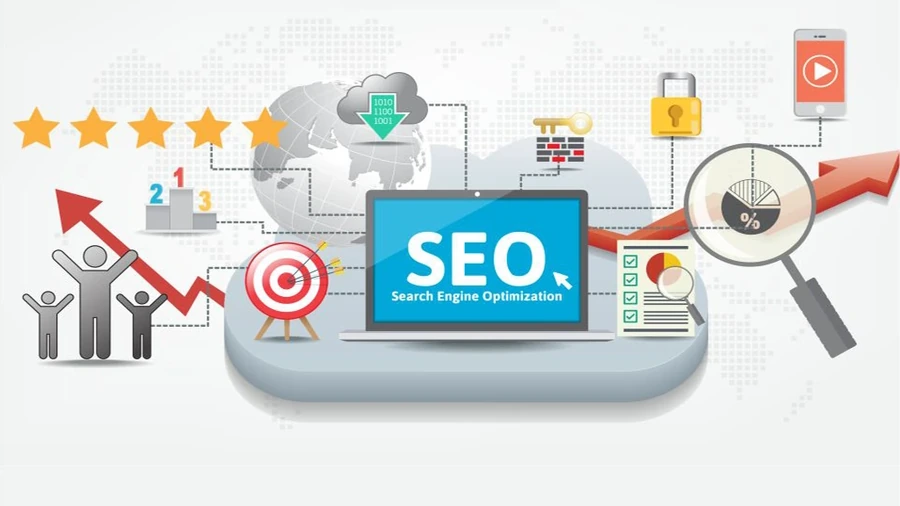
A solid digital marketing strategy for a small business often starts with SEO. That catches people already looking for your service. Then it layers in Google Ads or social ads to fill gaps in demand. Google Business Profile optimization is often the fastest win here. It directly affects whether you show up in local map results.
- Local SEO. Ranking in Google Maps and organic results for local searches, like “emergency plumber near me.”
- Paid search. Google Ads that put you in front of people searching right now. Ideal for high intent, high value services.
- Email marketing. A low cost way to stay in front of past leads and customers until they are ready to buy again.
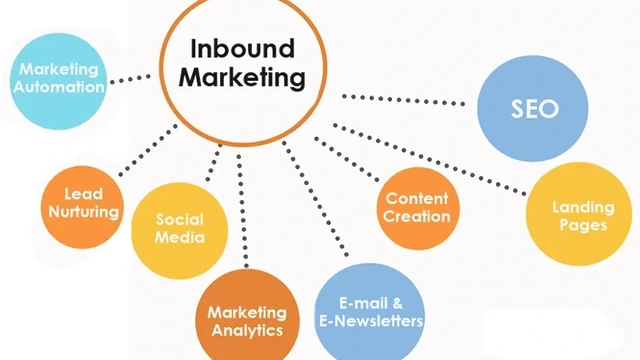
Content and Inbound Marketing Strategy
Content marketing means publishing helpful material: blog posts, guides, and videos that answer real questions your audience is searching for. It builds trust before the sale. Its value compounds over time, unlike paid ads that stop the moment you stop paying.
Law firms and med spas gain a lot here, because buyers research heavily before booking a consultation. A blog post that answers one specific legal or treatment question can rank for years. It keeps bringing leads long after it is published.
- Educational content. Guides and FAQs that answer the exact questions your buyers type into Google.
- Voice search optimization. Shaping content to answer the spoken questions people ask smart speakers and AI assistants.
- Case studies. Real results, like a specific before and after or a documented cost reduction. They build trust faster than vague claims.
Social Media and Outbound Marketing Strategy
Social media works best for being seen and trusted. For most local service firms it is usually not the main lead source on its own. It is where prospects check you out after finding you elsewhere. So steady social media management and strong content design matter more for trust than for direct volume.
Outbound tactics still have a place: cold outreach, direct mail, event sponsorships. They fit B2B fields like property management and commercial real estate, where relationships close deals.
- Instagram advertising. A strong fit for visual industries like med spas, real estate, and interior focused home services.
- Facebook ads management. Works for local awareness campaigns and for retargeting site visitors who did not convert.
- LinkedIn outreach. The channel to use for B2B firms selling to property managers, developers, or other businesses.
| Strategy Type | Best For | Primary Channels | Typical Timeline to Results |
|---|---|---|---|
| Business-to-consumer (B2C) | Med spas, real estate, home services | Social ads, Google Ads, local SEO | 1 to 3 months |
| Business-to-business (B2B) | Property management, law firms | LinkedIn, content marketing, SEO | 3 to 6 months |
| Digital-first growth | Ecommerce, multifamily leasing | SEO, paid social, email | 2 to 4 months |
| Local market domination | Roofing, dental, HVAC/electrical/plumbing | Google Business Profile, local SEO, reviews | 1 to 2 months |
| Brand-building strategy | Any business entering a new market | Content, PR, social media marketing | 6 to 12 months |
How to Build a Marketing Strategy Step by Step
Building a marketing strategy takes five steps. Define your target audience, set clear goals, study rivals, choose your channels, and set a budget tied to results you can track. Skip any one of these, and you end up with a strategy document nobody uses. The sequence works for a solo dentist opening a second location. It works just as well for a property management company with hundreds of units.
Step 1: Define Your Target Audience and Positioning
Start by writing down exactly who your best customer is. “Homeowners” is too broad. Aim for this: “homeowners over 45 who own a house built before 2000 and need a roof replacement, not a repair.”
The narrower this is, the easier each other decision becomes. Then write your positioning in one sentence: what you do, for whom, and why you are different. If you cannot say it in one sentence, your prospects will not be able to either.
Step 2: Set Specific, Measurable Goals
Each goal should tie to leads or revenue, not vanity numbers like impressions or followers. “Generate 40 qualified leads per month at a cost per lead the margin can carry” is a real goal. “Increase brand awareness” is not something you can act on.
Set a baseline first. If you do not know your current cost per lead, you cannot prove improvement later.
- Lead volume. How many qualified leads you need each month to hit your revenue target.
- Cost per lead. What you are willing to pay for one lead, by channel.
- Conversion rate. What share of leads must become paying buyers for the math to work.
Step 3: Analyze Competitors and Choose Your Channels
Look at three direct rivals and note where they show up. Are they running Google Ads or ranking organically? Are they active on Instagram and collecting reviews aggressively? This tells you where the fight is, and where there may be an open lane.
Then pick channels by where your audience spends time and how they search. Ignore what is merely trendy. A dental practice often needs strong local SEO and a well built Google Business Profile first. A TikTok strategy can wait.
Step 4: Set a Realistic Budget
A common starting benchmark for a small firm is 7 to 12 percent of gross revenue on marketing. It varies by industry and growth stage. New firms, or those entering crowded markets, often need to spend at the higher end of that range.
Split the budget across channels by the goals from Step 2 and hold back a portion for testing. The reserve lets you move money toward whatever starts working. That only helps if nothing in your setup locks the money in place.
The 3 3 3 Rule and Other Frameworks
The 3 3 3 rule means focusing on three channels, three core messages, and three offers at any one time. It stops a small firm spreading its budget and its message across too many fronts. Along with the classic 4 Ps, it is one of the most practical mental models there are. It keeps a strategy simple enough to run.
Applying the 3 3 3 Rule
Pick three channels where your audience really is. Pick three core messages that answer your customer’s biggest objections. Pick three offers and test them in turn, rather than launching ten at once.
A home services business picks local SEO, Google Ads, and email as its three channels. Its three messages answer price, trust, and speed, its buyers’ biggest objections. Its three offers are a free estimate, a seasonal discount, and a referral incentive. It rotates those three and tests them one at a time.
This limit feels hard at first. It means saying no to channels that might work one day. But it is what lets a small marketing budget produce results you can measure. Spread it everywhere and you get thin results everywhere.
The 4 Ps and Other Classic Frameworks
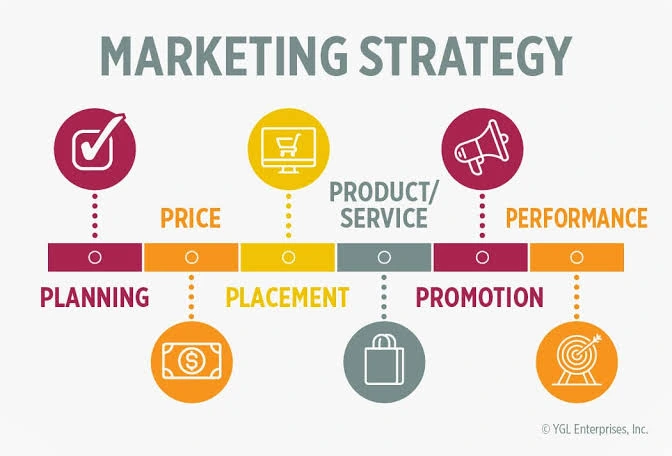
The 4 Ps are product, price, place, and promotion. They still hold up as a way to check whether your strategy is complete. Most small firms over-invest in promotion and under-think price and place. That is often why a good product still underperforms.
Another common question is what the 5 main marketing strategies are. The list most often means some mix of product marketing, content marketing, social media marketing, email marketing, and search engine marketing. Frameworks are useful as checklists, not as rigid rules you must follow to the letter.
- Product. Does your offer solve the exact problem your target audience has right now?
- Price. Is your pricing set up the way your ideal buyer expects and can justify?
- Place. Are you reachable where your buyer looks, whether that is Google Maps, Instagram, or a referral network?
- Promotion. Do your message and channel choice match steps 1 through 3, rather than being chosen first?
Marketing Strategy Examples by Industry
Marketing strategy examples for a small business differ a lot by industry. Buying cycles, trust needs, and search habits differ across property management, med spas, law firms, and home services. A strategy built for a med spa selling a one time cosmetic treatment will not transfer directly. A property management company signing multi-year leasing contracts needs its own. Here is how the approach changes by industry.
Home Services: Roofing, HVAC, Electrical, and Plumbing
These firms win on speed and trust. A strategy built on local SEO, hard work on the Google Business Profile, and reputation management often beats broad brand ads. Buyers here search with urgent, local intent.
A roofing company moves its spend from broad social ads into local SEO and review generation. Within a few months its cost per lead often drops a lot. The reason is simple. For an urgent home repair, organic and map pack traffic converts at a much higher rate than cold social traffic.
Med Spas, Dental Practices, and Real Estate
These fields sell trust and results, so visual proof matters more than almost anywhere else. Instagram ads, before and after content, and steady social media management do the heavy lifting. Local SEO covers the practice’s physical location.
Real estate agents and med spas both gain from retargeting through social ads. Most buyers research for weeks before committing. A strong website redesign, or simply a fast, professional site, keeps them from bouncing after the first click.
Property Management, Multifamily, and Law Firms
These are longer sales cycles with higher stakes. Content marketing and SEO built around specific, high intent questions perform well. A property management company can answer questions like “what does a property manager charge in Seattle” through content. That builds a long term organic pipeline. A law firm or multifamily leasing team can do the same for its own high value search terms.
LinkedIn and direct outreach still matter for B2B relationships in these fields. But the foundation is almost always a website that ranks and converts. That is why development quality directly affects lead volume, not just looks.
Common Mistakes That Sink a Strategy
The most common marketing strategy mistakes are easy to name. You target too broad an audience, chase tactics without a plan, ignore website speed and technical basics, or measure the wrong metrics. Each one is fixable. But they compound quietly, so a business can market for months or years without spotting the leak. Catching them early is usually cheaper than fixing the damage later.
Targeting Everyone Instead of Someone Specific
“Anyone who needs a lawyer” or “anyone who owns a home” is not a target audience. It is the absence of one. Broad targeting forces a message broad enough to fit everyone. That means it lands strongly with no one.
Narrowing the audience almost always raises conversion rate, even as it lowers total reach. Conversion rate is what pays the bills.
Ignoring the Technical Foundation
A brilliant strategy still fails if the page behind the ad or the search result is slow, outdated, or hard to use on mobile. Website speed work and clean technical SEO are not glamorous. But they directly affect whether a click turns into a lead or a bounce.
Google has publicly confirmed that page speed and mobile usability are ranking and user experience factors. A slow site turns paid clicks into bounces just as easily as organic ones.
Measuring Vanity Metrics Instead of Revenue
Impressions and likes feel good to report, but they do not pay invoices. Only three metrics should drive strategy decisions: leads generated, cost per lead, and the revenue each channel brings in.
Any agency or in-house team that reports follower growth ahead of lead count is measuring the wrong thing. It is worth asking why.
- Cost per lead. Tracked by channel, not blended, so you know exactly where to spend next.
- Lead to customer rate. Shows whether your sales process, not just your marketing, needs attention.
- Revenue per channel. The one number that finally justifies or kills a channel.
Frequently Asked Questions
What are the 4 marketing strategies?
The 4 marketing strategies most often cited are product, price, place, and promotion, known as the 4 Ps. They form a checklist for whether a marketing plan covers the full picture, not just ads.
What are the 5 main marketing strategies?
The 5 main marketing strategies most often cited are product marketing, content marketing, social media marketing, email marketing, and search engine marketing. Most small firms combine two or three of these, based on audience and budget. Few run all five at full strength.
What is the 3 3 3 rule in marketing?
The 3 3 3 rule means focusing on three channels, three core messages, and three offers at once. It keeps a small budget concentrated enough to produce results you can measure. Spreading effort across too many fronts does not.
What are 6 marketing strategies?
A common list of 6 marketing strategies includes digital marketing, content marketing, social media marketing, email marketing, influencer marketing, and local or community marketing. The right mix depends on your industry, your sales cycle, and where your buyers search.
How much should a small business spend on marketing?
A common benchmark is 7 to 12 percent of gross revenue. Newer firms, or those in crowded local markets, often spend at the higher end. The exact number should tie to your cost per lead and revenue goals, not a broad industry average.
What is the difference between a marketing strategy and a marketing plan?
A marketing strategy is the overall reasoning: who you target, why you are different, and which channels fit. A marketing plan is the tactical execution of that strategy, with specific campaigns, timelines, and budgets.
How often should a marketing strategy be updated?
Most small firms should review their marketing strategy each quarter and revisit the full document once a year. Faster moving fields like real estate or med spas may need to reassess the channel mix every 60 to 90 days. Cost per lead data should drive that call.
Do I need a different strategy for local versus national marketing?
Yes. Local firms like dental practices, roofers, and home services lean heavily on their Google Business Profile and local SEO. National or ecommerce brands lean more on broader SEO and paid social to reach spread out audiences.
What is a good marketing strategy for a small business?
One built for your buyer. Start with one narrow audience and a one sentence position. Pick two or three channels where those people already look. For a local service business that often means local SEO, a strong Google Business Profile, and reviews. For B2B it leans on content, SEO, and LinkedIn. Then judge each channel by cost per lead.
How do you make a marketing plan for a small business?
Build the strategy first, then turn it into the plan. Take the audience, goals, channels, and budget from the five steps above. For each channel, write down the campaigns you will run and when they start. Add the cost per lead you expect. Review it each quarter and move budget toward what brings leads.
Should a small business start with social media?
Usually not as the main lead source. For most local service firms, social media is a trust layer. Prospects check you out there after finding you in search. Start with search and your Google Business Profile, then add social to build trust. Med spas and real estate lean on it more, since Instagram ads suit visual fields.
What is a low-cost marketing strategy for a small business?
Concentrate rather than spread. The 3 3 3 rule keeps a small budget on three channels, three messages, and three offers. A strong Google Business Profile is often the fastest win. Email is a low cost way to stay in front of past leads. Content keeps working after it is published, unlike ads that stop when you stop paying.
Does a B2B small business need a different marketing strategy?
Yes, mainly in channels and timeline. B2B fields like property management and law firms sell through relationships and longer sales cycles. Content marketing, SEO built around high intent questions, and LinkedIn outreach do the work there. The table above puts typical results at 3 to 6 months rather than 1 to 3 months.
Turning Strategy Into Leads
A marketing strategy only matters if it produces leads and revenue, not a polished document that sits unused. The steps here apply to a med spa in Seattle. They apply just as well to a property management company with units across three states. Define your audience, choose two or three channels that fit, set a real budget, and measure cost per lead.
Building or auditing that strategy may be more than your team has time for. If so, get a free audit from Kihan Marketing. It shows where your marketing is losing leads today, before you spend more.
Want to know where your site stands? Ask for a free marketing audit.