Curious why only a few listings get all the calls? We see companies lose leads because they don’t appear on page one when renters and owners search. Prospects typically shortlist 2–3 results, so page-one visibility is decisive.
We frame search engine optimization as a direct lead-generation system, not a nice-to-have. Our approach builds a practical SEO strategy, local foundations, conversion-focused pages, and clear reporting that proves ROI.
Success for us means more qualified calls, form fills, and tour requests — measurable outcomes that help you manage more units. We handle the technical work, content, and authority building while you focus on daily operations and serving residents.
If you want to discuss goals and competition, call us at (425) 954-3452 or email info@kihanmarketing.com. Let’s turn search traffic into real leads and sustainable growth.
Key Takeaways
- Page-one visibility drives most renter and owner shortlists.
- SEO is a lead-generation system focused on measurable outcomes.
- We build local foundations, conversion pages, and ROI reporting.
- Our partnership handles technical and content work so you can operate.
- Contact us at (425) 954-3452 or info@kihanmarketing.com to start.
Why SEO Matters for Property Management Companies in the United States
Most prospects stop at page one, so appearing there shapes every lead you win or lose. A clear majority—91.5%—don’t go beyond Google’s first page, and only 4.8% click to page two.
How renters shortlist communities through search
People use search engines to narrow choices fast. They scan titles, snippets, and map results. Page-one placement determines whether your company gets a call or gets ignored.
What strong search results signal to prospects
High rankings act as an immediate trust signal. To a searching renter or owner, strong search results imply credibility, local authority, and reliability before anyone reads your About page.
ROI benefits: lower cost per lead and better traffic
Good organic rankings reduce dependency on paid ads. Over time, sustained organic traffic compounds and lowers cost per lead versus paid campaigns.
- Better leads: users actively searching in your service area convert at higher rates.
- Competitive edge: vital in dense U.S. markets where many companies vie for the same terms.
Next: we’ll map audience intent, run audits, and build local pages, content, links, and measurement to capture those high-value searches.
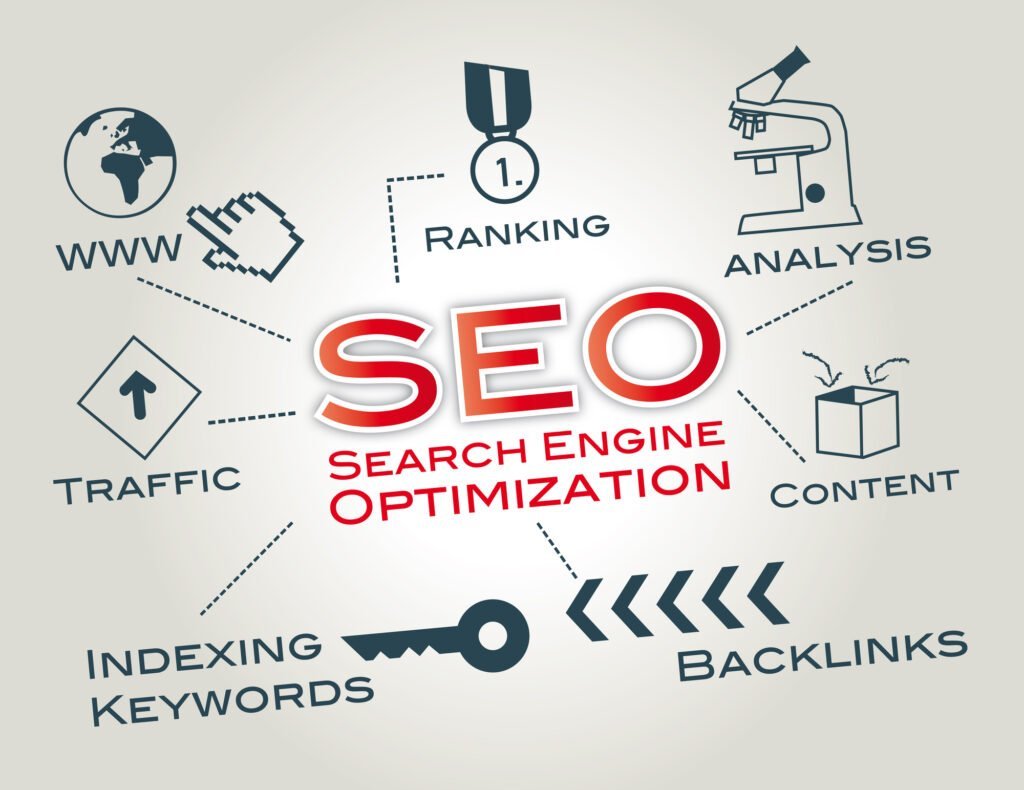
Define Your Audiences and Intent Before You Touch Your SEO Strategy
Define who you serve and what they need first — it keeps your site focused and converts better. We split visitors into two clear audiences so every page answers a single intent. This prevents mixed messages that confuse users and search engines.
Prospective renters vs. current residents: two search journeys to optimize
Prospective renters search for availability, tours, and lease terms. Those pages must drive conversions: availability checks, tour bookings, and applications.
Current residents look for portals, maintenance requests, and policy FAQs. Support pages reduce friction and increase resident satisfaction.
Mapping intent to pages: leasing conversions vs. resident support
We map intent to distinct pages and align keywords, internal links, and metadata accordingly. That way, Google and users clearly understand which page serves which need.
- Site architecture first: plan navigation and URL structure before writing content to avoid costly rewrites.
- Clear CTAs: keep “apply now” on leasing pages and support actions on help pages to avoid conversion friction.
- Owner-focused guidance: create separate owner-lead pages so they don’t compete with renter-focused pages for the same terms.
We build this structure so search intent matches page purpose, improving both user experience and measurable results.
Run a Comprehensive SEO Audit to Find What’s Blocking Rankings
Start with a deep site audit to find the issues that stop search engines from indexing your best pages. We prioritize crawlability, indexation, and site quality signals so fixes deliver measurable lift fast.
Technical red flags that hurt trust and usability
Crawl errors, broken links, and messy redirects break user journeys and erode trust. Thin or duplicate content confuses search engines and dilutes authority. Each issue lowers the chance of ranking well.
Mobile and speed diagnostics aligned to Core Web Vitals
Measure LCP, FID, and CLS. Aim for LCP under 2.5s, FID under 100 ms, and CLS under 0.1. Mobile load times should target ~3 seconds or faster to match typical user behavior.
Indexing essentials and Google Search Console checks
Validate HTTPS, submit a clean XML sitemap, and review coverage reports in Google Search Console. Fix indexing errors and remove unwanted noindex tags to restore visibility.
Structured data opportunities
Implement schema for organizations, reviews, FAQs, availability, and RealEstateAgent/Property where applicable to enhance search results snippets and click-through rates.
Fix-first checklist:
- Resolve critical crawl errors and broken links.
- Repair redirects and enforce HTTPS across the site.
- Consolidate thin or duplicate content and optimize Core Web Vitals.
- Submit sitemap and monitor Search Console for recurring issues.
| Audit Area | What to Check | Priority |
|---|---|---|
| Crawlability | Robots.txt, crawl errors, broken links, redirects | High |
| Speed & Mobile | LCP, FID, CLS, mobile load time (~3s) | High |
| Indexing | HTTPS, XML sitemap, coverage in Google Search Console | High |
| Content Quality | Thin/duplicate pages, title/meta issues | Medium |
| Structured Data | Schema for listings, reviews, FAQs, organization | Medium |
Master Local SEO to Show Up Where Renters Actually Search
When renters look up nearby options, appearing in the map pack often decides whether they call or scroll past. We focus on local signals that convert intent into action.
Optimizing your Google Business Profile for local pack visibility
Google Business Profile must have accurate NAP, correct categories, clear hours, and a compelling description. Add frequent posts and replies to reviews to show activity.
Local citations and directory listings that reinforce NAP consistency
Consistent citations across directories build trust. We clean duplicates, update listings, and prioritize high-authority directories so search engines trust your business data.
Service areas and multi-location considerations for management companies
For multi-location firms, create separate profiles only when you have a staffed office at each location. Avoid duplicate listings and align each profile to its market and services.
“Profiles with 100+ photos see higher calls and direction requests—images matter.”
| Focus | Action | Impact |
|---|---|---|
| Business profile setup | Correct categories, NAP, hours, description | Map-pack eligibility |
| Images | Upload 50–100+ real photos: team, signage, units | More calls & directions |
| Citations | Audit, fix, and standardize listings | Stronger local trust |
- Result: better local pack placement leads to more click-to-call, directions, and qualified inquiries.
- Outcome: more inbound leads from your exact service area, not broad national traffic.
Create Location and Neighborhood Pages That Capture High-Intent Local Traffic
Location pages turn casual browsers into callers by matching local intent with clear, useful detail.
We build a hierarchical system: state → county → city → neighborhood so searchers find the exact area they care about. Each page contains unique local copy that references landmarks, universities, employers, and lifestyle benefits instead of recycled templates.
City, county, and state pages that match how owners and renters search
City and county pages should explain services for the whole area and link to nested neighborhood pages. That prevents keyword overlap and keeps each page focused on one intent.
Neighborhood pages that add context and lifestyle signals
Neighborhood pages highlight amenities, transit options, walkability, imagery, and availability. They answer the local questions renters and owners type into search and improve conversion rates.
On-page trust builders and internal linking
Embed a Google map tied to your Google Business Profile, add testimonials, trust badges, and clear CTAs like “Schedule a Tour” or “Request a Proposal”. Link broadly: parent pages link to sub-areas and sub-areas link back up to aid users and crawlers.
“Local pages that include maps, real testimonials, and clear CTAs generate more calls and tour bookings.”
| Focus | Action | Impact |
|---|---|---|
| Location hierarchy | Create state → county → city → neighborhood pages | Better search intent matching |
| Maps & profiles | Embed Google Business Profile map | Stronger local association |
| Trust elements | Testimonials, badges, direct CTAs | Higher conversions and visibility |
When pages are unique and linked correctly, you capture high-intent local traffic that turns into more calls, tour bookings, and owner inquiries from the exact areas you serve.
Build a Keyword Research Plan That Targets Leads, Not Just Traffic
Focus your research on phrases that predict action, not just page views. We teach a repeatable process that finds terms which drive calls, form fills, and tour bookings. Start by separating broad theme terms from localized service-intent phrases.
Core terms capture industry themes. Localized terms show clear intent—people searching for “pet-friendly apartments near downtown” or “3-bedroom units by university” are closer to signing a lease or requesting a tour.
Long-tail and placement strategy
Long-tail keywords can be ~70% of searches and often convert better. Assign one primary keyword per page and add close variations.
- Place the primary keyword in the title tag, H1, and first paragraph.
- Use supporting keywords in H2/H3, body copy, meta descriptions, and image alt text.
- Avoid repetition; write for clarity and usefulness.
| Step | Action | Why it matters |
|---|---|---|
| Discover | List theme + local long-tail terms | Targets high-intent searchers |
| Prioritize | Score by intent, competition, business value | Build pages that move the needle |
| Implement | Title, H1, first 100 words, alt text, meta | Maximizes relevance and click-throughs |
Optimize On-Page SEO for Better Click-Through and Better Conversions
A clear page structure and enticing snippets earn clicks in crowded search results. We focus on elements that influence behavior: title tags, meta descriptions, headers, and images. Each tweak pushes more qualified visitors toward a conversion.
Title tags and meta descriptions that earn clicks from competitive search engines
Write title tags that combine a primary keyword, a location modifier, and a concise value proposition. Keep titles under ~60 characters so they don’t truncate in search results.
Meta descriptions should highlight top amenities, a key differentiator, and a strong call to action. Aim for clarity over buzzwords and avoid sounding generic.
Header tag structure that makes pages easy to scan
Use H1 for the main headline, H2s for major sections, and H3s for details like pricing, floor plans, and neighborhood notes. This lets users scan fast and helps search engines understand page hierarchy.
Keep headings descriptive and actionable so readers find answers quickly and move to the next step.
Image optimization for speed and accessibility (without sacrificing visuals)
Compress images, use modern formats like WebP when appropriate, and add descriptive filenames. Include meaningful alt text to support accessibility and context for crawlers.
Balance image quality with page speed: faster pages reduce bounce and keep users engaged.
| Task | Action | Impact |
|---|---|---|
| Title tags | Primary keyword + location + value | Higher CTR from search results |
| Meta descriptions | Amenities, differentiator, CTA (140–155 chars) | More qualified clicks |
| Headers | H1 → H2 → H3 hierarchy for scanability | Better user experience and clarity |
| Images | Compress, WebP, descriptive alt text | Faster load, improved accessibility |
On-page checklist: craft titles and metas for clicks, structure headings for scanning, compress images, add alt text, and answer top user questions within the first 200 words. We standardize this across key pages to scale improvements and boost visibility and conversions.
Create Content That Attracts, Builds Trust, and Converts
Content that solves real renter and resident problems builds trust and drives actions. We plan pieces that guide choices and remove friction, so casual visitors become callers and applicants.
Renter-focused ideas
Write local neighborhood guides, amenity breakdowns, and clear floor plan pages. Add pet policy details and step-by-step move-in checklists to reduce hesitation.
Resident-focused ideas
Create helpful pages for portal logins, payment FAQs, maintenance request instructions, and move-out steps. These reduce support calls and improve retention.
Formats that perform
Use blog posts for discovery, FAQs for quick answers, downloadable checklists for lead capture, and visual walkthroughs for higher engagement. Mix short how-tos with long-form guides to earn backlinks and authority.
“Consistent, useful content signals expertise and helps pages rank in competitive markets.”
- Roadmap: build an editorial calendar from keyword research, not guesses.
- Internal linking: point blog posts to conversion pages so informational traffic converts.
- Measure: track engagement, leads, and backlinks to refine topics each month.
Technical SEO and User Experience Improvements That Protect Rankings
Fast, friction-free pages protect rankings and turn clicks into calls. Technical SEO and user experience must work as one. Slow load times or cluttered mobile layouts undo ranking gains and cost you qualified leads.
Mobile-first UX: navigation, tap targets, and frictionless forms
Design for thumbs. Use simple navigation, large tap targets, and readable fonts to lower friction on phones.
Keep forms short: request only the fields you need and enable autofill. Fewer steps mean higher completion rates for tour bookings and inquiries.
Speed improvements that support Core Web Vitals and reduce bounce rates
Target Core Web Vitals: LCP
Faster pages reduce bounces and protect rankings, especially for high-intent local and property pages where users act quickly.
Security and reliability signals: SSL, mixed content fixes, and stable layouts
Enforce HTTPS, remove mixed-content warnings, and lock down fonts and ads that shift layout. Stable pages build trust and prevent CLS-related drops in engagement.
“Technical fixes that improve user trust also preserve visibility and conversions.”
Ongoing QA routine: test mobile paths, run Core Web Vitals reports after updates, and bench new plugins in staging to avoid regressions.
| Priority | Action | Impact |
|---|---|---|
| High | HTTPS, fix mixed content, optimize LCP | Trust + visibility |
| High | Compress images, enable caching, use CDN | Faster pages, lower bounce |
| Medium | Thumb-friendly nav, short forms | Better mobile conversion |
| Medium | Staging QA for updates | Prevents performance regressions |
Quick checklist for busy teams: enforce HTTPS, meet Core Web Vitals, simplify mobile UX, run monthly performance tests, and stage updates before release. We partner with teams to make these changes with minimal disruption and measurable results.
Authority Building with Link Building and Reputation Signals
External endorsements — links and citations from reputable sources — create the trust layer that on-page work alone cannot deliver. We treat authority as proof that differentiates clients in competitive local search results.
How high-quality backlinks support visibility and credibility
Backlinks act as trust signals when they come from relevant, high-quality sites. Editorial context matters: a citation within a local news story or an industry guide carries weight.
Anchor text and relevance
Anchor text shapes topical association. We earn natural, descriptive anchors that reinforce expertise without manipulative tactics.
Reviews and response workflows
Online reviews impact map placement and conversion. Fast, professional replies show accountability and improve local trust.
- High-quality link traits: relevance, editorial placement, and domain authority.
- Link ideas: local partnerships, sponsorships, community guides, and guest articles.
- Review workflow: respond within 48 hours, acknowledge, offer a solution, and escalate sensitive items privately.
| Signal | Action | Why it matters |
|---|---|---|
| Backlinks | Target local news, industry sites, and universities | Boosts visibility and topical trust |
| Anchor text | Use natural, descriptive phrases in context | Improves relevance without penalty risk |
| Reviews | Monitor, reply quickly, and resolve issues | Raises map-pack ranking and conversions |
Track Performance and Prove Results From Your Search Engine Optimization Efforts
Measuring the right metrics turns months of effort into clear business wins. We define a compact KPI set so your team sees how work drives calls, form fills, and tour bookings.
Metrics that matter: organic traffic, rankings, conversions, and local pack presence
Focus on organic traffic quality, not just raw sessions. Track rankings for lead-driving terms and conversions tied to those pages.
Include local pack visibility as a separate metric. Map-pack placement often produces the highest-intent clicks and calls.
Tool stack basics: Google Analytics, Google Search Console, and call tracking
Use Google Analytics for user paths and conversion funnels. Pair it with Google Search Console to watch impressions, click-throughs, and keyword trends.
Add call tracking (for example, CallRail) to attribute phone leads. Many high-intent prospects call first—track those interactions.
How to refine your seo strategies using monthly reporting and trend analysis
Build a monthly report that highlights progress, blockers, and next actions. Avoid raw data dumps; show context and recommended fixes.
Watch trends over weeks and months. If rankings rise but conversions lag, test page messaging and CTAs. If impressions grow but clicks stay flat, update meta titles and descriptions.
“Regular reporting turns search data into a clear roadmap for improvement.”
| Focus | Primary Metric | Tool | Next Action |
|---|---|---|---|
| Lead-driving keywords | Rankings & CTR | Google Search Console | Optimize titles & H1 |
| Conversion paths | Form completions & calls | Google Analytics + CallRail | Shorten forms, add click-to-call |
| Local visibility | Map-pack impressions & directions | GMB insights + GSC | Update profile & local content |
| Trend health | 30/90-day traffic & leads | Analytics + monthly report | Adjust strategy and prioritize fixes |
We partner with your company to keep reporting clear and actionable so leadership can invest with confidence in the next set of improvements.
Property Management SEO Solutions That Keep You Ahead of Algorithm Changes
Algorithm shifts reward sites that combine technical stability with clear, user-first content. We build a foundation first, then layer enhancements like schema, voice-friendly copy, and optimized video to keep traffic steady through updates.
Schema markup for richer search results
Structured data unlocks rich snippets for listings, reviews, FAQs, and availability. Use Organization, FAQ, Review, and availability schema to improve click-through rates and show up with extra detail in search results.
Voice search optimization
Write conversational Q&A sections that mirror how people ask assistants. Short, direct answers in question-format headers increase the chance of being read aloud or shown as a featured snippet.
Video SEO for virtual tours and neighborhood highlights
Embed virtual tours and short neighborhood clips. Add descriptive titles, transcripts, captions, and video schema to boost engagement and time on page. Videos help converts curious visitors into tour bookings.
Common mistakes to avoid
- Chasing broad keywords instead of focused, intent-driven terms.
- Neglecting local signals and inconsistent listings.
- Publishing thin or duplicate pages without unique local detail.
- Letting page speed and mobile UX degrade after updates.
“Future-proofing starts with fundamentals: solid technical work, helpful content, and local trust signals.”
| Prevention Checklist | Action | Impact |
|---|---|---|
| Technical baseline | Maintain fast loads, HTTPS, valid schema | Stable visibility during updates |
| Content value | Unique local pages, FAQs, transcripts | Higher engagement and resilience |
| Local trust | Consistent listings, reviews, and profiles | Improved map-pack and conversions |
We focus on consistent lead flow and lasting brand authority, not temporary spikes. Build the basics, add rich data and multimedia, and monitor results so your rankings survive the next algorithm change.
Conclusion
A consistent, systems-driven approach turns search traffic into reliable business outcomes.
Start by defining intent, run a focused audit, win local visibility, build location pages, and target lead-driving keywords. Improve on-page and technical performance, build authority, and measure results with clear reporting.
The goal: steady, qualified leads that convert to signed leases and new owner accounts—not just higher rankings.
SEO is a long-term growth asset that compounds, lowering cost per lead and reducing dependence on paid ads. Treat it as an operational system with monthly improvements.
To discuss your market, competition, and goals, call (425) 954-3452 or email info@kihanmarketing.com. We’ll partner with your company to deliver measurable results.
FAQ
What makes SEO essential for property management companies in the United States?
Effective search engine optimization improves visibility where renters and owners search. Page-one placement signals trust and authority, drives sustainable organic traffic, lowers cost per lead, and improves lead quality for leasing and owner services.
How do renters and current residents search differently, and how should we respond?
Prospective renters look for availability, amenities, floor plans, and neighborhood info. Current residents search for portals, maintenance, and policies. We map those search journeys to dedicated pages and calls to action to capture leads and support retention.
What does a comprehensive SEO audit uncover for our site?
A full audit finds technical blockers like crawl errors, broken links, thin pages, mobile speed issues, sitemap and indexing problems, and structured data gaps. Fixing these restores crawlability, improves Core Web Vitals, and boosts search visibility.
How do we optimize our Google Business Profile to win the local pack?
Optimize your Business Profile with accurate business name, address, phone (NAP), service areas, hours, photos, and regular posts. Encourage verified reviews and respond promptly to build local relevance and increase pack placement.
Should we build city and neighborhood pages, and what should they include?
Yes. Location pages should match user search intent with city, county, and neighborhood context, amenities, transit, embedded Google Map, testimonials, and clear CTAs. These pages capture high-intent local traffic and improve conversions.
What keyword strategy drives leads rather than just traffic?
Target service-intent and localized terms as well as long-tail queries that indicate readiness to lease or to list units. Place these keywords in headings, body content, metadata, and image alt tags to align with search intent and improve conversions.
How do title tags and meta descriptions boost click-through rates?
Well-crafted titles and metas use targeted terms, benefit-focused language, and location signals to stand out in search results. They earn more clicks, which can improve rankings and bring higher-quality prospects to leasing pages.
What content should we publish to attract renters and support residents?
For renters: amenity guides, floor plans, pet and move-in policies, and neighborhood highlights. For residents: portals, maintenance instructions, and policy pages. Blogs, virtual tours, and downloadable move-in guides perform well for engagement and lead capture.
Which technical fixes most often protect rankings after changes or updates?
Prioritize mobile-first UX, speed improvements for Core Web Vitals, SSL and mixed content fixes, stable layout shifts, and accessible navigation. These reduce bounce rates and maintain search performance during algorithm shifts.
How does link building and reputation management affect our visibility?
High-quality backlinks from relevant real estate and local sites boost authority. Consistent anchor text relevance and active review management increase credibility. Encourage reviews and respond to feedback to support local ranking signals.
What metrics should we track to prove SEO results?
Track organic traffic, keyword rankings, conversion counts (leads, tours, lease applications), local pack presence, and engagement metrics. Use Google Analytics, Google Search Console, and call tracking to measure impact and refine strategy.
How can schema markup and video SEO improve search performance?
Schema for listings, availability, reviews, and FAQs makes results richer and more clickable. Video SEO for virtual tours and neighborhood highlights increases engagement and can appear in video carousels, improving discovery.
What common SEO mistakes should property managers avoid?
Avoid broad, non-localized keywords, thin content, inconsistent NAP, slow pages, and neglecting mobile UX. These errors reduce visibility and weaken conversions. A focused, local-first strategy yields better long-term growth.