


Link building for law firms in the U.S. works best when it is quality-first and local-first. Put editorial placements, legal directory listings and digital PR ahead of volume. Start this week with three moves.
Earn links a lawyer would still stand behind if Google changed its rules tomorrow. Complete your Justia, Avvo, FindLaw and state bar profiles first. Then answer reporter requests through HARO and Qwoted, and reclaim mentions of your firm that never got a link. Earned links from trusted sources move rankings. Piles of directory links do not.
- Claim and complete your profiles on Justia, Avvo and FindLaw, plus your state bar directory.
- Set up HARO and Qwoted alerts for legal, personal finance and local news queries. Then you can answer reporter requests within the hour.
- Audit your site for unlinked mentions with Google Alerts and Ahrefs. Send reclaim emails before you build a single new link.
These three moves cost almost nothing and carry no ethical risk. They also bring results faster than any cold outreach campaign you could start from scratch.
What are backlinks, and why do they matter for law firms?
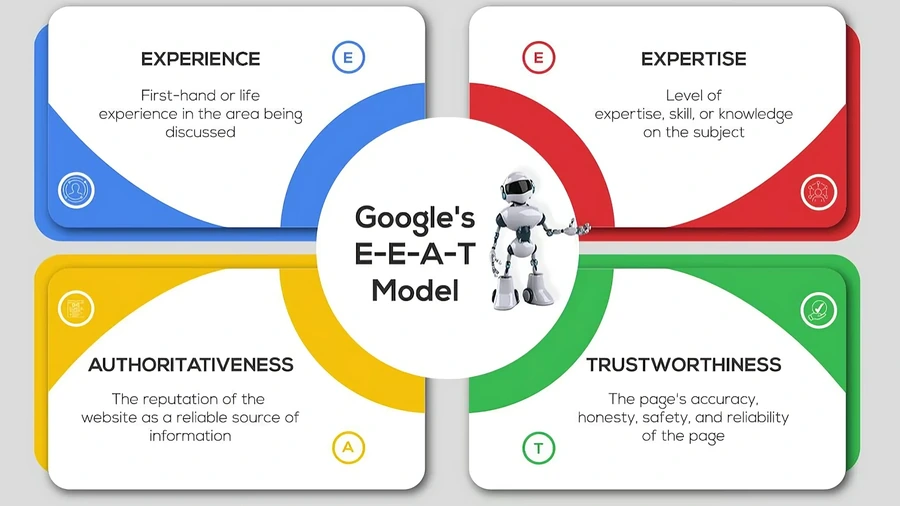
A backlink is a link from another website to yours. Search engines read these links as votes of trust. Legal is one of the most trust-sensitive fields on the web. Google’s quality raters judge legal content under E-E-A-T (Experience, Expertise, Authoritativeness, Trustworthiness). So the source of a link matters as much as the link itself.
The difference shows up fast. A profile link from a generic directory tells Google your firm exists. Say a local paper cites your firm in its coverage of a court ruling. That tells Google your firm is a trusted source on the topic. Both are backlinks. Only one moves your rankings.
Links that build authority for a legal website start with the basics:
- Foundational directory links: Justia, Avvo, FindLaw and your state bar profile. These show Google your firm is real. They are defensible links a legal professional would still endorse even if Google’s rules changed tomorrow.
Why does link building matter specifically for law firms?
Legal searches are high-intent and crowded. Someone searching “personal injury attorney Chicago” is ready to hire. The firms in the top three spots take the vast majority of those clicks. Backlinks remain one of the strongest ranking signals. Every rival is producing content, so links often decide who lands on page one and who lands on page two.
The trust dimension is unique to legal. Choosing a lawyer is a high-stakes decision. A firm cited by the local bar, a local paper and a legal aid nonprofit signals trust. A firm with 200 low-quality directory links cannot send that signal.
Quality backlinks do more than lift rankings. They bring visits from people who are already reading about legal topics. Those visitors convert at a higher rate than cold search traffic. Off-page citations and local directory listings improve local search visibility. They also help decide whether your firm shows in the Google Maps pack for local searches.
Key benefits law firms see from a well-run link program:
- Higher rankings for the practice-area terms every firm fights over
- More visits from legal outlets and local news
- Stronger local pack visibility for city and neighborhood searches
- Better E-E-A-T signals that protect rankings during Google updates
- More qualified leads from readers already in a legal research mindset
What are the most effective link-building tactics for law firms?
The tactics below are ranked by expected return and ethical safety. Starting from scratch? Run them in order. Once the basics are in place, run them side by side.
1. Foundational directory and association listings
Why it works: These links show Google your firm is real. They are the first thing Google looks for when it checks a new legal website. Quality-focused tactics like directory presence and local engagement produce the best foundational results.
How to do it:
- Claim and fully complete your profiles on Justia, Avvo and FindLaw. Use the same NAP (name, address, phone) data on each.
- Submit to your state bar’s lawyer directory. Add any specialty bar groups that fit your practice areas.
- Check that every profile links to the same canonical URL on your website.
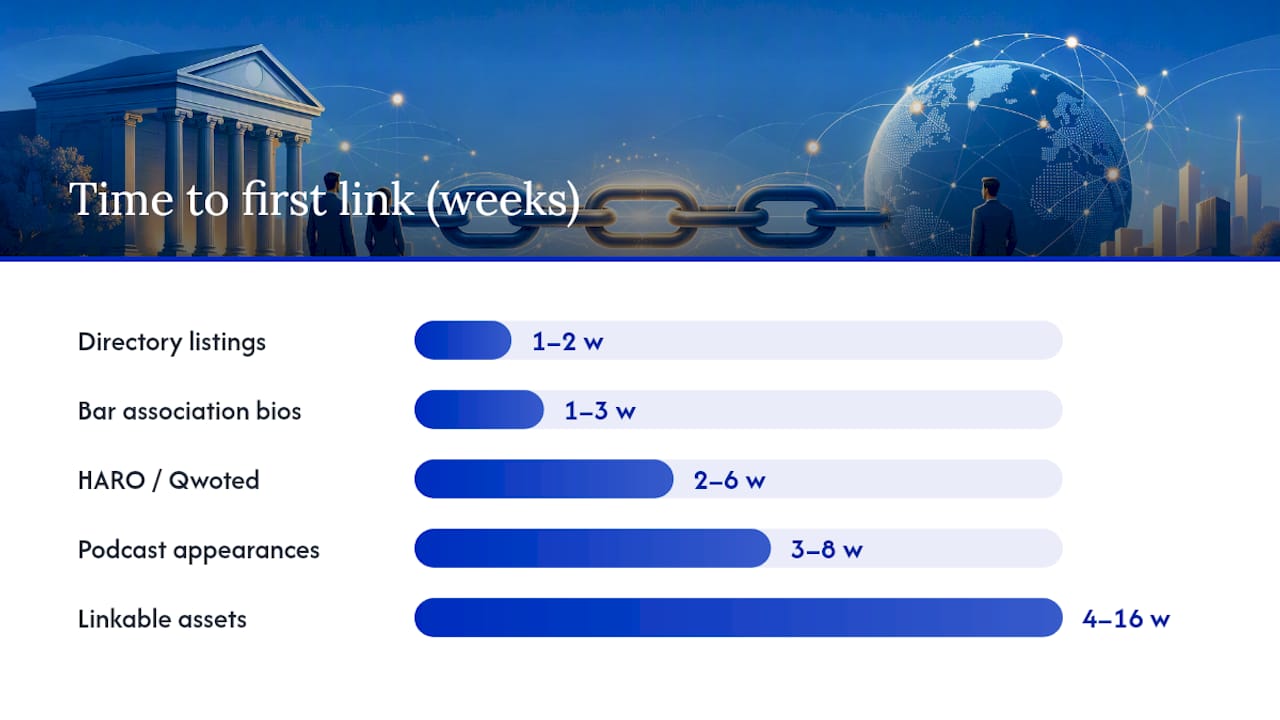
Typical time to first link: 1 to 2 weeks.
2. Attorney bios and bar membership pages
Why it works: Bar profile pages carry the weight of the bar itself. Editors control them, so Google treats them as trust signals rather than self-promotion.
How to do it:
- Log into your state bar member portal. Update your bio with a link to your firm’s website.
- Do the same for any specialty bar groups (ATLA, NAELA, NELA and others).
- Check that your law school alumni directory lists a current firm link.
Typical time to first link: 1 to 3 weeks.
3. HARO and Qwoted journalist outreach
Why it works: Reporters need legal expert sources all the time. A well-timed quote earns an editorial citation from an outlet a cold pitch would never win. The DC Bar explicitly recommends HARO and Qwoted as link-earning tactics for lawyers.
How to do it:
- Create accounts on HARO (Help a Reporter Out) and Qwoted. Set keyword alerts for “attorney,” “lawyer,” your practice area and related legal topics.
- Reply within two hours of a query posting. Reporters work on deadlines, and late replies rarely get used.
- Keep replies under 200 words. Lead with the direct answer. Include your bar number and firm name so they can trust you.
Typical time to first link: 2 to 6 weeks per placement.
4. Guest articles in legal and local publications
Why it works: A bylined article in a legal trade journal or local business paper earns an editorial link. It also builds your name and often brings visits from readers already in a legal research mindset.
Target site types: state bar journals, legal niche blogs, local business outlets, law school alumni magazines and ABA-affiliated channels.
How to do it:
- Find three to five outlets that accept articles from lawyers. Read their submission guidelines.
- Pitch a specific, timely topic. Tie it to a recent court ruling, a new law or a local legal trend.
- Include a brief author bio with a link to your firm’s practice area page, not just the homepage.
Typical time to first link: 4 to 10 weeks.
5. Local news and community sponsorships
Why it works: Local papers, local TV station websites and local blogs link to sponsors and expert sources. These links are tied to your area, which directly supports local pack rankings.
How to do it:
- Sponsor a local event, legal aid clinic or local group. Confirm that the deal includes a link to your site.
- Pitch your lawyers as expert voices to local reporters who cover legal topics.
- Offer local news sites a free legal guide for the public that they can link to. One example is “What to Do After a Car Accident in [City].”
Typical time to first link: 2 to 8 weeks.
6. Scholarship pages (.edu links)
Why it works: College financial aid and scholarship pages carry high domain authority, and editors maintain them. A law firm scholarship for pre-law students earns a link from a .edu domain. That link is nearly impossible to get any other way.
How to do it:
- Create a scholarship page on your website. State clearly who can apply and how.
- Email financial aid offices at law schools and colleges near you with a brief pitch.
- Budget for the award itself. A token amount undercuts the credibility of the page and the outreach behind it.
Typical time to first link: 6 to 12 weeks.
7. Reclaiming unlinked mentions
Why it works: News articles, court coverage and legal blogs often mention law firms without a link. Turning those mentions into links is the highest-ROI tactic there is, because the editor has already decided to name your firm.
How to do it:
- Set up Google Alerts for your firm name, your lead lawyers’ names and common misspellings.
- Use Ahrefs Content Explorer or Semrush’s Brand Monitoring tool to find unlinked mentions at scale.
- Email the author or editor a brief, friendly note asking for the link.
The writer already chose to mention your firm, so you are only asking for the link. Send the author or editor a brief, friendly note: “I noticed you mentioned [Firm Name] in your article on [topic]. Would you consider adding a link to our website for readers who want to learn more?”
Typical time to first link: 1 to 3 weeks per reclaim.
8. Linkable assets (guides, checklists, local data)
Why it works: A truly useful resource earns links on its own over time. Digital PR works too: a lawyer comments on public legal data, court trends or local statistics. Regional press and niche sites cite that commentary again and again.
Target asset types: state-specific legal guides, court process checklists, local accident data analysis, consumer FAQ pages and interactive tools (for example, a statute of limitations calculator).
Typical time to first link: 4 to 16 weeks after publication.
9. Podcast appearances and expert quote roundups
Why it works: Legal podcasts and expert roundup articles often include show notes or guest bios with links. These are low-effort placements that also build brand awareness.
How to do it:
- Search “[practice area] podcast” and “[city] legal podcast” to find shows that host lawyer guests.
- Pitch a specific topic tied to a recent case or legal change. Skip the generic “I’m an expert” pitch.
- After the episode goes live, confirm the show notes include a link to your firm’s website.
Typical time to first link: 3 to 8 weeks.
Tactic comparison at a glance:
| Tactic | Effort | Link Quality | Time to First Link |
|---|---|---|---|
| Directory listings | Low | Moderate | 1 to 2 weeks |
| Bar association bios | Low | High | 1 to 3 weeks |
| HARO / Qwoted | Medium | High | 2 to 6 weeks |
| Guest articles | High | High | 4 to 10 weeks |
| Local sponsorships | Medium | High (local) | 2 to 8 weeks |
| Scholarship pages | Medium | Very high | 6 to 12 weeks |
| Unlinked mention reclaim | Low | High | 1 to 3 weeks |
| Linkable assets | High | Variable | 4 to 16 weeks |
| Podcast appearances | Low | Moderate | 3 to 8 weeks |
What ethical rules govern link building for lawyers?
Bar advertising rules apply to digital marketing, and link building is not exempt. The ABA Model Rules of Professional Conduct, above all Rules 7.1 through 7.5, govern how lawyers talk about their services. Most state bars have adopted versions of these rules. Several states (California, New York, Florida, Texas) add their own ad rules.
Do:
- Keep all content used to earn links accurate and not misleading under ABA Rule 7.1.
- Label any sponsored content or paid placement as advertising where your state bar requires it.
- Get client consent before using case outcomes, testimonials or details that could identify a client in any content that earns links.
- Keep a log of every third-party link you gain: the tactic used, the outlet and the content involved.
Don’t:
- Buy links through schemes that need a misleading endorsement or a fake editorial placement. That breaks Google’s guidelines and, in many states, bar ad rules.
- Use client case details in linkable content without explicit written consent. That includes details with the name removed that could still identify a client.
- Claim to be a specialist or certified in a guest article unless your state bar has certified you in that area.
- Let an outside agency publish content under your name without checking it for accuracy and bar compliance.
Keep a simple compliance log. One spreadsheet is enough, with columns for the outlet, the content title, the link URL, the tactic used and a “reviewed for bar compliance” checkbox. If your state bar ever questions a placement, this log is your first line of defense.
Good, relevant backlinks should be earned, not bought. That matches the bar rules. The tactics that comply with bar guidance are also the ones that produce lasting SEO results.
Which tools help you find and track link opportunities?
You don’t need a large tech stack to run a good program. These tools cover the full workflow, from finding targets to tracking links:
| Tool | Type | Primary use case for law firms |
|---|---|---|
| Ahrefs | Paid | Backlink audits, competitor gap analysis, unlinked mention discovery, page-level traffic checks |
| Semrush | Paid | Keyword research, backlink monitoring, brand mention alerts, local SEO audits |
| HARO (Help a Reporter Out) | Free/Paid | Journalist query alerts for legal expert sources |
| Qwoted | Free/Paid | Journalist query platform; often less competitive than HARO for legal queries |
| BrightLocal | Paid | Local citation audits, NAP consistency checks, local rank tracking |
| Google Business Profile | Free | Local pack visibility, entity signals, review management |
| Google Alerts | Free | Unlinked mention monitoring for firm name and attorney names |
| Backlinko / Moz Link Explorer | Free tier | Spot-checking domain authority and link context |
Free vs. paid tradeoffs: Google Alerts and HARO are table stakes and cost nothing. Ahrefs or Semrush earns its monthly fee once you run active outreach. Finding targets by hand, without a backlink tool, is slow and patchy. BrightLocal is the right call for local citation work. Its audit depth goes beyond what Semrush’s local tools offer.
Free tools and PR-focused tactics like HARO and Google Alerts are practical starting points for firms not yet ready to pay for a full stack.
What does a 6-month link-building plan look like for a law firm?
This plan follows the order that builds trust fastest. The basics come first, then editorial outreach, then asset-driven and PR-led links.
| Month | Tasks | Outputs | Est. Hours |
|---|---|---|---|
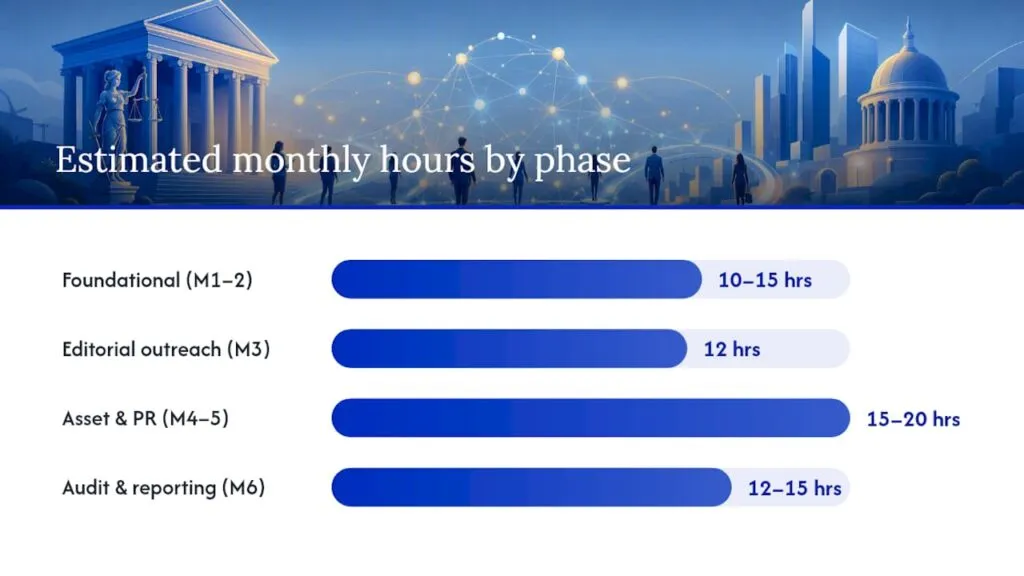
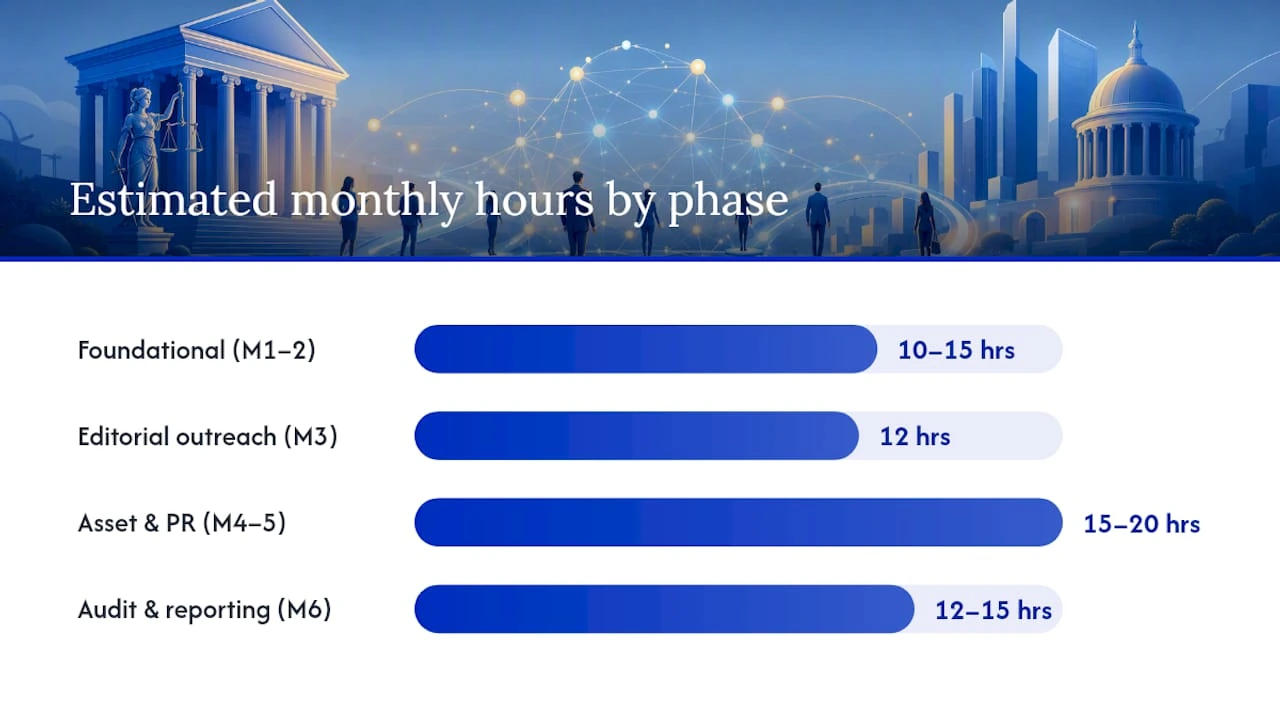
| Month 1 | Directory claims (Justia, Avvo, FindLaw, state bar); Google Business Profile optimization; Google Alerts setup; HARO/Qwoted account creation | 5 to 8 foundational links; GBP fully optimized | 10 to 15 hrs |
| Month 2 | Unlinked mention audit and reclaim outreach; bar association bio updates; law school alumni directory submissions | 3 to 6 reclaimed links; 2 to 4 association links | 10 to 12 hrs |
| Month 3 | First guest article pitch and submission; HARO/Qwoted active response (daily); local chamber of commerce submission | 1 to 2 editorial links; 2 to 4 HARO placements | 12 hrs |
| Month 4 | Linkable asset creation (city-specific legal guide or checklist); local news PR pitch; scholarship page launch | 1 asset published; 1 to 3 local news links | 15 to 20 hrs |
| Month 5 | Asset promotion outreach to legal blogs and resource pages; podcast pitch to 3 to 5 local/legal shows; scholarship outreach to law schools | 3 to 6 asset links; 1 to 2 podcast links; 2 to 4 .edu links | 15 to 20 hrs |
| Month 6 | Full backlink audit; competitor gap analysis; second guest article; reporting and plan refinement | 2 to 4 additional editorial links; audit report | 12 to 15 hrs |
Budget range: A solo or small firm running this program in-house should set aside 10 to 20 hours per month of staff or lawyer time.
Key Takeaways
A quality-first, local-first program is the safest approach for U.S. law firms, and the one with the highest return. It combines directory basics, editorial outreach and digital PR.
| Point | Details |
|---|---|
| Start with foundations | Claim Justia, Avvo, FindLaw, and state bar profiles before any outreach campaign. |
| Prioritize editorial links | HARO, Qwoted, and guest articles earn high-authority links that directories cannot replicate. |
| Local links drive local leads | Google Business Profile, chamber listings, and regional news citations directly improve Maps pack rankings. |
| Measure referring domains, not raw links | Track unique linking domains monthly; tie traffic and conversion data to specific practice area pages. |
| This is buildable as a program | Link audits, editorial outreach, and local SEO work, measured in leads and cost-per-lead rather than vanity metrics, is work we already run for clients in other local, service-based industries and can build out the same way for a law firm. |
The case for doing this right, not just doing it fast
Most law firms that struggle with link building are not short on effort. They are chasing volume in a field where trust is the real currency.
Legal is one of the few fields where one earned link from a trusted source can beat 50 directory listings. That source might be a state bar journal, a local paper or a law school resource page. This is not a theory. It is the pattern you see when you look at which firms dominate the hard practice-area searches in major U.S. markets.
There is also a compliance side that most generic SEO advice ignores. Bar advertising rules are not a footnote. They govern what you can say, how you can say it and which endorsements you can use. A tactic that works fine for a plumber can create a bar complaint for a lawyer. That is why this playbook is ordered the way it is: the safest and most effective options come first.
One thing worth saying plainly: hiring an agency for law firm link building is not a shortcut. It is a question of time and staff. Can your firm answer HARO queries daily, pitch guest articles monthly and manage local PR outreach? Then do it in-house. If not, an agency that knows legal marketing will get results faster, with fewer compliance risks than a general shop. Watch for one red flag: an agency that promises a set number of links per month without discussing quality, fit or bar compliance. That is a volume play, and volume is exactly what you don’t need.
How Kihan Marketing would run this for a law firm
The work in this article is work we already do: backlink audits, editorial outreach, local citation cleanup and Google Business Profile work. We run it for clients in other local, service-based industries. Building out a complete digital marketing strategy without managing every moving part in-house would work the same way for a law firm. It starts with a backlink audit. Then come editorial outreach, local citation work and Google Business Profile work, in the order this article describes.
Want a clear program that stays inside the bar rules, instead of guessing where links might come from? Request a link audit to see where your backlink profile stands and which openings are worth chasing first.
Useful sources and tools
- Link Building for Lawyers: A Complete Guide
- Nine SEO Fundamentals for Lawyers
- SEO for Lawyers: How to Optimize Your Law Firm Website
- 5 Valuable Link Building Strategies For Law Firms, Forbes
- SEO for Law Firms: The Complete Guide to Client Acquisition Through Search, Marketing By Kevin
- Link Building for Law Firms: A Complete UK + US Guide, Link Building Journal
- Link Building for Law Firms | 7 Free Tools to Boost Your Backlinks
- Search Engine Ranking Factors, Backlinko
- Justia
Recommended
- Aesthetic Practice SEO: Outrank the Big Chains
- LinkedIn Marketing for B2B: Organic Growth Tactics
- Local SEO for Dental Practices: Attract New Patients
- Google Local Service Ads for Roofers: 2026 Guide
Frequently asked questions
What is link building for law firms?
A backlink is any link from another website to yours. Search engines treat those links as votes of trust. Link building for law firms is the work of earning them from trusted legal and local sources. Legal is one of the most trust-sensitive fields on the web, so the source of a link matters as much as the link itself.
Which backlinks actually help a law firm rank?
Editorial citations carry the weight. A profile link from a generic directory tells Google your firm exists. A mention in a local paper’s coverage of a court ruling tells Google your firm is a trusted source. Both are backlinks, but only one moves rankings. Directory links from Justia, Avvo, FindLaw and your state bar set the baseline.
What should a law firm do first?
Three moves you can start this week. Claim and complete your profiles on Justia, Avvo and FindLaw, plus your state bar directory. Set up HARO and Qwoted alerts for legal, personal finance and local news queries. Then you can answer reporter requests within the hour. Audit for unlinked mentions and send reclaim emails before you build a single new link.
Why reclaim unlinked mentions before building new links?
Someone has already decided your firm was worth naming, so the hard part is done. Reclaim emails cost almost nothing, carry no ethical risk and bring results faster than any cold outreach campaign. Building new links before collecting the ones you have already earned means doing the expensive work first.
Are there ethics rules to know before building links as a law firm?
Yes. Legal advertising is regulated in ways most industries are not. The safe standard is to build links a legal professional would still endorse even if Google’s rules changed tomorrow. Directory profiles and genuine press coverage meet that test. Paid or gamed link schemes create both ranking risk and bar complaint risk.
Which tools help find and track link opportunities?
Google Alerts and Ahrefs show unlinked mentions of your firm so you can reclaim them. HARO and Qwoted deliver reporter requests you can answer for editorial placements. The tools matter less than how fast you reply: reporter queries usually go to whoever answers first with something usable.
How many backlinks does a law firm need?
There is no magic number, and counting raw links is the wrong measure. Track unique linking sites instead, month by month, and tie traffic and leads back to each practice area page. One earned link from a state bar journal or local paper can beat 50 directory listings. A few trusted sources beat a long list of weak ones.
How long does law firm link building take?
Typical times depend on the tactic. Directory listings and bar profile bios land in 1 to 3 weeks. Reporter quotes through HARO and Qwoted take 2 to 6 weeks. Guest articles, scholarship pages and linkable assets take longer, from 4 to 16 weeks. The 6-month plan puts the fast wins first, so the slower editorial work builds on a base.
Can a law firm buy backlinks?
It is the wrong route. Link schemes that need a fake editorial placement or a misleading endorsement break Google’s guidelines and, in many states, bar advertising rules. If you do pay for a placement, label it as an ad where your state bar requires it. Earned links, such as directory profiles, reporter quotes and guest articles, produce lasting results.
Do legal directories like Avvo still help SEO?
Yes, as a foundation. Justia, Avvo, FindLaw and your state bar profile are the first things Google looks for when it checks a new legal website. They show the firm is real and support local search visibility. Their link quality is moderate, so claim them before any outreach campaign, then add editorial links on top.
How much does law firm link building cost?
Done in-house, the main cost is time: 10 to 20 hours a month of staff or lawyer time for a solo or small firm. Paid tools such as Ahrefs or Semrush add a monthly fee once outreach is active. A scholarship page needs a real award behind it. For an agency-run program, the pricing page explains what shapes the scope.