

TL;DR
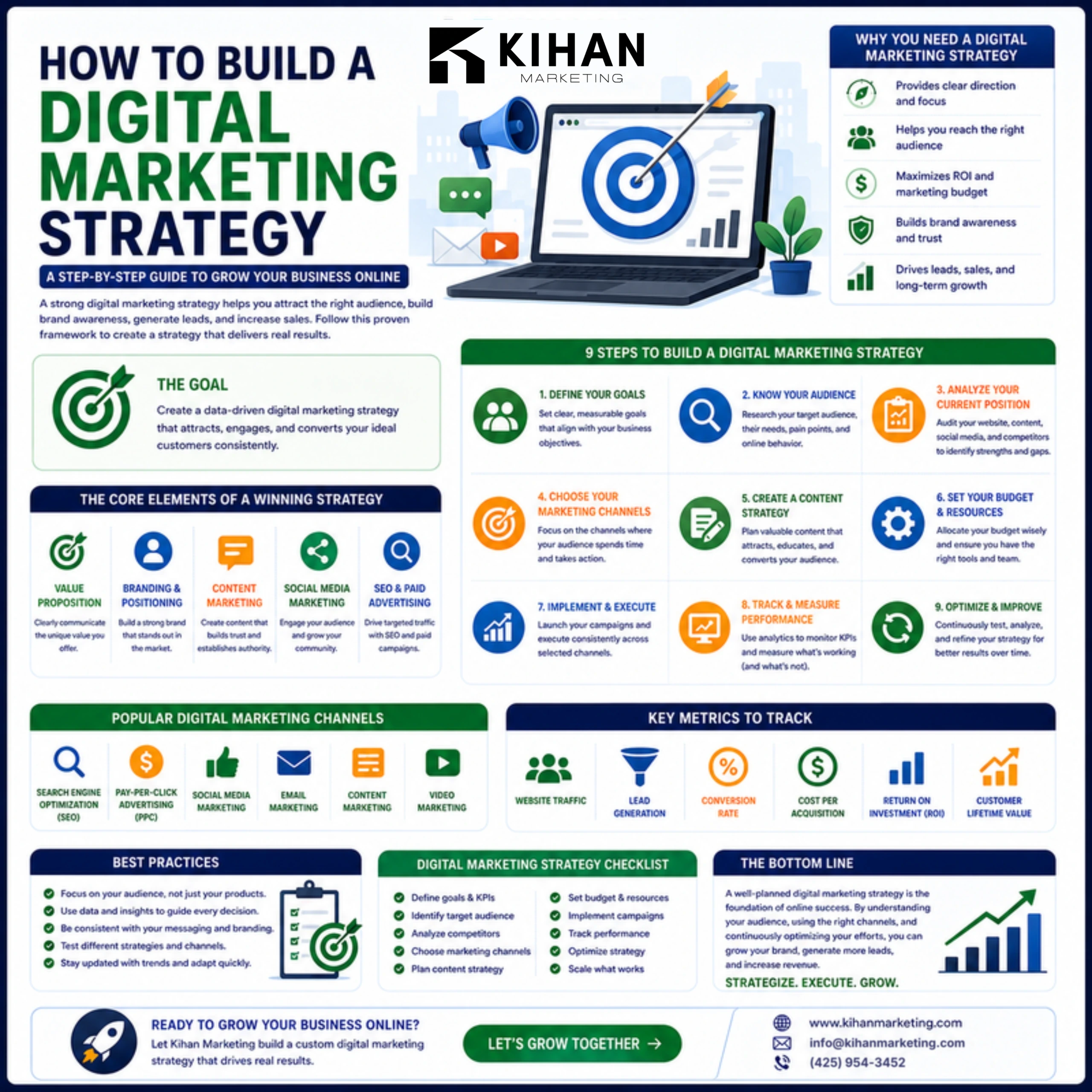
To build a digital marketing strategy, follow five steps. Define your goal and target customer. Audit where you stand today. Choose the few channels closest to revenue. Set a budget and timeline, then measure against leads and revenue. The biggest mistake is starting with tactics. Start with the goal, and let the goal choose the channels.
A digital marketing strategy starts with one clear goal and a sharp picture of the customer, not with tactics. Check where you stand, then put your effort into the two or three channels closest to revenue. Give them a realistic budget and timeline. Judge the plan by leads, cost per lead and revenue, and move budget toward what works.

Step 1: Define the Goal and the Customer
Start with one clear goal, such as 20 qualified leads a month. Then get a sharp picture of the customer you want. Everything else flows from these two. A strategy without a specific goal turns into a pile of random tactics. So decide what success looks like in numbers before you pick a single channel.
Step 2: Audit Where You Stand
Before you add anything, get a clear view of where you are today. Look at your current rankings, website conversion and reviews. Note which channels already bring in leads. This baseline tells you what to fix and what to build. A free marketing audit is the fastest way to find the gaps and the quick wins.
Step 3: Choose the Few Channels Closest to Revenue
Pick the two or three channels nearest to revenue for your business. Do not spread yourself across all of them. For most local and service businesses, that means SEO, Google Business Profile and ads. A few channels done well beat many done thinly. Not sure where to start? See which services to invest in.
Step 4: Set a Budget, Then Measure What Matters
Set a realistic budget and timeline. Then track leads, cost per lead and revenue, not opens and impressions. Review the numbers every month. Shift budget toward whatever brings the lowest cost per lead. A strategy is only as good as the measurement that keeps it honest.
Related reading
- How to Choose Keywords for Your Small Business Website
- How to Get More Google Reviews (and Why They Help SEO)
FAQ: Digital Marketing Strategy
How do I create a digital marketing strategy?
Define your goal and customer, audit where you stand, choose the few channels closest to revenue, set a budget, and measure leads and revenue.
What should a marketing strategy include?
A clear goal, target customer, chosen channels, budget and timeline, and the metrics you will track.
What's the biggest mistake in marketing strategy?
Starting with tactics instead of a goal. Let the goal choose the channels.
How many channels should a small business use?
Two or three channels closest to revenue, done well, beat spreading thin across many.
What is a digital marketing strategy?
A digital marketing strategy is a plan for winning customers online. It names one goal, the customer you want and the few channels you will use to reach them. It also sets a budget, a timeline and the numbers you will track, such as leads, cost per lead and revenue.
Why does a small business need a digital marketing strategy?
Without a strategy, time and budget drift to tactics that never tie back to revenue. A strategy puts your effort into the two or three channels nearest to sales, instead of spreading it thin. It also gives you numbers to check, so you can move budget toward what brings the lowest cost per lead.
What does a digital marketing strategy example look like?
Here is a simple example for a local service business. The goal is 20 qualified leads a month, and the business knows exactly which customer it wants. An audit shows where rankings, reviews and the website fall short. The plan then focuses on SEO, Google Business Profile and ads. It tracks leads, cost per lead and revenue each month.
Jump back to a section