


TL;DR
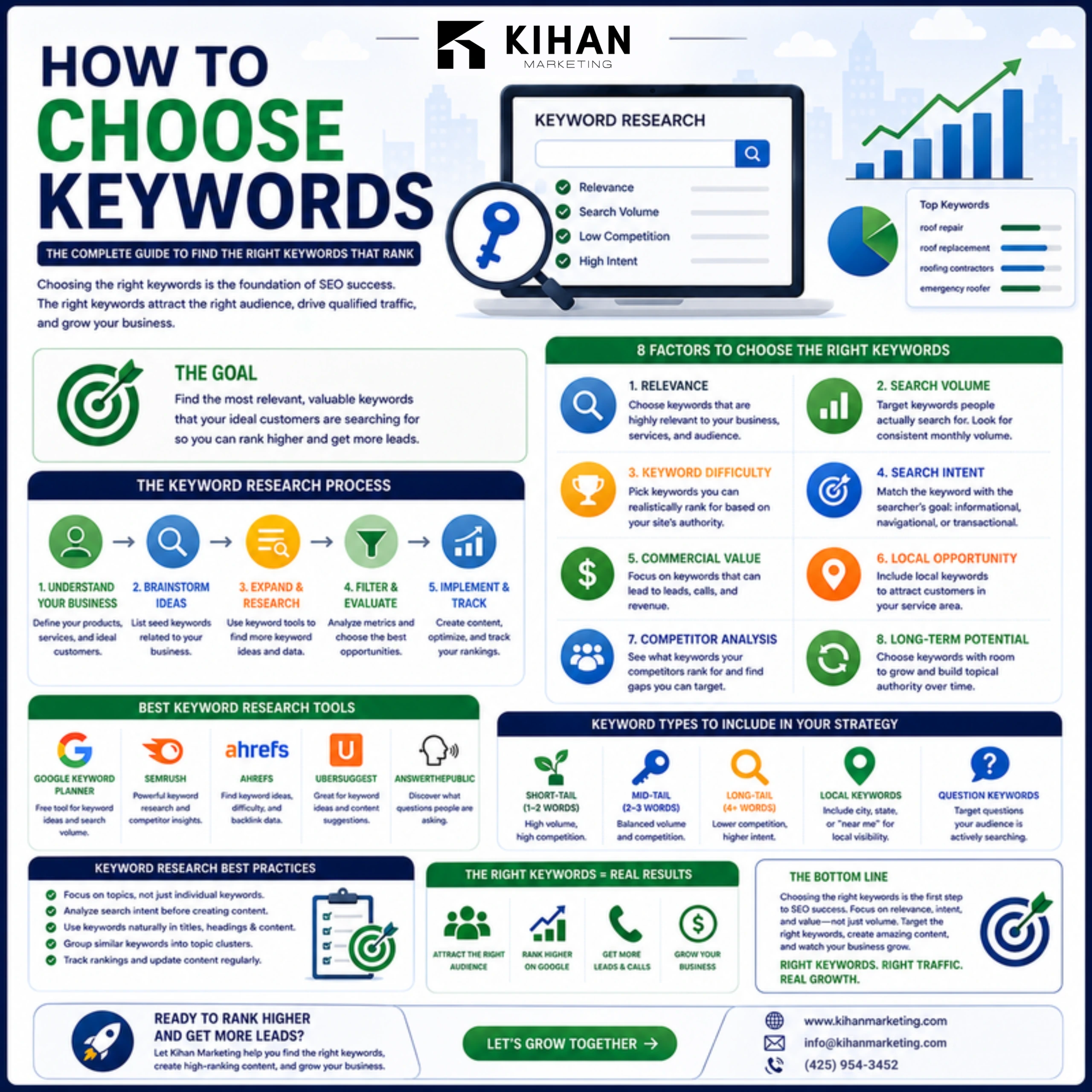
Here is how to choose keywords for SEO. Start with the words your customers use for your service. Check search volume and difficulty in a tool like Ubersuggest. Then pick specific phrases with less competition and clear buyer intent. For a small business, ten well-chosen local and long-tail keywords beat one broad term you cannot win.
Choose the keywords your customers really type, not industry terms. Use a tool to compare volume and difficulty, but treat both as estimates. Give each intent its own page. Favor specific local and long-tail phrases you can win over one broad term you cannot. Start with five, one for each service you most want, and grow from there.

Start With Customer Language
List the words your customers use for your service, not industry jargon. Think about the problems they have and the phrases they would type. Your sales calls, reviews and FAQs are full of real customer language. This raw list is the seed for everything else.
Check Volume and Difficulty
Run your list through a keyword tool like Ubersuggest. It shows the monthly search volume and SEO difficulty of each term. You are looking for the sweet spot: enough searches to matter, and difficulty low enough that you can rank. A high-volume term you can never reach is worth less than a modest one you can win.
Match Buyer Intent
Not all searches are equal. Intent means what the person searching wants to do. Put keywords with clear buyer or local intent on your money pages, the pages that sell. Use informational terms for blog posts that feed those pages. Intent decides which keyword belongs on which page.
Someone who types “Emergency plumber [city]” is ready to buy. Someone who types “how does plumbing work” is not. The first search belongs on a service page. The second belongs in a blog post that points to it.
Prioritize Long-Tail and Local
For small businesses, specific long-tail and local keywords win. A long-tail keyword is a longer, more specific phrase. These terms have less competition and higher intent, and they convert better than broad head terms. Ten focused phrases you can rank for beat one giant keyword you cannot. A free marketing audit can confirm which terms are within reach.
Related reading
- How to Get More Google Reviews (and Why They Help SEO)
- In-House Marketing vs Hiring an Agency: Which Is Right?
How to Choose Keywords for a Local Business
Local keyword research is a different job from general keyword research. The set you can win is smaller, and the deciding factor is not volume.
- Start from what you sell, not from a tool. List every service in the words customers use, not the words your industry uses. The tool comes second. It checks the list; it does not write it.
- Cross each service with each area you really serve. That grid is your list of candidates. Do not stretch it to places you would not drive to.
- Search each one and look at what comes back. The map pack is the map and short list of local businesses Google shows on some searches. If one shows up, that term is decided by distance and your Google Business Profile. If it does not, it is decided by your pages. At this point the same keyword list splits into two different jobs.
- Drop anything you cannot answer honestly. A page about a service you do not offer, or a city you do not serve, will not hold a ranking. It only wastes the effort.
- Order what is left by value, not by volume. The service you most want more of comes first. That holds even if it gets fewer searches than something you would rather not sell.
Reading Volume and Difficulty Without Being Misled
Both numbers come from third-party tools, and both are estimates. They are useful for comparing two keywords with each other. They are not reliable as exact figures.
- Volume is an estimate, and often a wide one. Terms a tool calls low volume often bring real inquiries, especially local ones. Do not drop a keyword because a tool says ten a month.
- Difficulty describes the current page one, not you. The score reflects who ranks now. A site with authority on the topic can win a scary-looking term. A new site can lose an easy one.
- Zero-volume long tail is where local businesses win. Specific phrases with tiny reported volume convert far better than broad ones. The person typing them has already decided what they want.
- Check what actually ranks before you commit. If page one is directories and national brands, that is your competition, whatever the difficulty number says.
Matching Keywords to Intent, and to Pages
| What they typed | What they want | What page it needs |
|---|---|---|
| Emergency plumber near me | Someone now | A service page that answers can you come today |
| How much does a new roof cost | To be informed, not sold | A guide with real ranges and what changes them |
| Best dental seo company | To compare providers | A service page with deliverables and pricing |
| What is local seo | To understand the term | An explainer that earns trust and links onward |
One page per intent. The most common keyword mistake is aiming four different intents at one page. That page serves none of them and ranks for none of them.
Keyword Strategy for Small Businesses, in Practice
- Pick five to start, not fifty. Choose one for each service you most want. A short list that gets real pages beats a spreadsheet nobody acts on.
- Give each one a page that fully answers it. Not a paragraph inside a page about something else.
- Check Search Console after a month. It is Google’s free tool that shows which searches find your site. It will show you phrases you never thought of. That is free research, and it is more accurate than any tool, because it is measured.
- Grow from what is already working. A page picking up impressions for a related phrase is telling you to write the next page. Follow it.
- Review the list every quarter. Services change and competitors publish. A term you could not win last year sometimes becomes one you can.
FAQ: Choosing Keywords
How do I choose keywords for my website?
Start with the words your customers use. Check volume and difficulty in a tool. Then pick specific phrases with less competition and clear buyer intent.
What is keyword difficulty?
It is a score that estimates how hard it is to rank for a term. The lower the score, the more realistic the target for a small business.
How many keywords should I target?
Pick a focused set of local and long-tail keywords, not one broad term you cannot win. Five is a reasonable start: one for each service you most want more of, each with its own page that answers it fully. Then grow from whatever starts picking up impressions, not from a list written up front.
What are long-tail keywords?
They are longer, more specific phrases with less competition and higher intent. For example, “emergency roof repair [city]” instead of “roofing.”
How do I choose keywords for a local business?
Cross every service you offer with every area you really serve, then search each one. Terms that show a map pack are decided by your Google Business Profile and distance. Terms that do not are decided by your pages. Order what is left by the value of the work, not by search volume.
Are low-volume keywords worth targeting?
Often they are the most worthwhile, especially for local businesses. Reported volume is an estimate, and it undercounts long-tail phrases. Someone typing a very specific search has usually already decided what they want.
Should I trust keyword difficulty scores?
Yes for comparing two keywords, no as an exact measure. Difficulty describes whoever ranks now, not your site’s chance against them. Look at the real page one before you commit.
How do I choose keywords for blog posts?
Use informational keywords: the questions people ask before they are ready to buy. Give each question its own post that answers it fully. Link each post to the service page it supports, so the blog feeds your money pages. Search Console will also show related phrases your posts already get seen for, and those make good next topics.
How much does keyword research cost?
It depends on how many services and areas you need to cover, and how crowded page one is for each. A business with one service in one town needs less work than one with many services across a region. See our pricing page for how the work is scoped, or start with a free marketing audit.
How do I know if a keyword is working?
Check Search Console about a month after the page goes live. If the page you built for the keyword is picking up impressions for it, the keyword is starting to work. Also note the related phrases that page starts to show up for. Each one points to the next page worth writing.