

TL;DR
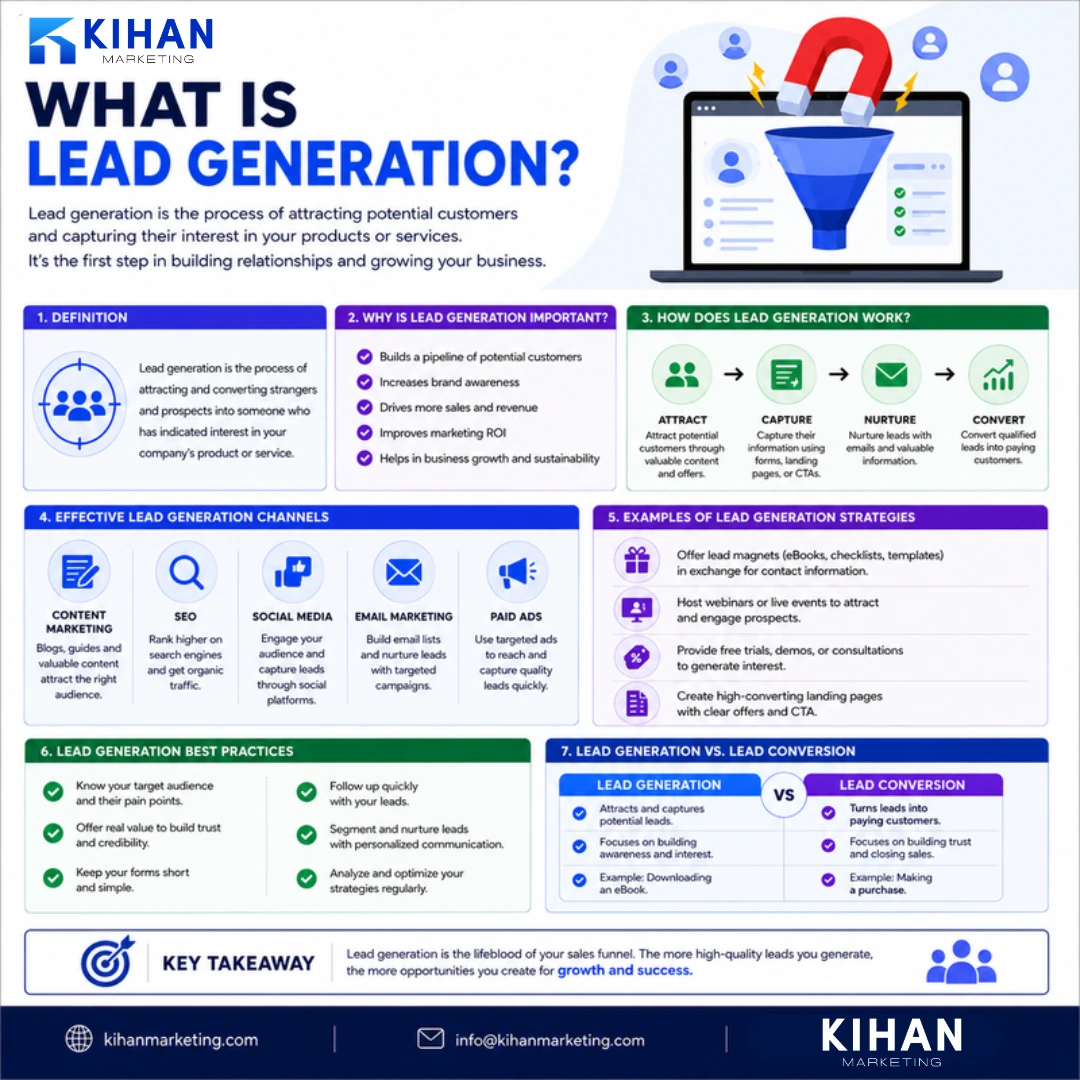
What is lead generation? It is the process of turning strangers into people who have shown interest in your service, usually by calling or filling out a form. For service businesses, it works through local SEO, Google Business Profile, ads and referrals. Each one sends people to a website built to convert. The goal is exclusive leads you own.
Lead generation turns strangers into people who call, fill out a form or book. For a local service business, pair a Google Business Profile with a website that answers what people search. Add ads when you have capacity to fill quickly. Reply to every lead within minutes, and build channels you own rather than renting shared leads.
What Lead Generation Is
Lead generation turns strangers into prospects: people who have raised their hand by calling, filling out a form or booking. It sits between marketing, which gets attention, and sales, which closes the deal. For a service business, a lead is usually a phone call or a quote request from someone who needs what you do.
How Lead Generation Works
For service businesses, leads come from a few core channels. Local SEO and Google Business Profile optimization help people find you. Google and Meta ads bring in leads right away. Reviews and referrals feed both. Every channel sends people to a website whose job is to turn the visit into a call or a form.
Own Your Leads, Do Not Rent Them
There is a big difference between leads you generate and leads you buy. Exclusive leads come only to you. Shared leads come from platforms that resell the same contact to your competitors. Exclusive leads cost less over time and close better. So the aim of good lead generation is to build channels you own, rather than rent access to customers.
Convert With Your Website
Getting the lead is only half the job. Converting it is the other half. A fast website with an obvious click-to-call button and simple forms turns visits into leads. Quick follow-up then turns those leads into customers. Without that step, even great traffic leaks away.
Ready to act on it? See the best lead generation strategies for small businesses, ranked.
Related reading
- WordPress lead generation forms: 5 methods compared in 2026
- B2B Lead Generation: From Cold Outreach to Inbound
- Cold Email Sequences That Get Replies in 2026
The Stages a Lead Moves Through
Lead generation gets talked about as one thing. It is really five stages, and a business usually has one weak stage rather than a weak system.
- Attention: someone with the problem you solve learns you exist. That might be through search, a map listing, an ad, a referral or a sign on a truck.
- Capture: they give you a way to reach them, such as a form, a call, a text or a booking. If this stage is weak, everything spent on attention is wasted.
- Qualification: you find out whether they are the kind of customer you want. Two or three questions on the form do more here than any tool.
- Follow-up: you reach them before a competitor does. This is where most service businesses lose deals they had already paid to create.
- Close: the quote, the proposal or the visit. Most owners think about this stage first, yet marketing affects it the least.
Before you spend more on the first stage, work out which stage is really leaking. More attention on a broken capture stage just makes the leak bigger.
Channels, and What Each One Is Good For
| Channel | Best at | What it demands |
|---|---|---|
| Search results and content | Steady, compounding demand | Time, and pages that genuinely answer the question |
| Google Business Profile | Local, ready to call, no ad spend | A verified location and a review habit |
| Google Ads | Volume on demand, testable quickly | Budget, and a page that converts |
| Referrals and partners | Highest close rate of any channel | Consistent delivery and asking |
| Email and SMS follow-up | Turning old leads into work | A list you own, and something worth sending |
Two channels run well beat five run badly. For a local service business, the usual pair is a Google Business Profile plus a website that answers the questions people search. Add ads when you have capacity to fill quickly.
Speed to Lead: The Part Most Businesses Get Wrong
A lead who just filled out a form is comparing options right now, usually across several tabs. The business that replies first is very often the one that gets the job, whatever the price.
The fix is not a tool. Decide who owns the inbox, what the reply says and how fast it goes out. Then check once a month that it still happens.
Say your quote form sends leads to an email address nobody watches. Those leads sit and wait while a competitor replies first. No amount of marketing will fix that result. Give the inbox an owner and a set reply before you spend more on getting attention.
Why Owned Channels Win Over Time
Shared lead marketplaces sell the same inquiry to several businesses. You pay per lead, you compete on speed and price, and you own nothing at the end. When you stop paying, the leads stop that day.
Owned channels work differently. Pages that rank keep working. A Google Business Profile keeps bringing in calls. An email list is still yours next year. The trade-off is that they take longer to start. The usual answer is to run both for a while, then let the owned channels take over the volume as they mature.
How to Tell If Your Lead Generation Is Working
- Count leads by channel, not in total. A total tells you nothing about what to do next. Ask every caller how they found you, or use a separate phone number for each channel.
- Track cost per lead and cost per job. Cost per lead flatters channels that bring in unqualified inquiries. Cost per closed job is the honest number, and you already have both halves of it.
- Watch how long a lead waits for a reply. Measure it for a week. If the average is hours rather than minutes, that is the cheapest fix available to you.
- Check where a lead came from before it converted. Someone who searched your business name found you somewhere else first. The channel that gets the credit is rarely the whole story.
Where the Build Cost Starts
A lead generation build usually starts with the website, since every other channel points at it. Sending paid traffic to a page that does not convert is the most expensive mistake you can make.
Website DevelopmentWebsites on WordPress, Next.js, Webflow and Framer, built to rank and to bring in leads.FAQ: Lead Generation Basics
What is lead generation?
The process of attracting strangers and turning them into people who have expressed interest, usually by calling or filling out a form.
How does lead generation work for service businesses?
Through local SEO, Google Business Profile, ads, and referrals that drive prospects to a website built to convert.
What is the difference between exclusive and shared leads?
Exclusive leads come only to you; shared leads are resold to several competitors. Exclusive leads cost less and close better over time.
What is the difference between marketing and lead generation?
Marketing gets attention; lead generation turns that attention into prospects who raise their hand.
How much should I spend on lead generation?
Work backwards from a closed job. Start with what a customer is worth and roughly what share of leads you close. From that, you know what you can afford to pay for a lead. Set the budget from that, not from a percentage rule.
How fast should I reply to a new lead?
Minutes, not hours. Someone who filled in your form is very likely filling in others. Speed of first contact is one of the few things you can change this week without spending anything.
Is lead generation the same as SEO?
No. SEO is one channel that produces leads. Lead generation is the whole system. It covers how people find you and how they get in touch. It also covers how quickly you respond, and how you follow up with the ones who did not buy the first time.
Should I buy leads from a marketplace?
It can work as a short term fill while you build owned channels. Just know that the same lead was sold to competitors, and be ready to respond fast. It is a poor long term plan, because you are renting demand rather than building an asset.
What is lead generation in sales?
It is the part that comes before the sale. Lead generation brings in the call, the form or the booking, and sales closes the deal. The two meet at follow-up. That is where most service businesses lose deals they had already paid to create, so reach each new lead before a competitor does.
What is a lead generation website?
It is a website built to turn visits into calls and form requests. It loads fast, has an obvious click-to-call button and keeps its forms simple. Two or three questions on the form help you qualify each lead. Ads, search and your Google Business Profile all send people there. If the site does not convert, that traffic leaks away.
What is a lead generation campaign?
It is a focused push on one channel to bring in leads, such as Google Ads sent to a page that converts. Give each campaign its own phone number, so you can count its leads apart from the rest. Then judge it by cost per closed job, not by cost per lead, which can flatter weak inquiries.
What do lead generation services include?
They cover the channels that bring people in and the site they land on. That can mean local SEO, your Google Business Profile and ads. The work should also cover capture and follow-up, not only attention. The channels you need move the cost. The pricing page explains what shapes the scope, or you can start with a marketing audit.
Jump back to a section