


TL;DR
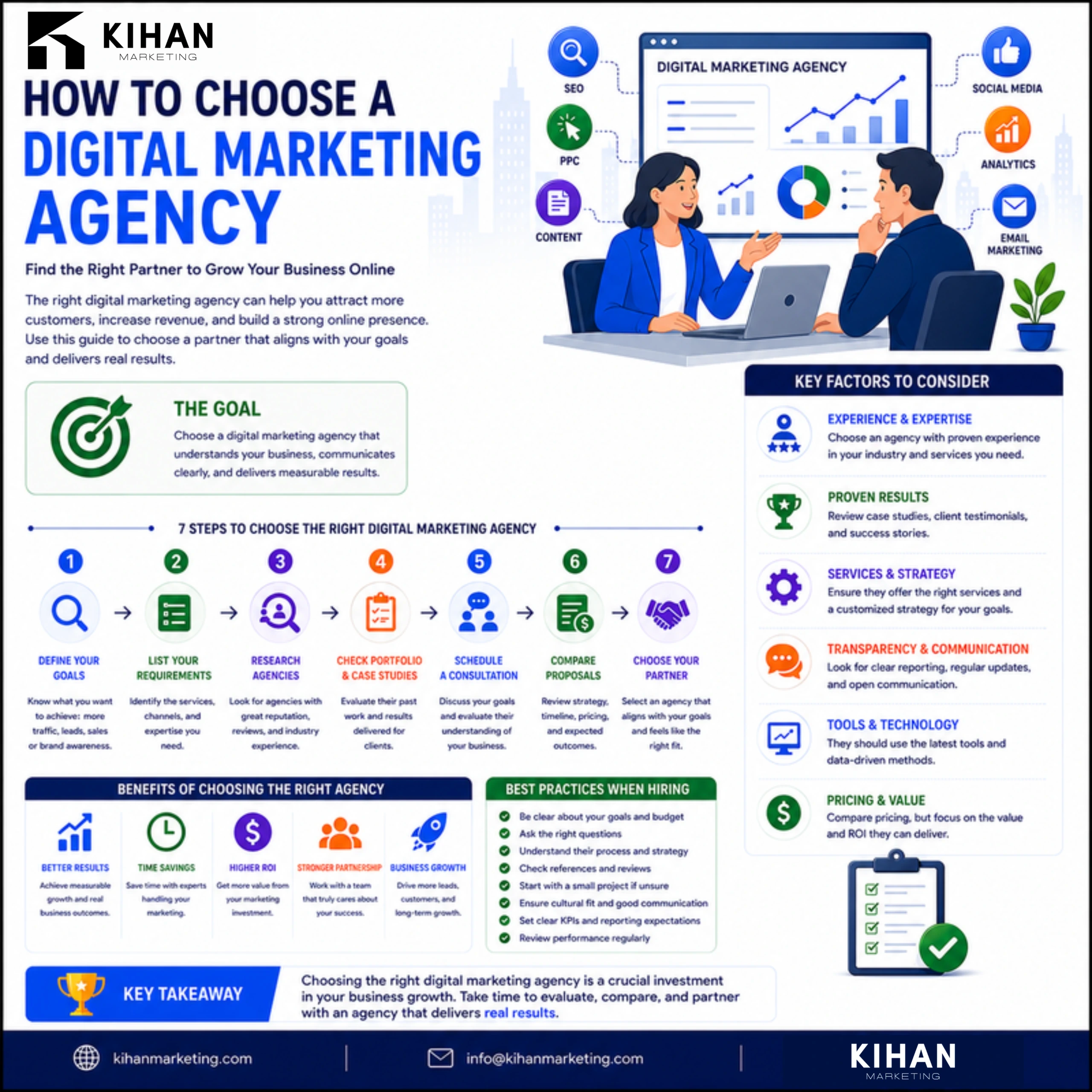
To choose the best digital marketing agency, look past the sales pitch and check four things. Does it have proven results in your industry? Is its reporting open and tied to leads and revenue? Will you own your own accounts? Does it talk to you clearly? The best fit is usually a specialist who has done the work in your niche, not the biggest agency. Ask for case studies with real numbers. Talk to a current client before you sign.
Pick the agency that can prove it has grown businesses like yours. It should report on leads and revenue, in plain English, and leave your website, ad accounts and analytics in your name. Size matters less than fit. A focused specialist with senior people on your account will often do more for you than a big name.

Proven Results in Your Industry
The strongest sign is relevant proof. An agency that has grown businesses like yours knows your customers and your busy and slow seasons. It knows the searches that actually turn into sales. Ask for case studies with real numbers, such as leads added, cost per lead and revenue. “We increased traffic” is not enough. At Kihan Marketing, our work across verticals like roofing SEO, med spas and property management means we start with patterns that already work.
Transparent Reporting and Ownership
A great agency is open about two things: what it is doing and what you own. Reports should tie to leads and revenue, in plain English, every month. You should also own your website, ad accounts and analytics outright. If an agency is cagey about its methods, walk away. Do the same if it keeps your accounts in its own name. Being open with you is not optional.

Specialist vs. Generalist
Bigger is not better. Large generalist agencies often hand small accounts to junior staff and use a one-size template. A focused specialist gives you senior attention and real know-how in your niche. For most companies, a specialist who has solved your exact problem will do better than a household-name agency.
Communication and Fit
Last, judge the working relationship. Do they explain things clearly, or hide behind jargon? Is the scope written down in plain terms? You will work with these people every month, so quick replies and honesty matter as much as skill. Read the agreement carefully before you sign.
Related reading
- How Digital Marketing Services Measure Return on Investment
- The Most Effective Digital Marketing Services for Small Businesses
- What Digital Marketing Tools Agencies Use to Manage Campaigns
FAQ: Choosing an Agency
Is a big agency better than a small one?
Not always. Large agencies often give small accounts to junior staff. A focused specialist usually gives you more senior attention and better results.
Should I choose a specialist or a generalist agency?
A specialist who has solved your exact problem in your industry will often do better than a generalist. They start with what already works.
What questions should I ask a digital marketing agency?
Ask for case studies with real numbers. Ask who owns the accounts and how they report results. Ask if you can speak to a current client.
What are red flags when choosing an agency?
Watch for a vague scope, reports full of vanity numbers, and an agency that will not let you own your own accounts.
What does a digital marketing agency do?
It helps your business get found online and turn that attention into customers. The work can cover SEO, your website, paid ads on Google and social media, your Google Business Profile and content. A good agency ties all of it to leads and revenue, so you can see what each channel brings in.
How much does a digital marketing agency cost?
It depends on the scope. How many places you need to be found in, how many pages you need and how much work your website needs all move the cost. Get the scope in writing so you can compare agencies on the same terms. You can see how we set scope on our pricing page.
Should I choose a digital marketing agency near me?
Distance matters less than fit. A nearby agency is worth a look, but judge it by the same checks as any other. Look for proof in your niche, reports tied to leads and revenue, and your name on your accounts. An agency that knows your industry will often do more for you than one that is simply close.
Is a digital marketing agency worth it for a small business?
It can be, if the agency fits your business. The risk for a small business is paying for work it cannot see. So pick an agency whose reports show leads and revenue, not just traffic, and that keeps your accounts in your name. Ask for case studies and talk to a current client first.