


TL;DR
A small business that wants to outrank a chain or a national brand is not crazy. It is just playing a different game. Big brands win on backlinks and domain authority. Small business SEO wins on relevance, freshness and proximity. Google's local results are built to show the best answer for one person, right now, in this neighborhood, with this exact need. That is not a contest of who has more links. This guide is the twelve practices that pull that off in 2026, in the order we would run them with a client.
Do not compete on domain authority. Compete on your Google Business Profile, hyperlocal content, a page per neighborhood, depth in one narrow specialty, schema markup and fresh reviews. Big brands cannot match those easily. Steady work on them often shows gains within a few months.
Related reading
- SaaS Marketing for Small Teams: Channels That Compound
- How Local Businesses Benefit From Digital Marketing Services
- What to Expect From a Full-Service Digital Marketing Provider
The three practices that move the needle most
Google Business Profile
Your Google Business Profile (GBP) should be complete, active, posting weekly and collecting reviews. This is the highest local lift on the list, and usually the single biggest lever for showing up in local results.
Neighborhood pages
One page for each city, suburb or neighborhood you serve. This one compounds. Six months in, it is the organic move with the most leverage.
Review velocity
Reviews are the trust layer. Fresh reviews matter more than the total count. Aim for 4 new reviews a month, at minimum, across your top platforms.
The 12 practices, in priority order
Use the twelve below as a small business SEO checklist. If you can only do three, do the top three. If you have a quarter, do the first six. Give all twelve a full year of patient work. That is how a small business competes with bigger rivals in its local market.
Complete your Google Business Profile to 100%
Fill every field. Claim every service category, tick every attribute and fill every photo slot. A complete profile is a direct ranking signal in the Local Pack. Chains often do this poorly, because they manage many profiles from one central team.
Build neighborhood-level service pages
One page for each city, suburb or neighborhood you serve, with copy that is truly local. Not the same template with the city name swapped. Each page targets "[service] in [neighborhood]" and ranks for the long-tail local searches the big brands ignore.
Collect 4+ reviews per month, every month
How fast reviews arrive matters as much as how many you have. Four reviews a month for twelve months often looks stronger than 48 reviews in one burst. Build a simple request flow after each job: a text message with a direct link to your profile. Then hold the team to it, every job.
Add LocalBusiness and Service schema
JSON-LD schema markup tells Google, in plain terms, what your business is, where it works, what it offers and how it is rated. Many small business sites have none, and many bigger rivals have only the basics. Doing schema thoroughly is a fast edge.
Build topical depth in one niche
Pick the one service you offer with the highest margin. Build a hub page plus ten supporting blog posts around it, one for every long-tail question a customer might ask. Depth in one topic shows Google you know the subject, in a way that broad but shallow content cannot.
Make your NAP consistent across the web
NAP is your business name, address and phone number. It must appear the same way, character for character, everywhere you are listed. That means your website, GBP, Bing Places, Apple Business, Yelp, Facebook, BBB and every directory you use. A mismatch weakens Google's confidence in your business and hurts ranking.
Speed up the site to sub-2.5s LCP
LCP is how long the main content of a page takes to appear. Page speed helps you rank and helps you convert, at the same time. For a small business site, the big wins are image compression (WebP), a CDN, modern hosting and a clean theme.
Post weekly to Google Business Profile
Posts are often an under-used feature of the profile. Weekly posts (offers, events, updates) keep the profile fresh for Google and add more surface for keywords. Most chains cannot post weekly across hundreds of locations. You can.
Earn local backlinks, not generic ones
One link from your local chamber of commerce beats ten generic directory listings. So does a local sports team you sponsor, or a partner business nearby. For small business SEO, local relevance matters more than raw link count.
Optimize for AI Overviews and "near me" intent
"Near me" searches and AI Overviews favor local relevance, FAQ blocks and plain, direct answers. Build an FAQ block into every service page. Write the way people talk. Use phrases that name the service and the place ("furnace repair in [neighborhood]", not "we provide HVAC services").
Internal linking that builds page authority
Hub pages link to their supporting blog posts. Those posts link back to the hub and to the neighborhood pages. A clean link structure pushes ranking power to the pages you most want to rank. Most small business sites are flat. Fixing this lifts the whole site.
Track only what matters and ignore the rest
Three numbers: your GBP positions for your top 10 keywords, organic clicks in Search Console, and calls and form fills from organic traffic. Skip the vanity metrics, above all the domain authority scores from third-party tools. They do not predict revenue.
Vertical-specific tweaks
Roofing
A crowded field with storm-driven demand. Roofing SEO lives or dies on neighborhood pages. "Roofer near me" is owned by GBP listings and big agencies. The long-tail phrase "metal roof installation in [neighborhood]" is wide open for a small roofer who keeps publishing. Build a page for each suburb you serve. Mention specific landmarks, common local roof problems and recent local jobs.
A storm hits your region. A fresh page aimed at "[storm name] roof damage repair [city]" can catch the spike in searches that follows a storm. Add storm-response content like this each season.
Priority moves: neighborhood pages, storm-response landing pages, financing content.
Typical timeline (not a promise): first top-3 placements at 4 to 6 months, sustained results at 9 to 12 months.
Roofing note: photo proof beats copy. A page with 8 before and after images of jobs in that neighborhood can rank faster than a 2,000-word essay with no images.
HVAC
A brutal local fight, driven by urgent calls. Paid-search clicks for HVAC are often expensive, which makes organic SEO worth more here. The wins are in long-tail emergency searches.
Write one page per symptom, not per service: "furnace not blowing hot air [city]", "AC making clicking noise [neighborhood]", "heat pump frozen in winter". Each is a real person with high intent, and few sites compete for it. That is how a small HVAC shop outranks the big franchises in a metro area.
Priority moves: content for each symptom, emergency pages, maintenance plan content.
Typical timeline (not a promise): first leads at 60 to 90 days, sustained rankings at 6 to 9 months.
HVAC note: the season drives the content calendar. Heat-pump content goes up in October. AC content goes up in March. Plan three months ahead of demand.
Med-Spa
A premium service, built on trust. Med-spa SEO is visual and trust-led like no other vertical. Treatment pages (Botox, fillers, laser hair removal, CoolSculpting, microneedling) win the long-tail "[treatment] near me" searches. Each page needs real before and after photos, the provider's credentials, FAQs for that treatment and the cost range for the procedure. Trust signals matter more than length. A 600-word page with strong photos and three video testimonials can outrank a 3,000-word page with stock images. Add Person schema for each named provider.
Priority moves: a page for each treatment, provider profiles, before and after photos.
Typical timeline (not a promise): top-3 placements possible in 90 to 120 days for the less crowded treatments.
Med-spa note: AI Overviews cite med-spa content with first-person FAQ blocks more and more. Build a Q&A section on each treatment page.
Real Estate
Very local, driven by listings. Real estate SEO is won at the neighborhood and zip-code level like nowhere else. Big franchises rank for state and city searches. Small brokerages win the neighborhood pages: "[neighborhood] homes for sale", "moving to [neighborhood]", "best schools in [neighborhood]". Build a full neighborhood guide for each area you cover, with current market stats, school data, recent sale prices and lifestyle content. Update it quarterly. This format is the organic move with the most leverage in real estate SEO in 2026.
Priority moves: neighborhood guides, market reports, school-rating content.
Typical timeline (not a promise): first leads at 90 to 120 days, sustained authority at 12 months.
Real estate note: do not compete on listing pages. Zillow and Redfin own those. Compete on content that teaches people about the neighborhoods they do not write about.
Big-brand vs. small-business SEO, where each wins
| Factor | Big brand wins | Small business wins |
|---|---|---|
| Domain authority | Yes (decades of links) | Rarely |
| Local relevance | Diluted across locations | Concentrated in one market |
| Google Business Profile depth | Templated, often incomplete | Can be 100% complete |
| Review velocity | High volume, low velocity | Lower volume, fresh weekly |
| Hyperlocal content | Rarely produced | Natural advantage |
| Topical depth in a niche | Broad but shallow | Deep in one specialty |
| Response time | Slow | Fast, usable as content |
| Schema markup completeness | Templated, basic | Can be comprehensive |
Common mistakes small businesses make with SEO
Competing on the wrong keywords
Trying to rank for "HVAC" or "roofing company" means competing with national brands and lead-gen platforms. You will lose. Compete on "[symptom] [neighborhood]" and "[service] near [landmark]" instead. Those are the keywords a small business can win.
Chasing domain authority
Third-party "domain authority" scores from Moz, Ahrefs and others are made by tool vendors, not by Google. Time spent fretting over a DA score moving from 18 to 24 is time stolen from the content and reviews that move rankings.
Buying generic backlinks
Backlink packages from offshore vendors are a fast way to harm your site. Spam links trigger Google's distrust signals. Skip the package. Invest in two or three genuine local link relationships a quarter instead.
Publishing thin content because "more is better"
Five strong neighborhood pages beat fifty generic 400-word blog posts. Google punishes thin content more and more, and AI Overviews are less likely to cite it. Quality beats quantity at every scale.
Switching strategies every quarter
SEO compounds over 9 to 12 months. Switching tactics every quarter resets the clock. The most consistent winners pick a small business SEO strategy and stay with it for a year. They fix tactics monthly, not the strategy.
Want a second opinion on your current SEO?
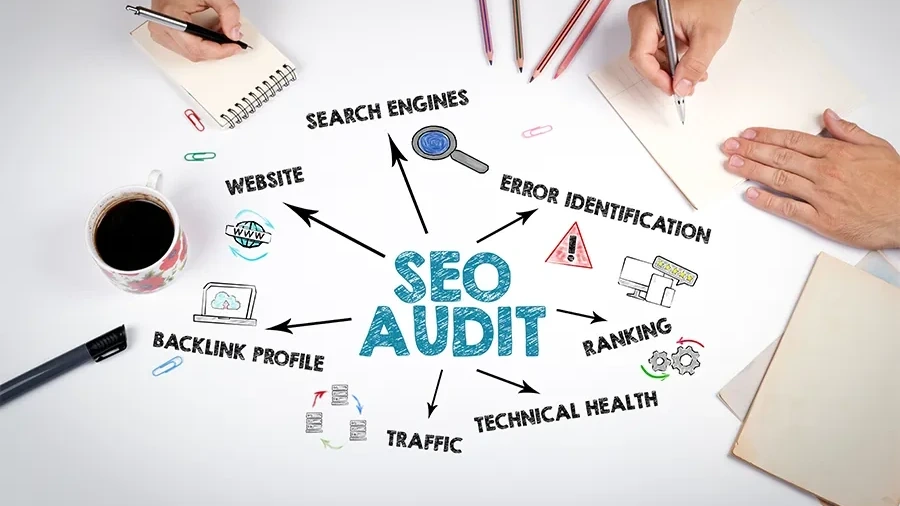
Ask for a free marketing audit. We run it by hand. You get the searches your site already shows up for, each with its real position in Google. We mark the ones close enough to page one to move. The audit also covers a technical read of your site, your Google Business Profile and three competitors.
SEO and AI SearchLocal, technical, schema and AI search work for businesses that need to be found.Frequently asked questions
How can a small business outrank bigger competitors in SEO?
By owning the local and niche ground where big brands cannot compete. That means local content, a page per neighborhood, a complete Google Business Profile, depth in one specialty, fresh reviews and schema markup. Big brands win on backlinks and domain authority. Small businesses win by being closer, fresher and more relevant.
How long does small business SEO take to work?
Local SEO for a small business often shows first movement in 60 to 90 days for keywords few sites chase. Busier keywords take 4 to 6 months. Crowded fields (legal, real estate, HVAC in major metros) usually take 9 to 12 months for sustained top-3 placement. Anyone promising results in 30 days is selling something that is not SEO.
Is local SEO different from regular SEO?
Yes. Local SEO adds signals for distance, prominence and relevance that do not apply to non-local searches. Your GBP, the same NAP everywhere, fresh reviews and neighborhood content all matter for local SEO. They do not matter the same way for general organic search. Small service businesses should put local SEO first. E-commerce and SaaS should put traditional SEO first.
What's the most important SEO ranking factor for small businesses?
For a local small business, it is a complete, active GBP with consistent NAP, fresh reviews and weekly posts. For a non-local small business, it is topical depth: enough content around one specialty that Google sees you as an authority in that niche. In both cases, depth beats breadth.
What is small business SEO?
It is the work of getting a small business found in search without playing the big brands at their own game. It skips the domain authority race. It leans on what a chain cannot easily copy: a complete GBP, a page per neighborhood, fresh reviews and depth in one specialty. The goal is calls and form fills.
How much does small business SEO cost?
What moves the cost is how much of the list your site needs. A site with no schema, a slow theme and no neighborhood pages takes more setup. One that only needs reviews and weekly posts takes less. A crowded metro takes longer. See pricing for how the work is scoped, or start with a free audit.
What SEO tools does a small business need?
Only the ones that measure the three numbers in this guide. Search Console shows your organic clicks. You also need a way to check your GBP positions for your top 10 keywords. Add a way to count calls and form fills from organic traffic. Do not buy a tool for its domain authority score. That score does not predict revenue.
Which website platform is right for small business SEO?
No platform wins by itself. Speed is the real test: compressed WebP images, a CDN, modern hosting and a clean theme. The platform also has to let you add a page per neighborhood, an FAQ block on each service page and JSON-LD schema. If it does those and loads fast, the platform name does not matter.